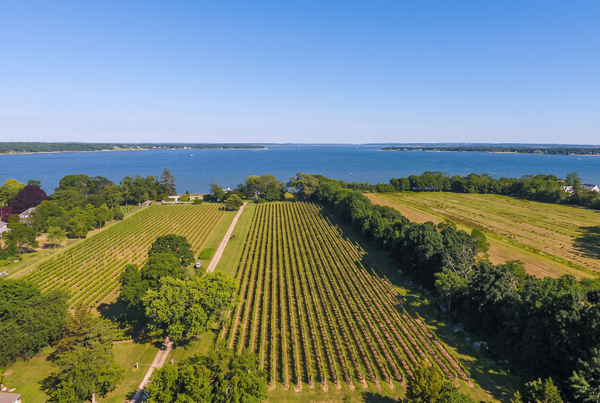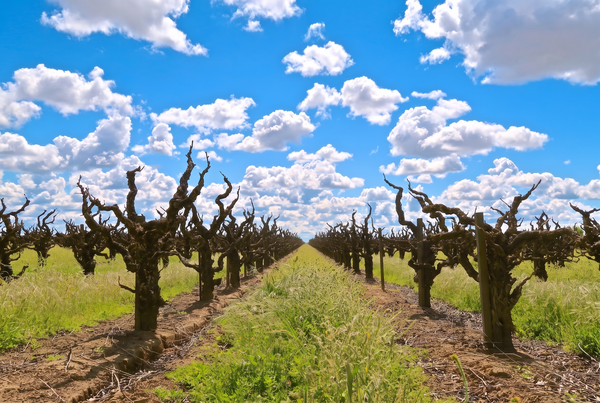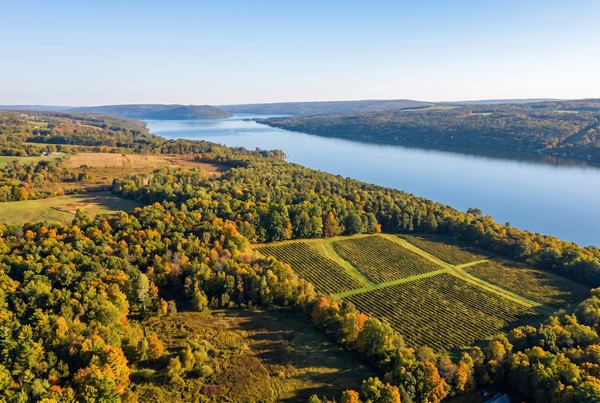


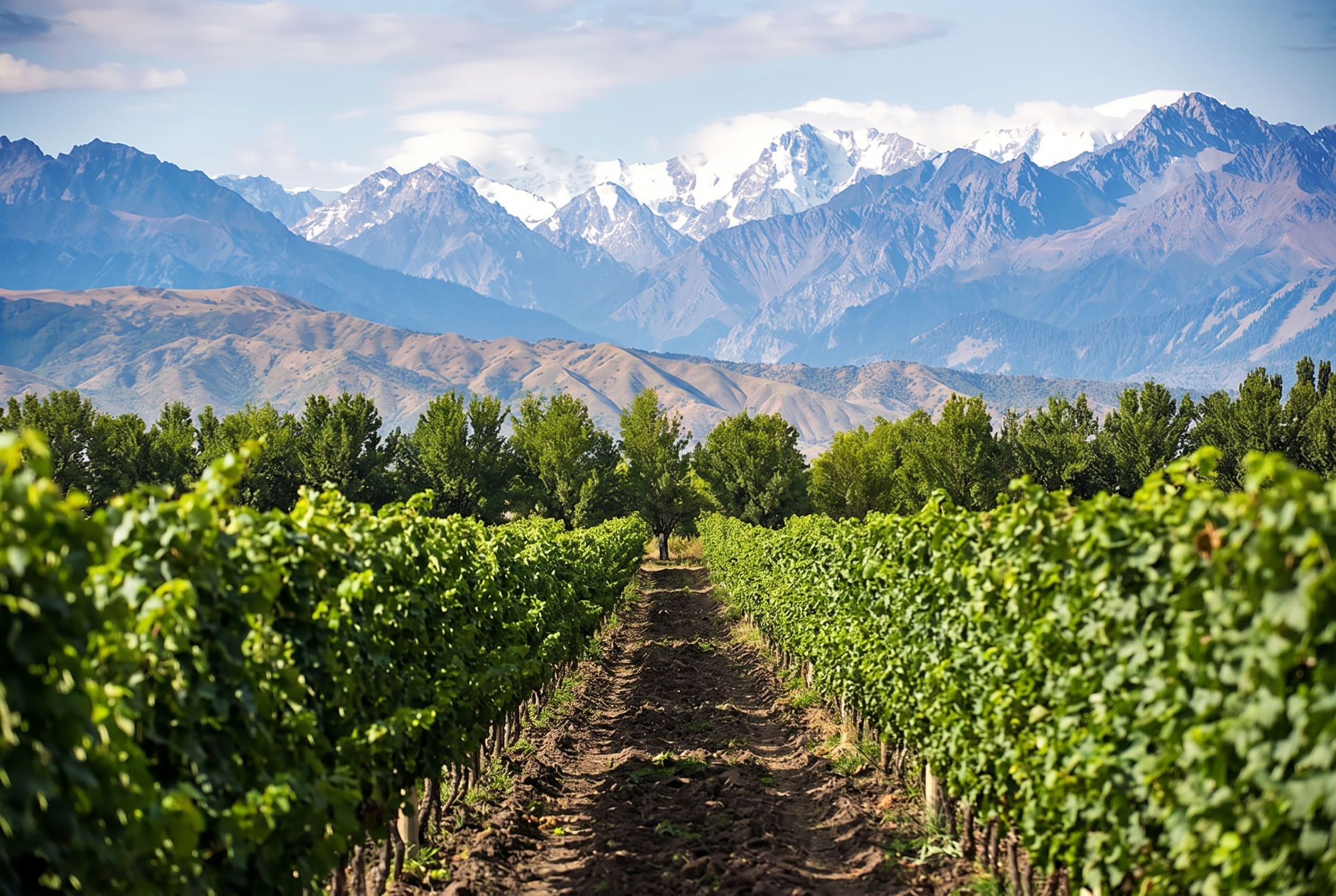
This high desert pours roughly seven of every ten bottles of Argentine wine.
1. At a Glance
Mendoza runs along the eastern wall of the Andes in western Argentina, roughly level with Santiago de Chile across the mountains. It is the country's wine engine: a sunny, nearly rainless plain that farmers turned into vineyard with snowmelt and canals. Almost everything Argentina is famous for in wine, above all Malbec, reached the world from here. The province held about 143,000 hectares (353,000 acres) of vines in 2024, or 71 percent of the national total, according to the INV, Argentina's national wine regulator.
Country: Argentina
Main grapes: Malbec, Cabernet Sauvignon, Bonarda, Chardonnay
Signature styles: Full-bodied Malbec, high-altitude whites, traditional-method sparkling wine
Climate: High-altitude desert; about 9 inches (220 mm) of rain a year
Key appellations: Luján de Cuyo (DOC), Maipú, Uco Valley (Tupungato, Tunuyán, San Carlos), San Rafael (DOC)
Vineyard area: About 143,000 hectares / 353,000 acres (2024, INV)
2. Why It Matters
Mendoza made Malbec a household word. The grape came from southwest France, where it played a supporting role; here it found deep sunshine, cold nights, and poor stony soils, and became a national calling card. Mendoza produces roughly 70 percent of Argentine wine, hosts most of its major wineries, and supplies most of its exports. When a wine list says simply “Argentina,” the bottle is usually from Mendoza.
3. Land and Climate
The Andes block Pacific storms, so Mendoza gets only about 9 inches (220 mm) of rain a year. Vines survive on irrigation: snowmelt runs down mountain rivers and into a canal network, and growers apply water like a dial, controlling vine vigor and ripeness. Soils are alluvial, meaning built from the sand, gravel, and stones that rivers wash down. They drain fast and hold few nutrients, which keeps yields small and flavors concentrated.
Altitude does the rest. Vineyards climb from about 2,000 feet (600 meters) in the east to 5,200 feet (1,600 meters) at Gualtallary in the Uco Valley. Height brings cold nights, and the wide gap between day and night temperatures preserves natural acidity, so the wines stay fresh despite the desert sun. Intense high-altitude sunlight also thickens grape skins, deepening color and tannin. One local menace: the zonda, a hot, dry wind that drops off the mountains and can scorch vines in spring. Eastern Mendoza, lower and warmer, still supplies the bulk of everyday wine, while San Rafael, about 140 miles (230 km) south between the Diamante and Atuel rivers, holds a quieter DOC of its own.
4. Grapes and Styles
Reds dominate. Mendoza Malbec is dark and plush, with ripe plum, blackberry, a violet scent, and soft tannins. Origin changes the style: Luján de Cuyo, the classic zone, gives round, chocolatey Malbec, while the higher Uco Valley gives tighter, fresher versions with floral lift and a chalky grip. Cabernet Sauvignon adds structure, often in blends. Bonarda, Argentina's second red grape, makes juicy, unpretentious wine for early drinking. The quiet story is Cabernet Franc: peppery, precise Uco Valley versions may be the most exciting reds in the province right now.
Whites are a smaller share but improving fast. Uco Valley Chardonnay can be taut and citrusy, and Sauvignon Blanc benefits from the same cold nights.
Sparkling wine has real history here too. The best are made by the traditional method, in which the bubbles form during a second fermentation inside the bottle; Chardonnay and Pinot Noir from high vineyards supply the acidity that style needs.
5. Reading the Label
If the label names one grape, Argentine law requires at least 85 percent of that variety in the bottle. Place names work like an address, from wide to narrow: Mendoza (the province), then a department such as Luján de Cuyo or Tupungato, then sometimes a district such as Las Compuertas or Paraje Altamira. Many bottles carry “IG,” short for Indicación Geográfica, a protected geographic indication that guarantees where the grapes grew. A step above sits the DOC, or controlled denomination of origin, which also regulates how the wine is made; Argentina has only two, both in Mendoza: Luján de Cuyo, created in 1989 for Malbec-based reds, and San Rafael. “Reserva” means minimum aging of 12 months for reds and 6 for whites and rosés; “Gran Reserva” doubles that. Terms like “Premium” or “Selección” have no legal definition.
6. A Short History
Spanish settlers planted vines in the 1500s, but modern Mendoza dates to the late 1800s, when Italian and Spanish immigrants arrived in force and the railway reached the province in 1885, opening the Buenos Aires market. For most of the 20th century Mendoza made cheap bulk wine for domestic drinkers. When consumption collapsed in the 1980s, the industry pivoted: foreign investment arrived in the 1990s, growers replanted for quality, and pioneers pushed vineyards up into the cold Uco Valley. Exported Malbec did the rest.
Did You Know? The first controlled denomination of origin in the Americas was created here. The DOC Luján de Cuyo, established in 1989 to protect old Malbec vineyards that were then being ripped out, predates every comparable appellation in the hemisphere, and its rules still require at least 85 percent Malbec.
7. At the Table
Malbec and beef is the local religion, and it works: the wine's soft tannins and dark fruit match grilled ribeye, short ribs, and the slow-cooked cuts of an asado, the Argentine barbecue. Empanadas mendocinas, baked and juicy, are the classic starter. Serve Malbec slightly cool, around 60 to 64°F (16 to 18°C); room temperature in a warm kitchen flattens it. Young bottles open up with 30 minutes in a decanter. Everyday Malbec is built for drinking within three or four years, while serious Uco Valley or Gran Reserva bottlings reward eight to twelve years of cellaring. High-altitude Chardonnay handles roast chicken and creamy pastas.
Links
National wine regulator (INV): https://www.argentina.gob.ar/inv
Official tourism board (Visit Argentina): https://www.argentina.travel
Producers' council, DOC Luján de Cuyo: http://doc-lujandecuyo.com.ar