

No vine grows more than four miles from the sea on this Melbourne peninsula.
1. At a Glance
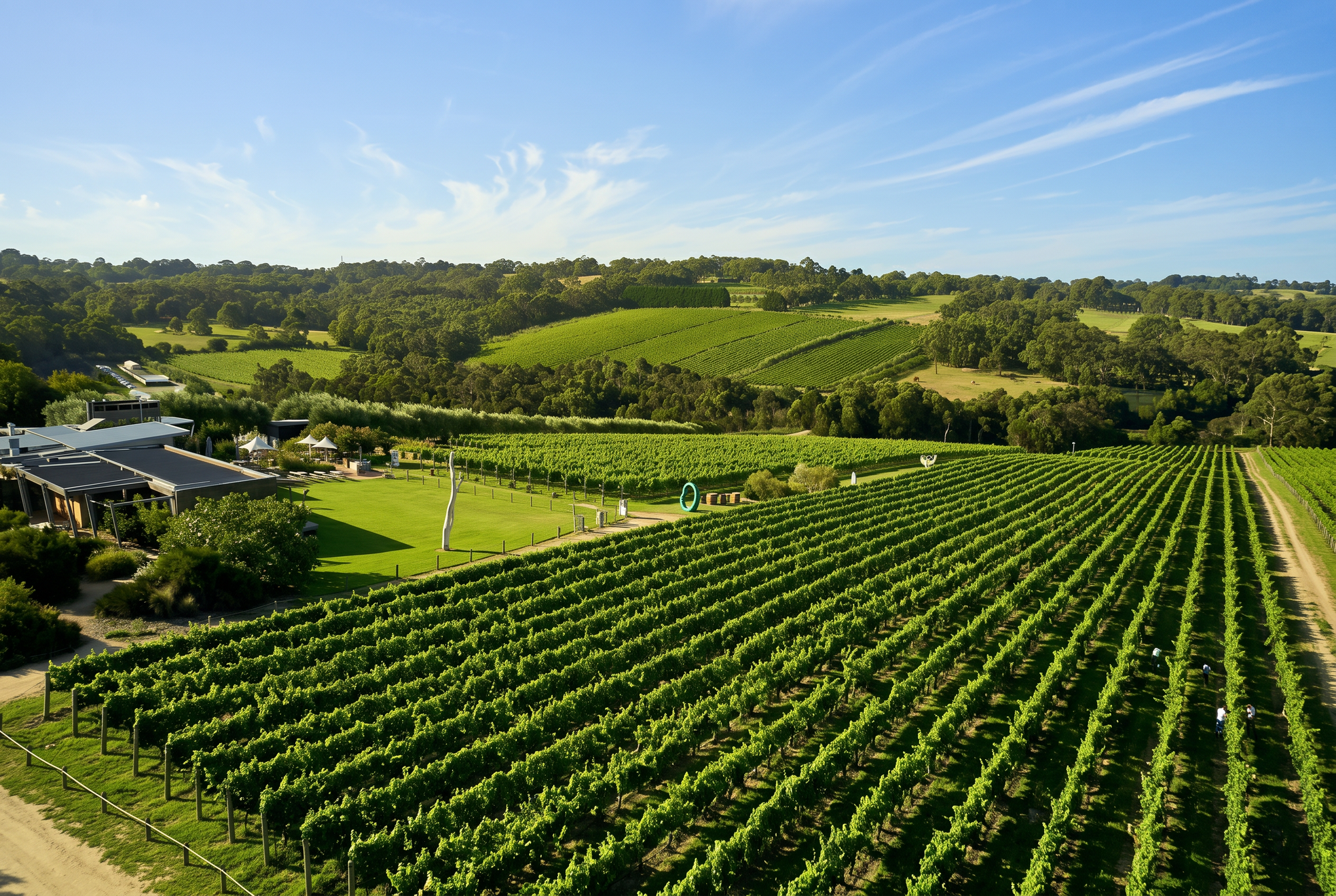
The Mornington Peninsula hooks south of Melbourne into the waters of Port Phillip Bay, Western Port, and Bass Strait, about an hour's drive from the city. Water on three sides gives it one of Australia's most purely maritime climates, and its small, quality-obsessed vineyards concentrate on Pinot Noir, Chardonnay, and Pinot Gris. Nothing here is industrial: some 200 growers and around 50 wineries share less vineyard land than a single large Barossa company might farm.
Country: Australia
Main grapes: Pinot Noir, Chardonnay, Pinot Gris/Grigio, with a little Shiraz
Signature styles: Silky Pinot Noir; precise Chardonnay; textural Pinot Gris
Climate: Cool maritime; sea-moderated with no continental extremes
Key appellations: Mornington Peninsula GI (no official subregions)
Vineyard area: About 2,410 acres (976 hectares), 2020 national vineyard scan
2. Why It Matters
For Pinot Noir, Australia's most demanding grape, the Mornington Peninsula is arguably the country's most consistent address. The region holds around 9 percent of the nation's Pinot Noir plantings on barely 1 percent of its vineyard land, hosts a biennial International Pinot Noir Celebration that has drawn producers from around the world since 2003, and its combination of small scale, high land prices, and low yields filters out anyone not chasing quality. Almost nothing here is cheap, and almost nothing is careless.
3. Land and Climate
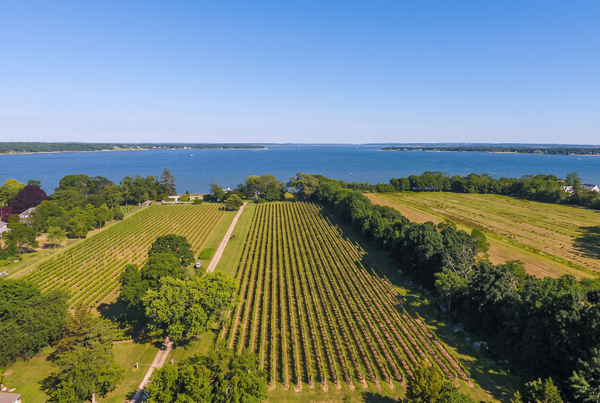
The sea runs this region. With Port Phillip Bay to the west, Western Port to the east, and Bass Strait to the south, no vineyard sits more than about 4.3 miles (7 kilometers) from water. The ocean works like a thermostat: summers stay mild, winters gentle, and the growing season stretches long into a soft autumn. That slow, even ripening is exactly what Pinot Noir and Chardonnay need to develop flavor while keeping bright natural acidity.
The trade-off is marginality. Wind, summer humidity, and rain at flowering, the spring stage when the vine sets its crop, can cut yields sharply, and they stay low even in good years, one reason the wines are rarely cheap. Elevation adds a second lever: red volcanic soils on the higher ground around Red Hill and Main Ridge give finer, later-ripening wines, while warmer, sandier sites toward the northern end of the peninsula produce riper, fuller styles.
4. Grapes and Styles
Pinot Noir is roughly half the vineyard. The regional style is silky and perfumed, with red cherry, raspberry, and a savory, earthy undertone; higher sites lean delicate and spicy, warmer ones darker and fuller. Most peak between 3 and 10 years, and pioneering producers like Main Ridge Estate have shown the best can go well beyond that.
Chardonnay is arguably just as strong: citrus and stone fruit with mineral drive and judicious oak, in a precise modern style that ages 5 to 10 years. Together the two grapes account for the large majority of plantings, and both also supply a small stream of quality traditional-method sparkling wine.
Pinot Gris is the local specialty third wheel, and better than its easy-drinking national reputation suggests. Producers here take it seriously, making both a crisp, Italian-leaning style, often labeled Grigio, and a richer, spicier, Alsace-leaning style labeled Gris. Small amounts of cool-climate Shiraz complete the range.
5. Reading the Label
"Mornington Peninsula" is a Geographical Indication, or GI, Australia's legally protected regional naming system; at least 85 percent of the grapes must be grown inside it, and the same 85 percent floor applies to any grape variety or vintage on the label. There are no official subregions, but locality names such as Red Hill, Main Ridge, Merricks, or Moorooduc appear constantly on labels, and they signal real style differences worth learning: cooler and finer on the high ground, riper and rounder lower down.
With Pinot Gris and Pinot Grigio, the producer's word choice is a style promise: Grigio for lighter and crisper, Gris for richer and rounder, the same grape either way. Single-vineyard bottlings are common here and usually mark a producer's top tier, priced accordingly.
6. A Short History
Vines were tried here in the 19th century and again in the 1950s, when a Seppelt planting at Dromana was wiped out by bushfire in 1967. The continuous modern era began only in 1972, with the first commercial winery, Main Ridge Estate, opening in 1978 and picking its first fruit in 1980. Doctors, lawyers, and business families planted boutique vineyards through the 1980s, and the region matured into a Pinot specialist, hosting its international Pinot Noir celebration every two years since 2003.
Did You Know? Every vineyard on the Mornington Peninsula lies within about 4.3 miles (7 kilometers) of the sea, with water on three sides: Port Phillip Bay, Western Port, and Bass Strait. Winemakers like to point out that the next landmass south of their breezes is, essentially, Antarctica.
7. At the Table
Mornington Pinot Noir is the ultimate crossover red, at home with duck breast, seared salmon or tuna, roast quail, and mushroom dishes; serve slightly cool, 57 to 61 degrees Fahrenheit (14 to 16 Celsius), and skip the decanter for all but the youngest, most structured bottles, since air dulls Pinot's perfume faster than it softens its tannin. Chardonnay pairs with the bay's own seafood, crab, scallops, and flathead, plus roast chicken, at about 52 degrees Fahrenheit (11 Celsius). Pinot Gris handles the awkward matches: pork with apples, mild curries, soft cheeses, served well chilled. Drink most bottles within 5 to 8 years; only top single-vineyard wines need longer.
Links
Official regional body (Mornington Peninsula Vignerons Association): https://morningtonpeninsulawine.com.au/
Wine Australia regional profile: https://www.wineaustralia.com/market-insights/regions-and-varieties/victoria-wines/mornington-peninsula