

One small county grows 4 percent of California’s wine and collects most of the fame.
1. At a Glance
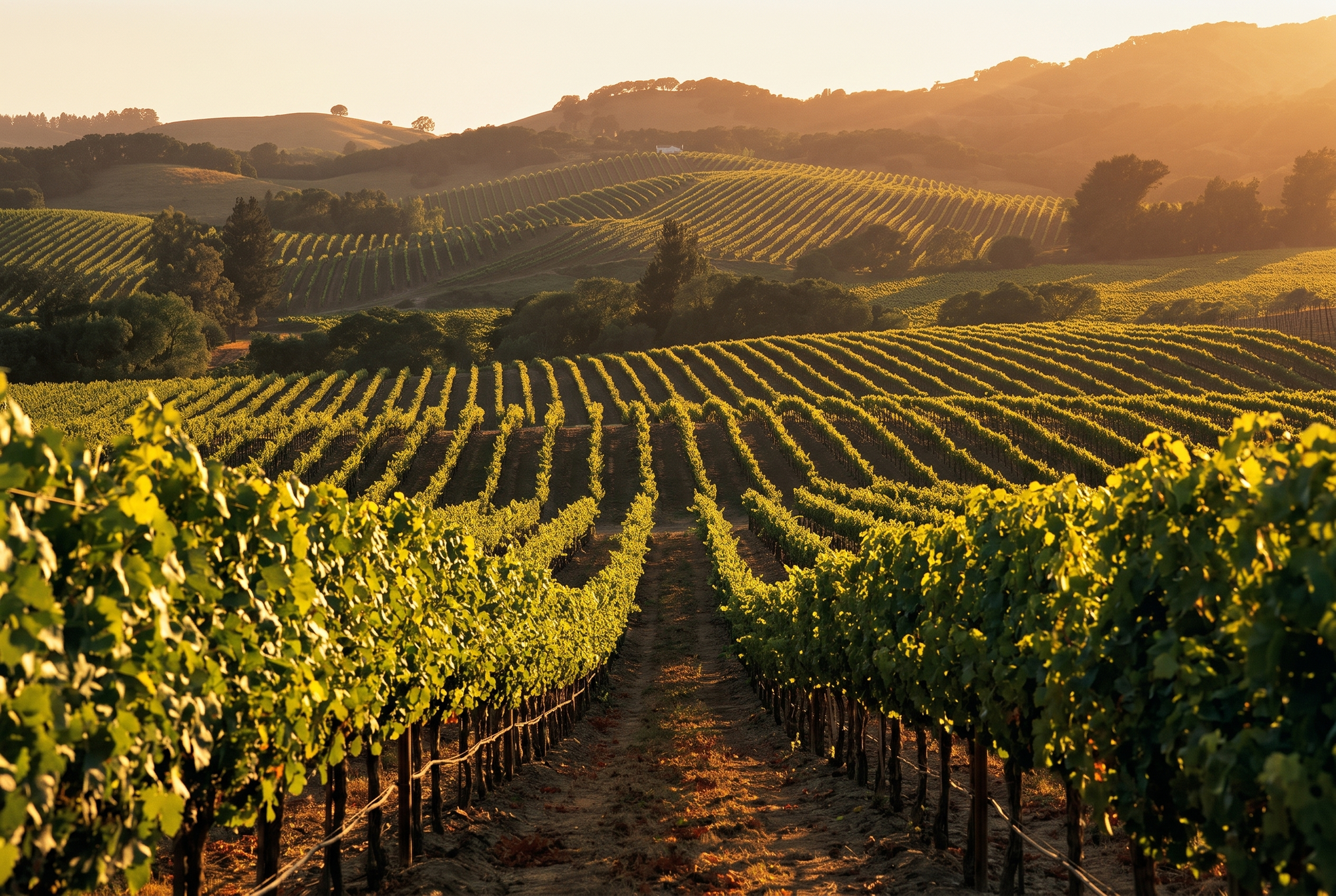
Napa Valley is a 30-mile (48-kilometer) trough between two mountain ranges, an hour north of San Francisco. In 1981 it became California’s first American Viticultural Area, or AVA, which is a grape-growing region with boundaries defined by the federal government. Today it is the reference point for American Cabernet Sauvignon, and its grapes and land are the most expensive in the country. The valley floor is barely 5 miles (8 kilometers) wide at its widest, yet it supports around 475 wineries and draws more than four million visitors a year (2024), which makes it one of the busiest stretches of farmland in America.
Country: United States
Main grapes: Cabernet Sauvignon, Chardonnay, Merlot, Sauvignon Blanc
Signature styles: Powerful, oak-aged Cabernet Sauvignon; rich Chardonnay; sparkling wine from Carneros
Climate: Mediterranean, with dry summers and cooling fog from San Pablo Bay
Key appellations: Napa Valley AVA plus 18 nested AVAs, including Oakville, Rutherford, Stags Leap District, and Howell Mountain
Vineyard area: About 45,000 acres (18,200 hectares) as of 2024
2. Why It Matters
Napa is where American wine proved itself. At the 1976 “Judgment of Paris” tasting, French judges ranked a Napa Cabernet and a Napa Chardonnay above famous wines from Bordeaux and Burgundy, and the fine-wine world has taken California seriously ever since. The valley produces only about 4 percent of California’s wine (2024), yet it sets the standard, and the prices, for the entire industry. When people anywhere in the world picture American wine, they are usually picturing this valley.
3. Land and Climate
The valley runs northwest between the Mayacamas Mountains on the west and the Vaca Range on the east. The Mayacamas block Pacific storms, so the growing season is almost rain-free and growers can let grapes hang until fully ripe.
Cold matters as much as heat here. San Pablo Bay pushes morning fog up the valley’s southern half, so Carneros in the south is cool enough for Pinot Noir while Calistoga in the north bakes at over 90°F (32°C). Nights everywhere drop sharply, which keeps acidity fresh in ripe grapes.
Soils change fast in a valley this narrow. Volcanic hillside soils are thin and stony, giving small berries and firm, gripping tannin. The gravelly benchlands of Rutherford and Oakville drain well and produce the balanced, dusty-textured Cabernet the valley is famous for. Nearly all of the year’s rain falls between November and April, so harvest season stays reliably dry.
4. Grapes and Styles
Cabernet Sauvignon covers roughly half the valley’s vines (2024) and defines its reds: dark and concentrated, tasting of blackcurrant and black cherry, with cedar and vanilla from aging in French oak barrels. Valley-floor versions are plush and drinkable young. Mountain versions from Howell Mountain or Mount Veeder are tighter and more tannic, built for the cellar. Merlot and Cabernet Franc appear both on their own and in Bordeaux-style blends, meaning wines that combine the traditional grapes of Bordeaux.
Chardonnay is the leading white. Expect a ripe, generous style, often with buttery notes from oak and from malolactic conversion, a winemaking step that softens sharp acids. Sauvignon Blanc is crisper and grassier, and honestly, Napa’s whites deserve more attention than they get. Cool, foggy Carneros also supplies Chardonnay and Pinot Noir for some of America’s best traditional-method sparkling wines, made the same way as Champagne. Zinfandel, Petite Sirah, and Cabernet Franc survive in older corners of the valley, and small bottlings of them sell out quickly to those who know.
5. Reading the Label
“Napa Valley” on a label means at least 85 percent of the grapes grew inside the AVA; that is the federal rule for any AVA name. A nested name such as “Oakville” or “Stags Leap District” means 85 percent came from that smaller zone, and a local law from 1990 requires “Napa Valley” to appear alongside it.
A grape name such as “Cabernet Sauvignon” guarantees at least 75 percent of that variety. “Estate bottled” means the winery grew, made, and bottled the wine within the AVA. Be careful with “Reserve”: in the United States the word has no legal definition, so it signals ambition, not a guarantee. Vineyard names such as To Kalon carry more information than most front-label flourishes; producers pay dearly for that fruit and say so.
6. A Short History
George Yount planted the valley’s first vines in 1838, and Charles Krug opened a commercial winery in 1861. Phylloxera, a root-eating insect, and then Prohibition nearly wiped the industry out. The modern era began when Robert Mondavi built his Oakville winery in 1966, and the 1976 Paris tasting made Napa world news. A 1968 law, the Agricultural Preserve, locked the valley floor into farming and saved it from suburbs.
Did You Know? Napa Valley produces only about 4 percent of California’s wine (2024), yet its grapes sell for more than three times the statewide average price per ton. No other American region packs so much value into so little acreage.
7. At the Table
Napa Cabernet was made for beef. Its firm tannins latch onto the fat in a ribeye, grilled lamb, or a burger with aged cheddar, and both wine and food taste better for it. Serve reds at 60 to 65°F (16 to 18°C), a little cooler than most American rooms. Young Cabernet opens up with an hour in a decanter, and the best bottles improve for 15 to 30 years.
Pour the Chardonnay at 50 to 55°F (10 to 13°C) with roast chicken or Dungeness crab. Sauvignon Blanc is the local answer to goat cheese and spring vegetables. One local trick: a side dish with a bitter edge, such as charred broccolini or grilled radicchio, makes young Cabernet tannins feel noticeably softer.
Links
Trade association (Napa Valley Vintners): https://napavintners.com
Regional wine and visitor portal: https://napavalley.wine
Federal AVA regulator (TTB): https://www.ttb.gov/regulated-commodities/beverage-alcohol/wine/american-viticultural-area-ava