

Three climates collide in a region that pours pilgrims free wine.
1. At a Glance
Navarra runs from the Pyrenees down to the Ebro River valley, and in barely 60 miles (100 kilometers) it squeezes in Atlantic, continental, and Mediterranean climates. That diversity built Spain's classic rosado (rosé) tradition, sustains a renaissance of old-vine Garnacha, and supports everything from barrel-fermented Chardonnay to honeyed sweet Moscatel.
Country: Spain (north, between the Pyrenees and the Ebro River)
Main grapes. Garnacha, Tempranillo, Cabernet Sauvignon, Merlot, Chardonnay, Moscatel de Grano Menudo
Signature styles: Deep-colored dry rosado; fresh Garnacha reds; sweet Moscatel
Climate: Atlantic in the north, Mediterranean in the south, continental in between
Key appellations: DO Navarra and its five subzones; several Vino de Pago estates
Vineyard area: Just over 10,000 hectares (25,000 acres) as of 2025
2. Why It Matters
For half a century Navarra was Spain's rosé region, and its Garnacha rosados remain a benchmark: darker, fruitier, and more filling than pale Provençal pink, and typically among the cheapest serious rosés on any shelf. But the region's range is the real story. It embraced French grapes decades before most of Spain, and it sits beside Rioja (part of which actually lies inside Navarra's borders) while selling comparable quality for noticeably less money.
3. Land and Climate
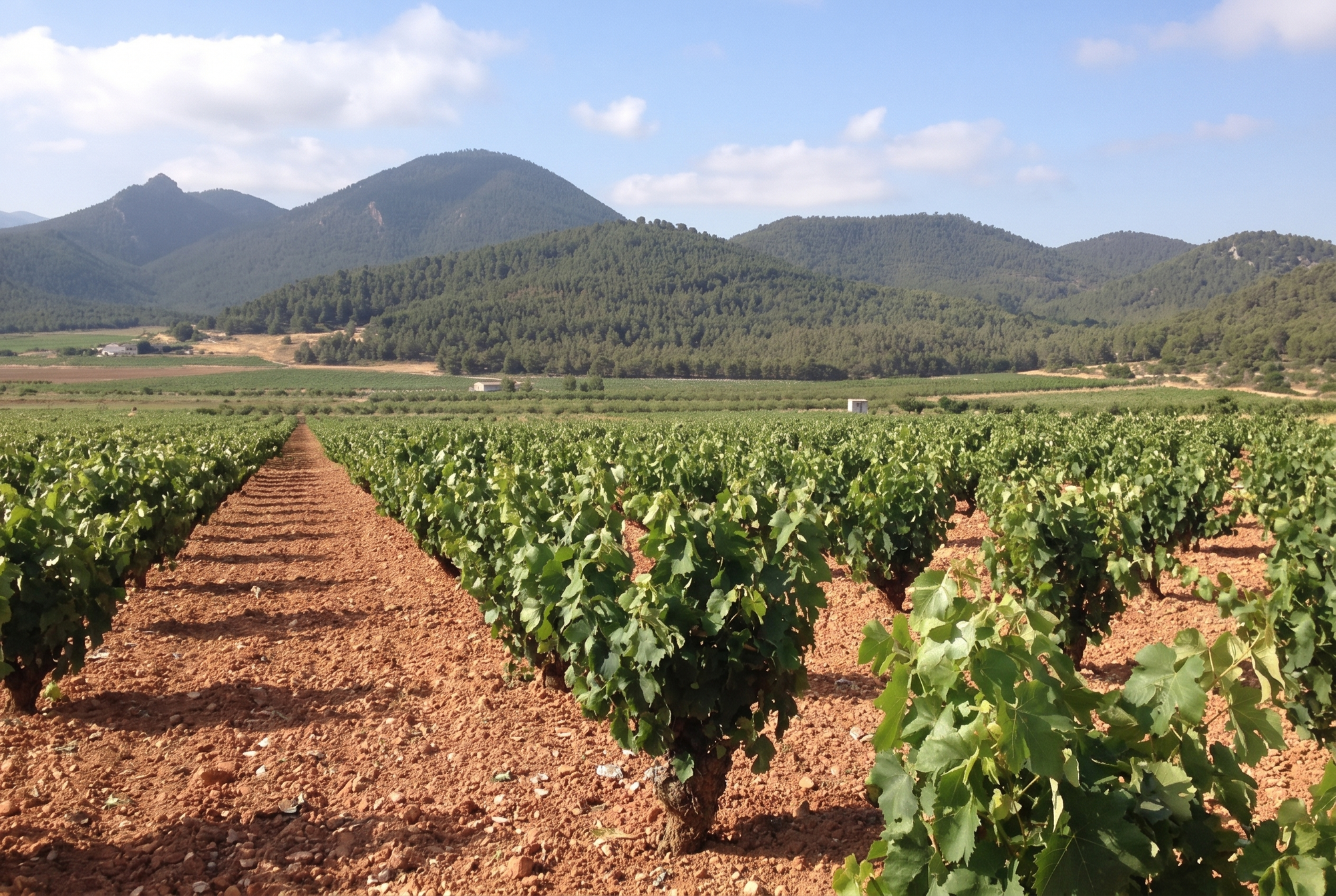
Few wine regions change so much so fast on a map. The north, near Pamplona, feels the Bay of Biscay: cooler, wetter, and green, it keeps acidity high and alcohol moderate, ideal for whites and rosado. The center, around Olite, is transitional. The south, Ribera Baja along the Ebro, is semi-arid and Mediterranean, and it ripens powerful reds.
Vineyards lie between roughly 820 and 1,840 feet (250 and 560 meters); the altitude of the northern subzones slows ripening and preserves freshness, which is why Navarran Garnacha tastes brighter and less alcoholic than versions from hotter Spanish regions. Rainfall runs from about 32 inches (800 millimeters) in the north to barely 14 inches (360 millimeters) in the far south, a spread few regions can match. Soils are mostly chalky with gravel, turning sandier in the far south, and they drain well enough to keep yields naturally modest.
4. Grapes and Styles
Rosado first, because it built the brand. Made mainly from Garnacha by the saignée method (drawing juice off the crushed grapes after brief skin contact), Navarran rosé is raspberry-pink, dry, and structured enough for a full meal. Locals call it gastronomic rosé and mean it as a rebuke to watery fashion; producing it this way uses far more grapes per bottle than a red, so the style is deliberate, never a byproduct.
Reds now dominate production. Tempranillo is the most planted grape at around 34 to 38% of the vineyard (2010s-2020s registry figures), but old-vine Garnacha is the region's soul: aromatic, spicy, full of ripe red fruit. In my view those mountain Garnachas, not the rosados, are now Navarra's most exciting wines. Cabernet Sauvignon and Merlot, long established here, appear in sturdy blends.
Whites are a small, worthwhile slice: crisp or barrel-fermented Chardonnay, and Moscatel de Grano Menudo made into perfumed sweet wines. The sweet Moscatels, golden and orange-blossom scented, are among Spain's least-known dessert wines and rarely cost much, since the grape covers only a sliver of the vineyard.
5. Reading the Label
"DO Navarra" on the label means the wine follows the rules of the region's Denominación de Origen, Spain's protected-region system, in force since 1933. A subzone name such as Baja Montaña, Tierra Estella, or Ribera Baja tells you north (fresher) versus south (riper), the single most useful clue on a Navarran bottle.
Aging categories follow the national pattern: joven (young, unoaked), Crianza (at least two years' maturing, with time in oak barrels), Reserva (three years), Gran Reserva (five). "Rosado" is rosé; expect it deeper in color than French pink. A "Pago" designation (as in Pago de Arínzano or Otazu) marks a single estate elevated to its own appellation.
6. A Short History
Wine funded monasteries here along the Camino de Santiago from the Middle Ages, and written records of Navarran rosado reach back to the 16th century. Phylloxera, the vine-killing louse, arrived in the 1890s just after Navarra had boomed selling wine to a devastated France, and destroyed most of the vineyard. Village records used names like Bermejo and Clarete for the pink wines long before rosado became the standard term. The DO arrived in 1933, its regulating council in 1958; French varieties and modern rosado technology defined the late 20th century.
Did You Know? Since 1991, Bodegas Irache in Ayegui has kept a public wine tap on its wall facing the Camino de Santiago, letting pilgrims pour themselves a free cup of red as they walk, an echo of the wine once handed out by the neighboring monastery.
8. At the Table
Navarra grows Spain's most prized white asparagus and piquillo peppers, and its own rosado is the textbook partner for both, as it is for paella and grilled vegetables. Serve rosado colder than red but not ice-cold, around 50°F (10°C). Garnacha reds shine with chistorra sausage, roast lamb, and bean stews; pour them at 60°F (16°C).
Sweet Moscatel with cheese or almond desserts closes a meal well. Most rosado should be drunk within a year or two of harvest, while its color is bright and its fruit fresh; good Garnacha and Reserva reds keep for a decade, and only the biggest need decanting. If a list offers a rosado more than three years old, pick something else.
Links
Consejo Regulador DO Navarra (regulatory body): https://navarrawine.com/en/
Wines from Spain (ICEX) Navarra profile: https://www.foodswinesfromspain.com/en/wine/regions/green-spain/navarra-do