

Hot afternoons, cold nights, and the biggest daily temperature swings in California wine.
1. At a Glance
Paso Robles sits halfway between San Francisco and Los Angeles, inland from the Pacific behind the Santa Lucia Mountains. It is big, sunny, and unbuttoned: over 60 grape varieties grow across roughly 40,000 acres (16,200 hectares) as of 2024, and most wineries are small family operations. Cabernet Sauvignon pays the bills, Rhône-style blends win the critics, and Zinfandel keeps the region’s oldest vines alive. If Napa is a tailored suit, Paso is boots and a dusty pickup, and the wines are priced accordingly.
Country: United States
Main grapes: Cabernet Sauvignon, Syrah, Grenache, Mourvèdre, Zinfandel, Viognier
Signature styles: Bold Cabernet Sauvignon; Rhône-style red blends; old-vine Zinfandel
Climate: Warm Mediterranean with day-to-night temperature drops of up to 50°F (28°C)
Key appellations: Paso Robles AVA with 11 nested districts, including Adelaida, Willow Creek, Templeton Gap, and Estrella
Vineyard area: About 40,000 acres (16,200 hectares) as of 2024
2. Why It Matters
Paso Robles is where California wine loosened its tie. Freed from Napa-level land prices, winemakers here planted whatever excited them, and the region became America’s champion of Rhône grapes like Syrah, Grenache, and Mourvèdre, a movement sealed when Château de Beaucastel of Châteauneuf-du-Pape chose Paso for its American estate, Tablas Creek. The wines are generous, the prices mostly are not painful, and the experimentation is constant. Most wineries here produce fewer than 8,000 cases a year (2024), so the tasting room, not the supermarket shelf, is where the most interesting bottles live.
3. Land and Climate
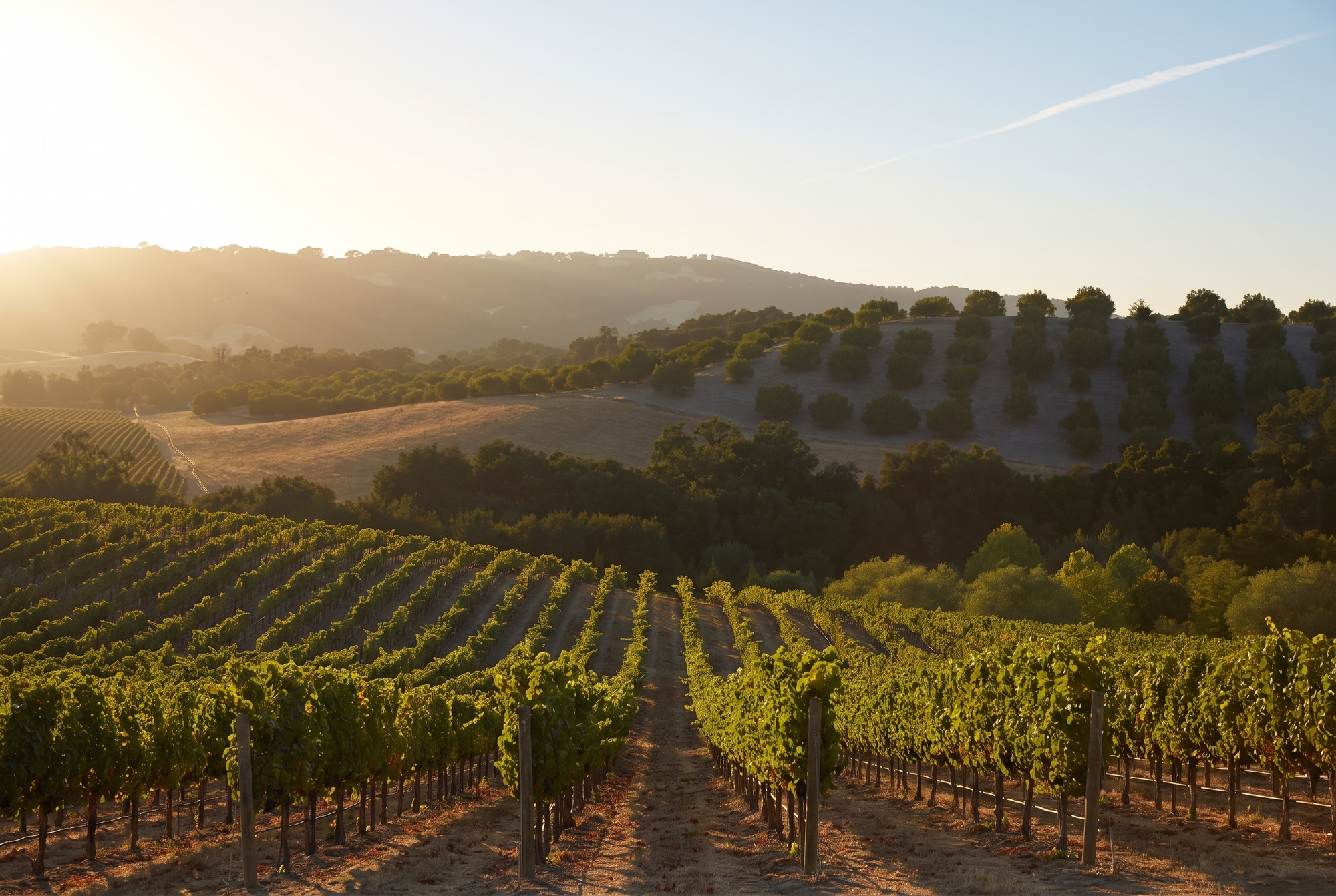
The Santa Lucia Mountains stand between Paso and the ocean, trapping heat; summer afternoons regularly pass 95°F (35°C). But one dip in the range, the Templeton Gap, funnels cold marine air inland every evening, and temperatures can plunge as much as 50°F (28°C) overnight, the largest day-to-night swing in California wine country. Heat builds sugar and flavor during the day; cold nights save acidity and aroma. That combination is why Paso reds taste ripe yet rarely flabby.
The west side is hilly, cooler, wetter, and rich in calcareous soil, meaning soil laced with chalky limestone that holds moisture and keeps wines fresh. The flatter east side is hotter and drier, with sandy and clay loams suited to large-scale Cabernet. Rainfall follows the same split, roughly 20 inches (510 millimeters) a year in the western hills and as little as 5 inches (130 millimeters) in the far east.
4. Grapes and Styles
Cabernet Sauvignon covers nearly half of Paso’s vineyards (2024) and makes a plush, sun-filled style: blackberry and cocoa, soft tannins, ready young. The east-side districts supply most of it, often at prices Napa abandoned decades ago.
The Rhône movement defines the top end, and Paso’s Rhône blends, more than its Cabernets, show the region at its best. Syrah from cooler west-side districts is dark and peppery; Grenache brings bright strawberry lift; blends labeled GSM (Grenache, Syrah, Mourvèdre) balance all three. Zinfandel is the heritage grape, grown here since the 1880s, delivering brambly fruit and spice from head-trained old vines. Whites are a small but improving minority: honeyed Viognier, plus Roussanne and Marsanne in white Rhône blends. Spanish and Italian varieties such as Tempranillo and Vermentino are gaining ground, part of the region’s standing habit of trying everything once.
5. Reading the Label
“Paso Robles” on a label means at least 85 percent of the grapes grew in the AVA, the federally defined region. Since 2014 the region has also had 11 nested district AVAs, such as “Adelaida District” or “Willow Creek District”; these follow the same 85 percent rule and signal real style differences, with west-side districts generally cooler and more structured.
A grape name guarantees 75 percent of that variety, so a “Syrah” may legally include other grapes. Blends often carry proprietary names instead, with the varieties listed on the back label, so turn the bottle around before judging it. “Old Vine” and “Reserve” have no legal definitions; producers who mean it will state vine age or vineyard names outright.
6. A Short History
Mission grapes arrived with Franciscan missionaries in the late 1700s, and Zinfandel took root in the 1880s; a handful of those plantings still bear fruit today, farmed by descendants of the original families. The modern era opened in the 1960s and 1970s with pioneering Cabernet and Rhône plantings, and Paso became an AVA in 1983 with only around 5,000 acres (2,000 hectares) of vines. The Beaucastel-Tablas Creek partnership of 1989 legitimized the Rhône movement, and in 2014 the region was carved into 11 districts.
Did You Know? On a summer day in Paso Robles the temperature can fall as much as 50°F (28°C) between mid-afternoon and dawn, the biggest day-to-night swing of any major California wine region. Locals joke that you can pick a season, as long as it is within one day.
7. At the Table
These are wines for food with weight, and the region’s ranching heritage supplies exactly that. GSM blends and Syrah shine with braised lamb shanks, sausages, or Santa Maria-style tri-tip, the barbecued beef specialty of California’s Central Coast. Zinfandel is the barbecue wine proper, happy next to ribs and smoky sauces. Serve reds at 60 to 65°F (16 to 18°C); many are high in alcohol, and serving them too warm makes them taste hot.
Most Paso reds drink best in their first decade. Decant young flagship blends for an hour. Chill Viognier lightly, to about 50°F (10°C), and pour it with roast chicken or soft cheeses. White Rhône blends handle richer dishes than most whites can.
Links
Producers’ association (Paso Robles Wine Country Alliance): https://pasowine.com
Federal AVA regulator (TTB): https://www.ttb.gov/regulated-commodities/beverage-alcohol/wine/american-viticultural-area-ava