

No wine region on earth grows more Riesling than this warm corridor.
At a Glance
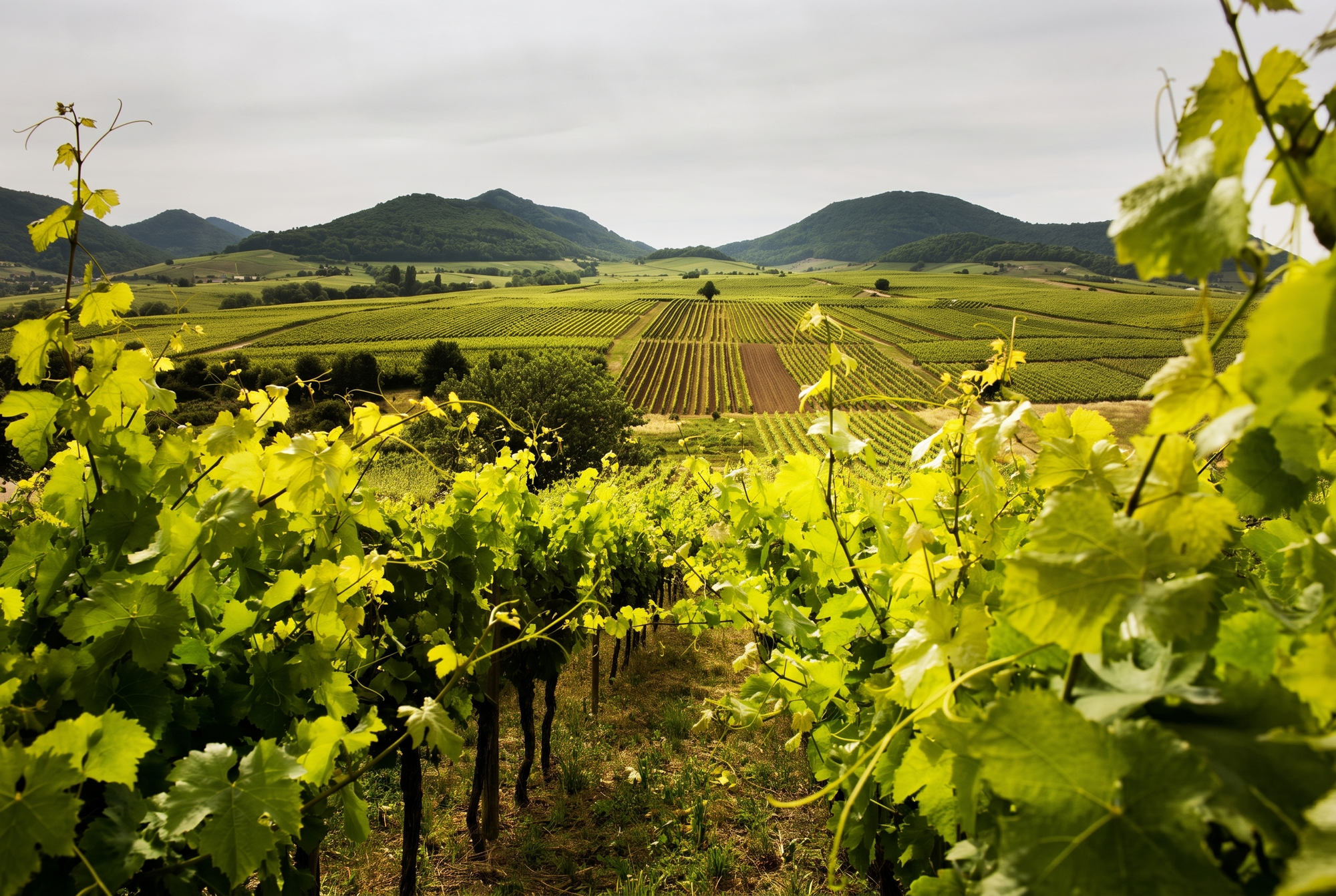
The Pfalz runs about 50 miles (80 kilometers) along the eastern flank of the Haardt hills, from the edge of Rheinhessen to the French border, where the same landscape continues as Alsace. Warmth, dryness, and deep soils make it Germany's most reliable ripening zone and its second-largest wine region.
Country: Germany
Main grapes: Riesling, Dornfelder, Grauburgunder, Spätburgunder, Weißburgunder, Sauvignon Blanc
Signature styles: Dry Riesling; full-bodied Pinot-family whites; substantial reds; single-variety rosé (Weißherbst)
Climate: Warm, sunny, and dry in the rain shadow of the Pfälzerwald forest
Key appellations: One protected origin, Pfalz, split between the Mittelhaardt (Forst, Deidesheim, Wachenheim) and the Südliche Weinstraße
Vineyard area: About 58,600 acres (23,700 hectares) as of 2022
Why It Matters
Riesling is the headline: about 14,800 acres (5,970 hectares) in 2022, more than in any other wine region anywhere. The Pfalz also carries roughly 40 percent of Germany's Sauvignon Blanc and about half its Merlot and Cabernet Sauvignon (2025 figures from the German Wine Institute), which tells you how warm it is. This is the engine room of modern dry German wine, big enough to fill supermarket shelves and good enough, in the Mittelhaardt, to fill auction catalogs.
Land and Climate
The Pfälzerwald, a low forested mountain wall, takes the rain. Its eastern foot, where the vines sit, is one of the driest and warmest strips in Germany; almonds and figs grow in village gardens, and the almond bloom in March draws crowds. For the glass, warmth means ripeness without struggle: fuller body, softer acids, and a dependability with red grapes that is rare this far north.
Soils are a patchwork of sandstone, limestone, loam, and loess, with one famous oddity: veins of black basalt around Forst that hold heat and give the village's Rieslings, from sites like Pechstein, a smoky stamp. The Mittelhaardt, the central stretch around Deidesheim and Forst, combines the best drainage with the oldest reputations. The Südliche Weinstraße to the south, once bulk country, now supplies much of the region's best-value Pinot Blanc and Pinot Gris.
Grapes and Styles
White grapes hold 61 percent of the land (2022). Pfalz Riesling is the muscular version of the grape: dry, ripe, peach and grapefruit over spice at 12 to 13 percent alcohol, with the Mittelhaardt's basalt and limestone sites adding grip and longevity. The Pinot family thrives here. Weißburgunder (Pinot Blanc) gives quietly excellent dry whites and is, in my experience, the region's most reliable bargain; Grauburgunder (Pinot Gris) runs richer, and Chardonnay and Sauvignon Blanc are expanding fast.
Reds matter more than in most of Germany, at 39 percent of plantings. Dornfelder delivers deep color and juicy plum, best young and cool. Spätburgunder (Pinot Noir) from limestone can be genuinely fine, and the warmest sites ripen Merlot, Cabernet Sauvignon, and Syrah. Weißherbst, a rosé pressed from a single red variety, is the local warm-evening staple. Sekt, bottle-fermented sparkling wine, is a fast-growing sideline, and aromatic old-timers such as Scheurebe, Gewürztraminer, and Muskateller keep a perfumed corner of the market alive. Late-harvest and dessert styles still appear in ripe years, but the region drinks and sells overwhelmingly dry.
Reading the Label
Qualitätswein means officially tested regional wine. Prädikatswein adds a ripeness rank from grape sugar at harvest: Kabinett, Spätlese, Auslese, then the rare dessert tiers Beerenauslese, Eiswein, and Trockenbeerenauslese. Pfalz estates increasingly keep ripeness terms off their dry wines, preferring a clean varietal label plus trocken (dry); feinherb means off-dry.
Grosses Gewächs (GG) marks dry wine from a top classified site, a designation used by members of the VDP, the association of leading German estates; Forster Pechstein GG shows the format, site plus village plus tier. Village-and-vineyard names follow the standard pattern, so Deidesheimer Hohenmorgen is the Hohenmorgen site in Deidesheim. One friendly note: a one-liter bottle of Pfalz white at a low price is not a defect but a tradition, the everyday pour of the region's wine pubs.
A Short History
Romans grew wine here at scale, and church and princely estates carried it through the Middle Ages; Bavaria administered the region after 1816. In 1935 the Pfalz opened the Deutsche Weinstraße, the German Wine Route, a 53-mile (85-kilometer) touring road that still anchors its tourism. Decades of postwar bulk production followed, until a dry-wine revival that gathered force from the 1980s moved the Pfalz from volume supplier to trendsetter.
Did You Know? The Historical Museum of the Palatinate in Speyer displays the world's oldest unopened bottle of wine, found in a Roman tomb nearby in 1867 and dated to about A.D. 325. A layer of olive oil and a wax seal have kept the contents liquid for seventeen centuries. Curators refuse to open it.
At the Table
The regional dish is Saumagen, pork and potatoes cooked in a casing, and dry Riesling is its standard partner; acidity against richness is the whole game. Flammkuchen, the thin cream-and-onion tart shared with Alsace, suits Weißburgunder or a cool Weißherbst. Bratwurst and grilled meats take Dornfelder or Spätburgunder, and Sauvignon Blanc handles salads and goat cheese.
Serve dry whites at 48 to 52°F (9 to 11°C) and reds at 57 to 61°F (14 to 16°C). Most bottles are built for the next one to five years. The exceptions are GG Rieslings and top Spätburgunders, which improve for a decade or more and open up with an hour of air when young.
Links
Official regional wine organization and tourism (Pfalzwein e.V.): https://www.pfalz.de
National wine institute (Wines of Germany / DWI): https://www.winesofgermany.com