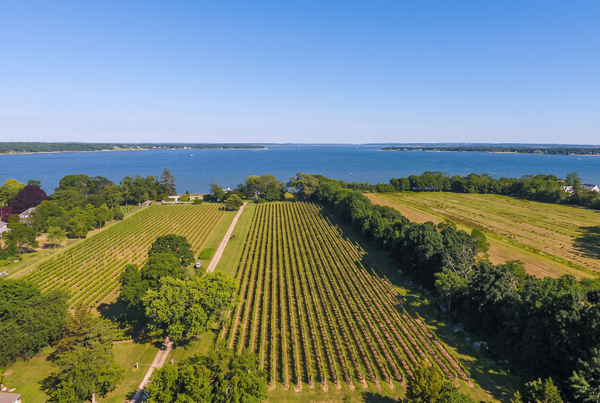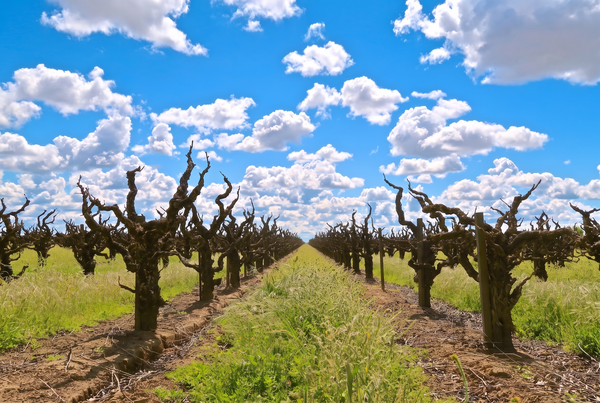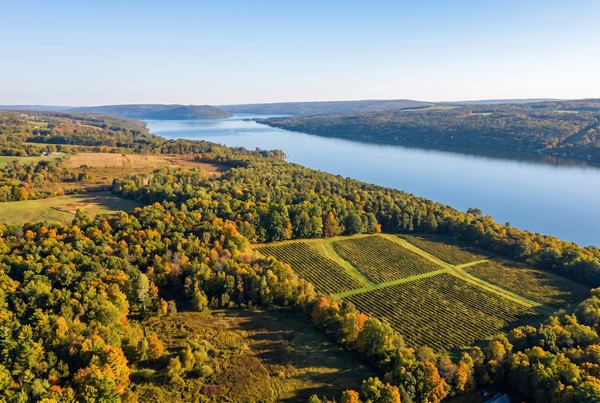

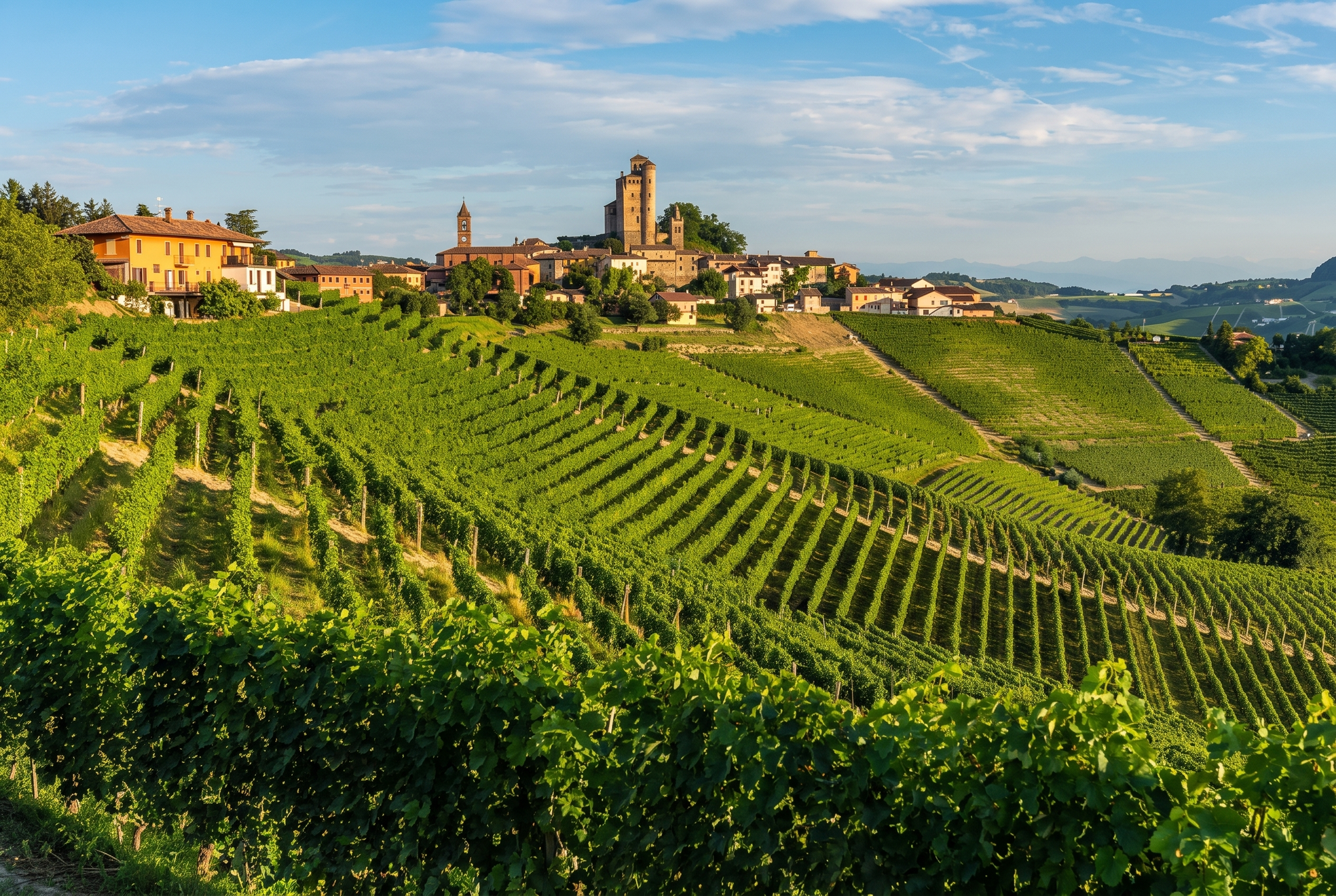
Fog-shrouded hills give Nebbiolo the slow ripening that makes Barolo and Barbaresco.
1. At a Glance
Piemonte (Piedmont) sits in Italy's northwest, ringed by the Alps, its name meaning "foot of the mountains." It is one of the two undisputed peaks of Italian fine wine. The Langhe hills here produce Barolo and Barbaresco, both from a single demanding grape: Nebbiolo.
Country: Italy
Main grapes: Nebbiolo, Barbera, Dolcetto, Moscato, Cortese
Signature styles: Powerful age-worthy red, everyday red, sweet sparkling, dry white
Climate: Continental, with autumn fog and wide temperature swings
Key appellations: Barolo DOCG, Barbaresco DOCG, Barbera d'Asti DOCG, Asti DOCG
Vineyard area: About 44,000 hectares registered (Istat, 2024 harvest)
2. Why It Matters
Barolo and Barbaresco are two of the greatest red wines on earth, capable of aging for decades and prized by collectors worldwide. Both are 100% Nebbiolo. Piemonte is where this notoriously fussy grape, which ripens late and grows well almost nowhere else, reaches its full height. The region is Italy's benchmark for terroir, the idea that a wine tastes of a specific place.
3. Land and Climate
The Langhe and Roero hills are Nebbiolo country. Autumn here brings thick fog (nebbia, the likely source of the grape's name) that blankets the valleys while the vines sit above it on the slopes. Nebbiolo ripens very late, into late October, so it needs those long, cool autumns to develop its perfume and firm tannins without losing acidity. The soils split the styles: calcareous marl (a chalky clay) in the western Barolo villages gives more perfumed, earlier-drinking wine, while sandstone-rich eastern villages give bigger, slower wines. This is why individual villages, and now individual vineyards, are named on labels. In Piemonte, a few hundred yards can change the wine.
4. Grapes and Styles
Serious reds. Nebbiolo makes Barolo and Barbaresco: pale garnet, deceptively light-looking, but powerfully tannic and high in acid, with tar, rose, cherry, and truffle. These need years to soften.
Everyday reds. Barbera is juicy, deep-colored, and low in tannin, the region's daily drinker. Dolcetto is softer and fruitier still, meant to be drunk young.
Whites and sparkling. Moscato d'Asti and sparkling Asti are gently sweet, low-alcohol, grapey wines from the Moscato grape. Gavi, from the Cortese grape, is a crisp dry white.
5. Reading the Label
Piemonte labels name the place, not the grape, for its top wines: "Barolo" and "Barbaresco" are always Nebbiolo, so the grape is not printed. For nearly everything else, the format is grape-plus-place: "Barbera d'Asti," "Dolcetto d'Alba," "Moscato d'Asti." "DOCG" is the top quality tier. The newest thing to know is the MGA system (Menzioni Geografiche Aggiuntive), official single-vineyard names now allowed on Barolo and Barbaresco labels, like "Cannubi" or "Rabajà." A vineyard name signals a specific, usually pricier, bottling. "Riserva" means longer aging.
6. A Short History
Barolo took its modern shape in the mid-1800s, when French-trained winemaking turned a sweetish local wine into a dry, powerful, ageable red favored by the Savoy royal court. The late 20th century brought the "Barolo Wars," a fierce split between traditionalists (long aging in large old casks) and modernists (shorter maceration, small new barrels). That debate has since cooled into a broad middle ground, but it pushed quality upward across the whole zone and made Barolo internationally famous.
Did You Know? Barolo is nicknamed "the wine of kings and the king of wines." The phrase dates to the 1800s, when the House of Savoy, Italy's royal family, championed the newly dry style, and it stuck as the wine's reputation spread.
7. At the Table
Barolo and Barbaresco demand rich food: braised beef (brasato al Barolo is the classic), game, truffles, and aged cheese. Their high tannin and acidity cut through fat. Serve them at about 64°F (18°C), and decant young bottles for an hour or two, since air softens the grip. Barbera and Dolcetto are the weeknight wines, good with pasta, salami, and pizza, served a touch cooler. Moscato d'Asti, lightly sweet and fizzy, is a brilliant match for fruit tart and hazelnut desserts. Barolo can age 20 years or more; drink Dolcetto within two or three.
Links
Regulatory body (Consorzio di Tutela Barolo Barbaresco Alba Langhe e Dogliani): https://www.langhevini.it/en/
Official tourism board: https://www.visitpiemonte.com/en