

France's oldest vineyards, and the world's only research center devoted to rosé.
1. At a Glance
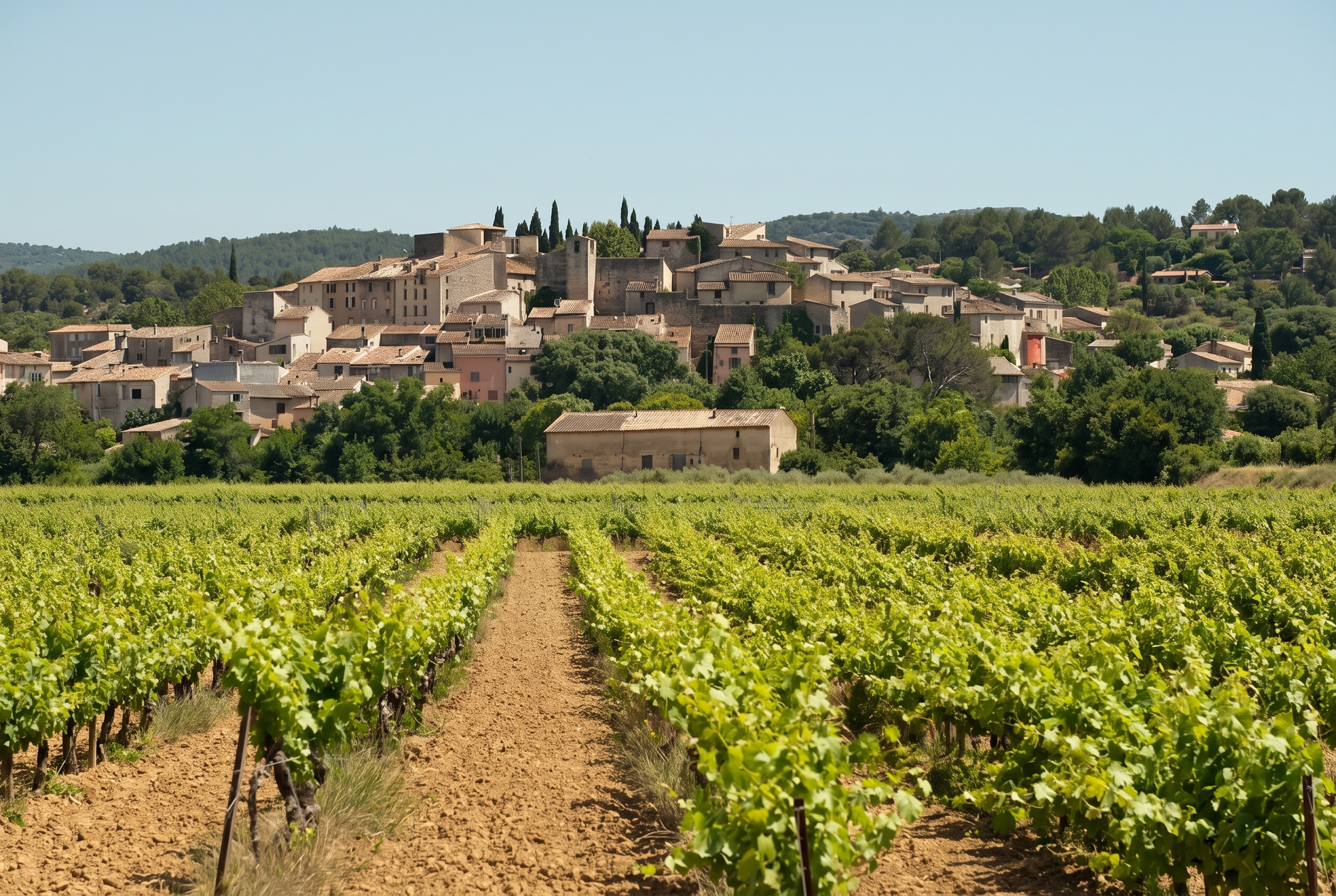
Provence stretches from the countryside around Aix-en-Provence east toward Nice, between the Mediterranean and the first Alpine foothills. Its three main appellations (an appellation is a legally defined growing zone with its own rules) covered about 68,700 acres, or 27,800 hectares, as of 2024, and roughly 90 percent of what they produce is pale, dry rosé. Around that pink core sit small, serious satellites: dark, age-worthy Bandol reds and the saline whites of Cassis.
Country: France
Main grapes: Grenache, Cinsault, Syrah, Mourvèdre, Tibouren; Rolle (Vermentino) and Clairette for whites
Signature styles: Pale dry rosé, structured Bandol reds, Mediterranean whites
Climate: Mediterranean, swept by the mistral wind
Key appellations: Côtes de Provence, Coteaux d'Aix-en-Provence, Coteaux Varois en Provence, Bandol, Cassis, Palette, Bellet
Vineyard area: About 68,700 acres (27,800 hectares) in the three main appellations as of 2024
2. Why It Matters
Provence turned pale, dry rosé from a beach afterthought into a global luxury category, and it remains the benchmark: its three main appellations produced about 134 million bottles of appellation rosé in 2024, over 40 percent of France's appellation rosé and roughly 5 percent of the world's rosé. It is also where French wine began, with Greek settlers around 600 BC, which gives the pink stuff a 2,600-year pedigree.
3. Land and Climate
The numbers behind the style: around 2,800 hours of sunshine a year, low rainfall, and the mistral, a cold, dry northerly wind that dries the vines after rain. Healthy grapes need little spraying, which is why organic farming is widespread, and cool nights plus the wind preserve the acidity that keeps rosé fresh in a hot place.
Geology splits the region in two. The west, around Mont Sainte-Victoire and Aix, is limestone hill country. The east, in the Maures massif toward Saint-Tropez, is crystalline schist and granite. Altitude matters too: the Coteaux Varois vineyards sit around 1,150 feet (350 meters), and their height reads as extra freshness in the glass. Drought is the growing worry, and irrigation is now permitted under strict conditions. Urban sprawl along the coast competes for land too, which caps any real expansion.
4. Grapes and Styles
Rosé is the main event, built mostly on Grenache and Cinsault with Syrah, Mourvèdre, and Tibouren, an old local grape prized for the aromatic, faintly earthy edge it gives a blend. The pale color comes from technique: direct pressing or only hours of skin contact, then cold fermentation, often from grapes picked at night. The result is dry, with red-berry and citrus fruit and a faint grip in the texture. This is engineered wine in the best sense. Looking ahead, the appellations have admitted heat-resistant newcomers since December 2021, including the old local Rousseli and Greek varieties such as Agiorgitiko and Xinomavro, insurance against hotter, drier summers.
The reds peak in Bandol, where Mourvèdre on terraced hillsides gives dark, leathery wines that need 5 to 15 years. Coteaux d'Aix and Les Baux-de-Provence make gutsy Grenache-Syrah reds. The whites, from Rolle and Clairette, and above all the herbal, saline whites of the little port of Cassis, are tiny in volume and deserve far more attention than they get.
5. Reading the Label
Most bottles carry one of the three big appellations: Côtes de Provence (much the largest), Coteaux d'Aix-en-Provence, or Coteaux Varois en Provence. A suffix such as Côtes de Provence Sainte-Victoire, La Londe, Fréjus, Pierrefeu, or Notre-Dame des Anges marks a stricter, smaller subzone and usually better wine.
"Cru classé" on a Côtes de Provence label refers to a 1955 list of estates, 18 of which still operate; it is a piece of history attached to the whole property, not a guarantee about the bottle in your hand. Bandol, Cassis, Palette, and Bellet are separate, standalone appellations. For rosé, the vintage rule is simple: buy the newest one on the shelf.
6. A Short History
Greek settlers from Phocaea founded Marseille around 600 BC and planted vines, the start of wine in France; the Romans spread it through their Provincia, the name that became Provence. Monks and, later, the great Provençal families kept vineyards alive through the centuries, but for most of the 20th century the region shipped forgettable pink wine to beach tourists. The turn came from the 1970s onward: appellation status in 1977 for Côtes de Provence, a collective bet on quality rosé, and premium brands that made pale pink fashionable worldwide.
Did You Know? Since 1999 the village of Vidauban has hosted the Centre du Rosé, the world's only research center dedicated entirely to rosé wine. Its scientists study color, aroma chemistry, grape choices, and winemaking technique, then share the findings with the region's cellars, one reason Provençal rosé got so consistently good.
7. At the Table
The local food is the argument for the wine. Rosé handles garlic and olive oil better than most reds: aïoli, tapenade, pissaladière, salade niçoise, grilled sea bass, even soupe au pistou. Bouillabaisse is classic with either rosé or a white Cassis, and goat cheeses from the hills flatter the whites generally; serve those a touch warmer than the rosé. Bandol red belongs with lamb daube or wild boar, and it is the one Provençal wine that wants a decant when young.
Serve rosé at 46 to 50°F (8 to 10°C) and drink it within a year or two; only a handful of ambitious cuvées improve beyond that. Serve Bandol red at 61 to 64°F (16 to 18°C) and give the good ones a decade.
Links
Conseil Interprofessionnel des Vins de Provence (regulatory body): https://www.vinsdeprovence.com/
Provence-Alpes-Côte d'Azur Tourism (official tourism board): https://provence-alpes-cotedazur.com/en/