

The heel of Italy long fueled Europe's blends; now Primitivo carries its name abroad.
1. At a Glance
Puglia (Apulia) is the long heel of the Italian boot, a hot, flat, sun-drenched region between two seas. It has always made vast quantities of ripe red wine. The recent change is that its two great local grapes, Primitivo and Negroamaro, now sell under their own names as good-value, full-bodied reds.
Country: Italy
Main grapes: Primitivo, Negroamaro, Nero di Troia, Bombino
Signature styles: Warm ripe red, rosé, some white
Climate: Hot Mediterranean, dry, with strong sun and sea breezes
Key appellations: Primitivo di Manduria DOC, Salice Salentino DOC, Castel del Monte DOCG
Vineyard area: About 94,000 hectares registered (Istat, 2024 harvest)
2. Why It Matters
Puglia is one of Italy's biggest wine producers by volume and, for decades, the source of anonymous bulk wine shipped north to beef up thinner blends. Its modern claim to fame is Primitivo, genetically the same grape as California's Zinfandel, which has made the region a go-to for ripe, affordable, crowd-pleasing reds.
3. Land and Climate
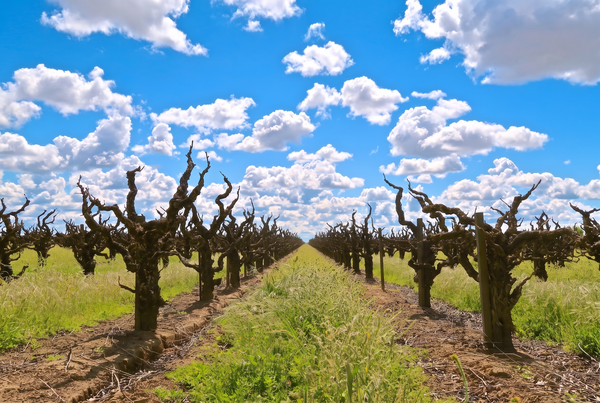
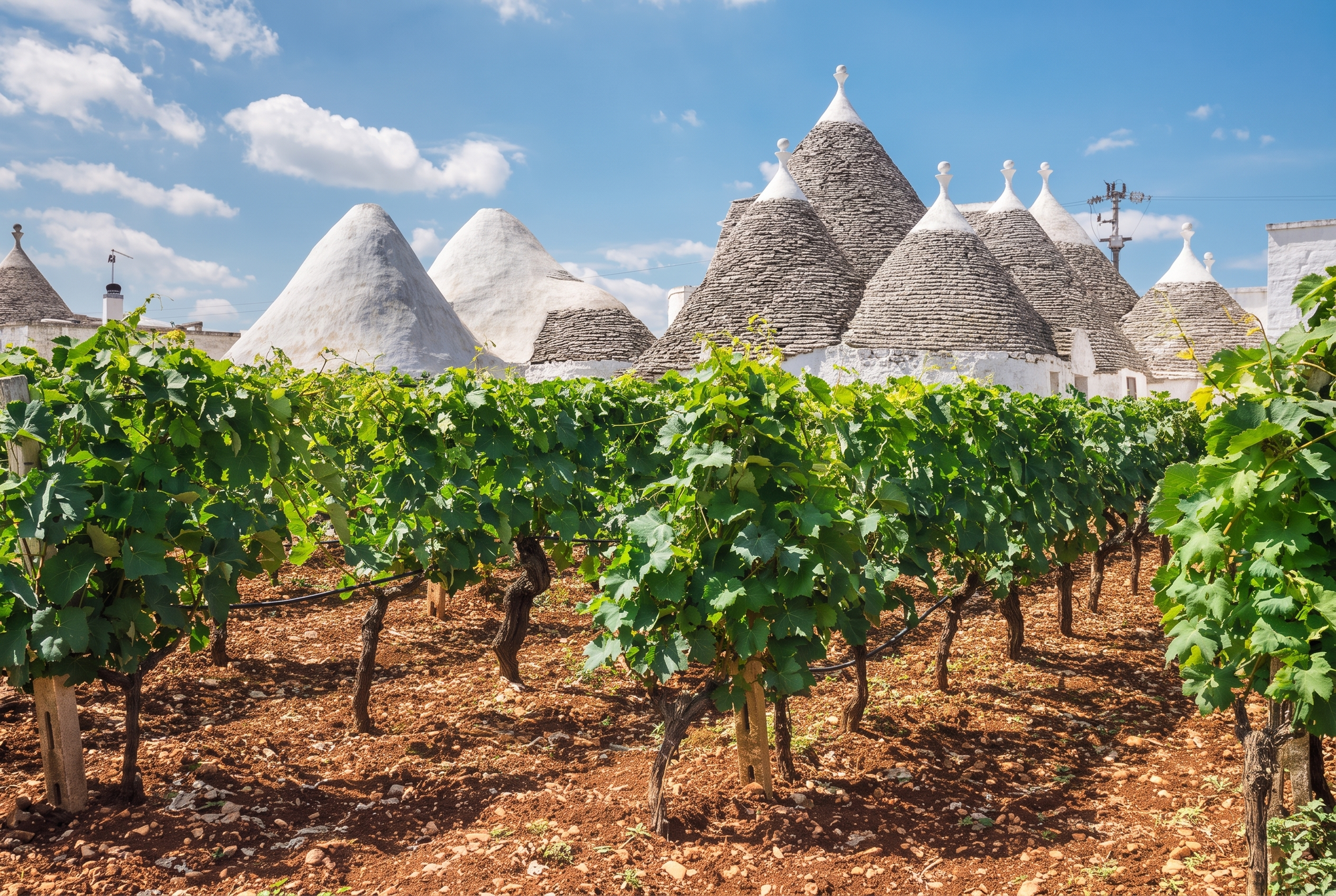
Puglia is mostly plain, which is why it can grow so much. The land is baked by intense southern sun, but two things keep the wines from turning flat and jammy: breezes off the Adriatic and Ionian seas that cool the vines at night, and soils rich in limestone and iron-red clay (the famous terra rossa) that force the vine to work. The heat gives naturally ripe grapes, high in sugar and therefore alcohol, with soft tannins and cooked-fruit flavors. The best sites, like the Salento peninsula at the very tip and the hills of Castel del Monte, get enough sea influence to keep some freshness. Old bush-trained vines (alberello, a low, free-standing training method that shades the fruit) survive here and give concentrated wine.
4. Grapes and Styles
Reds. Primitivo is deep, warm, and high in alcohol, with blackberry, fig, and spice; it ripens early and unevenly (the name means "the early one"). Negroamaro (the name means "black and bitter") is the Salento staple: full-bodied with a savory, slightly bitter twist. Nero di Troia, from the north, is firmer and more tannic.
Rosé. Puglia has a long rosé tradition, especially from Negroamaro. These are deep-pink, fruit-driven, and substantial, closer to a light red than a pale Provençal pink.
Whites. Less prominent, but Bombino Bianco and Verdeca make simple, fresh, low-acid whites for local drinking.
5. Reading the Label
The key labels are grape-plus-place. "Primitivo di Manduria DOC" is the benchmark zone for Primitivo, generally the most serious version. "Salice Salentino DOC" is usually Negroamaro-based. "Castel del Monte," up north, carries the region's DOCG rank for certain wines from Nero di Troia. You will also see plain "Primitivo" or "Negroamaro" under the broader "Puglia IGT" (a looser quality category, Indicazione Geografica Tipica, that allows more flexibility) at lower prices. Watch for "Dolce Naturale" on a Primitivo di Manduria label: that is the sweet, dried-grape version, not the dry red.
6. A Short History
For most of the modern era, Puglia sold wine, not names. Its ripe, alcoholic reds were shipped in bulk to strengthen the pale wines of northern Italy and France, a role that kept prices low and reputations invisible. The turning point came around 2000, when the confirmation that Primitivo and Zinfandel are the same grape gave the region an international hook. Producers began bottling under their own labels, and export demand for ripe, affordable reds did the rest.
Did You Know? Primitivo and California's Zinfandel are genetically identical, a fact confirmed by DNA testing at UC Davis in 2001. Both trace back to an old Croatian grape, Crljenak Kaštelanski. Same vine, three names, three continents.
7. At the Table
Puglia's ripe reds suit equally ripe, savory food: roasted lamb, sausages, tomato-rich orecchiette pasta, and hard aged cheeses. The wine's soft tannins and high alcohol handle spice and richness well. Serve reds at about 64°F (18°C); most everyday bottles need no decanting, though a serious Primitivo di Manduria benefits from a short one. Negroamaro rosé is a fine partner for grilled fish and vegetables, chilled to around 52°F (11°C). These wines are made to drink within a few years, not to cellar.
Links
Regulatory body (Consorzio di Tutela del Primitivo di Manduria): https://www.consorziotutelaprimitivo.com
Official tourism board: https://www.viaggiareinpuglia.it