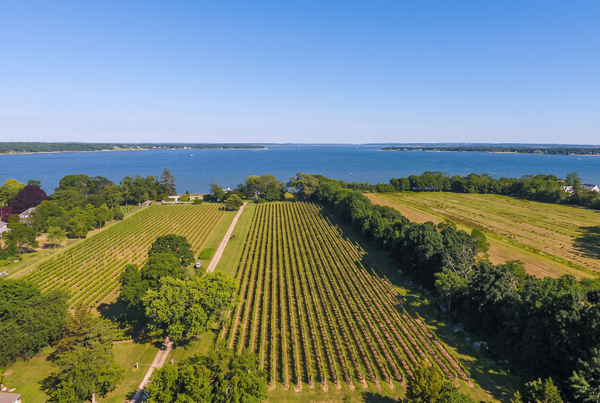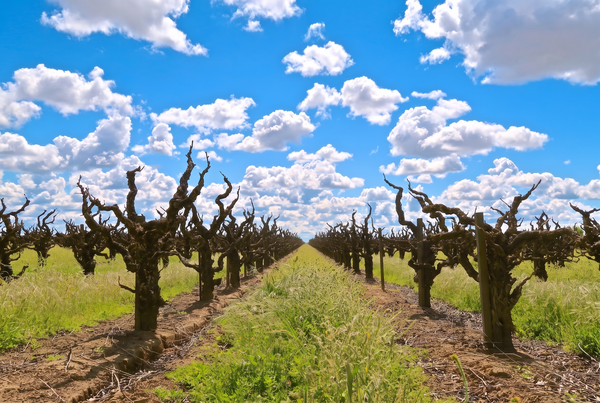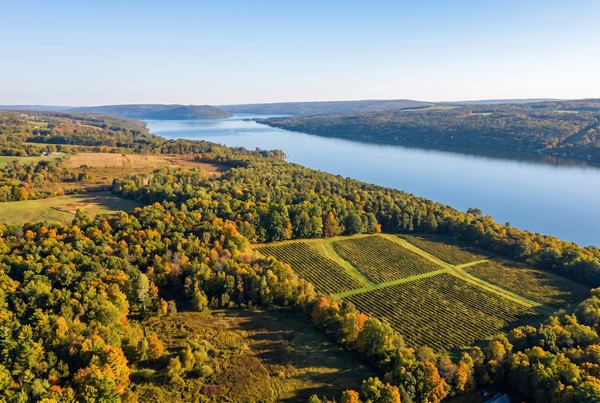


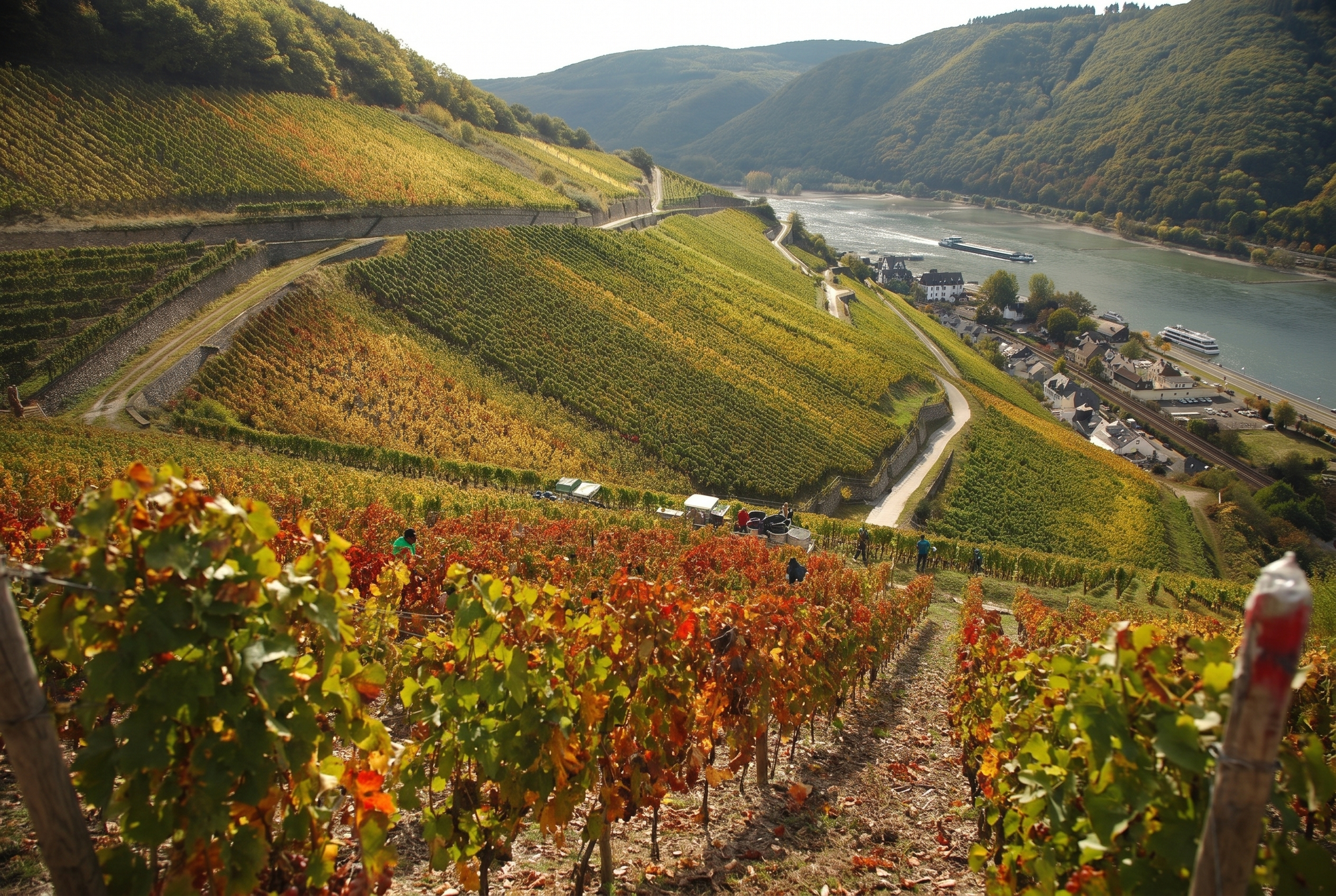
The Rhine turns west for twenty miles, and Riesling takes the sunny bank.
At a Glance
For most of its course the Rhine flows north. Between Wiesbaden and Rüdesheim it bends west, creating one continuous south-facing slope, and on that slope sits the Rheingau. The region is small, aristocratic in history, and committed to Riesling more completely than anywhere else in Germany.
Country: Germany
Main grapes: Riesling (about 77% in 2022), Spätburgunder (Pinot Noir)
Signature styles: Dry and nobly sweet Riesling; Assmannshausen Pinot Noir; bottle-fermented sparkling Sekt
Climate: Mild, sheltered by the Taunus hills, with misty autumns
Key appellations: one protected origin, Rheingau; famous villages include Rüdesheim, Johannisberg, Hattenheim, Erbach, and Hochheim
Vineyard area: About 7,900 acres (3,200 hectares) as of 2022
Why It Matters
The Rheingau's influence outruns its size, which is barely 3 percent of German vineyards. Deliberate late harvesting for noble sweetness was recorded here in 1775 at Schloss Johannisberg. The word Kabinett comes from cellars here. Riesling's rise to national flagship started here, and Geisenheim, the university that trains winemakers from around the world, sits mid-region. When German wine law has needed models, it has usually reached for the Rheingau.
Land and Climate
The whole region is one tilted plane. The Taunus hills block cold north winds, and the Rhine below, nearly half a mile (800 meters) wide in places, works as both storage heater and mirror, softening frosts and reflecting light up into the vines. Soils change with elevation: high slopes near Rüdesheim carry slate and Taunus quartzite that produce taut, stony Riesling, while the broad middle and lower slopes hold deep loess and loam that give rounder, fruitier wines. At the western end, around Assmannshausen, dark slate warms quickly, and Pinot Noir has grown there for centuries.
Autumn is the trump card. River mists breed botrytis, the so-called noble rot, a fungus that shrivels ripe grapes and concentrates sugar and flavor without spoiling them. Foggy mornings burned off by mild afternoons are the reason this region could invent late-harvest wine.
Grapes and Styles
Riesling occupies about 77 percent of the vineyard (2022), the highest share of any German region, in three broad styles. Dry is now the norm: firm, medium-bodied wines with apple, citrus, and a stony grip, more austere than Mosel Riesling and a degree or two higher in alcohol. Off-dry and lightly sweet versions, labeled by ripeness ranks such as Kabinett and Spätlese, balance sugar against ripe acidity. Nobly sweet wines, Auslese and above, come in tiny quantities from botrytized grapes and rank among the longest-lived whites on earth.
Spätburgunder (Pinot Noir) holds roughly 12 percent of plantings, concentrated in Assmannshausen: pale to medium ruby, silky, tasting of cherry and forest floor. It deserves far more attention than it gets. Sekt, bottle-fermented sparkling wine, is a growing specialty that suits Riesling's acidity. Nearly everything is white, varietal, and built around one grape's response to one slope. Vintage matters more than in warmer regions: cool years give racy, lean dry wines, warm years tropical breadth. Prices track the slope, and village-level bottles from Hattenheim or Erbach deliver much of the character of the famous single sites at a fraction of the cost.
Reading the Label
Qualitätswein means an officially tested wine from the region; Prädikatswein adds a ripeness rank measured by grape sugar at harvest, from Kabinett through Spätlese, Auslese, Beerenauslese, Eiswein, and Trockenbeerenauslese. Ripeness does not equal sweetness, so check for trocken (dry) or feinherb (off-dry); with neither word, a Prädikat wine will probably taste sweet, and alcohol around 8 to 9 percent confirms it.
Two terms are local. Erstes Gewächs, meaning first growth, is a Rheingau category for dry wines from classified sites. Grosses Gewächs (GG) is the equivalent used by members of the VDP, a national association of top estates. Labels follow the village-plus-vineyard pattern: Rüdesheimer Berg Schlossberg is the Berg Schlossberg site above Rüdesheim. Hochheim, at the eastern end, gave English its old word for Rhine wine, hock.
A Short History
Cistercian monks founded Kloster Eberbach in 1136 and built vineyard holdings that ranked among medieval Europe's largest. Schloss Johannisberg planted itself entirely with Riesling in 1720–21, an early bet on a single grape, and in 1775 its cellar records document a deliberately late, botrytis-affected harvest, the ancestor of Spätlese. Geisenheim's research institute opened in 1872. After the twentieth century drifted toward sweetness, the Charta producers' group pushed the region back to dry wine in the 1980s.
Did You Know? Kabinett, the term stamped on countless German labels, began in the Rheingau as Cabinet, the name for a locked cellar where an estate's best barrels were kept. Schloss Vollrads documented a cabinet cellar in 1716, and Kloster Eberbach built its famous one in 1730. The word only became a legal ripeness category in 1971.
At the Table
Dry Rheingau Riesling has the body for main courses: roast pork with apples, veal schnitzel, chicken in cream sauce, and hard mountain cheeses. Off-dry bottles handle sauerkraut dishes and moderate chili heat, and a mature Auslese is glorious with blue cheese or an apricot tart. Assmannshausen Spätburgunder suits duck, mushrooms, and game.
Serve dry Riesling at 48 to 52°F (9 to 11°C) and Spätburgunder around 57°F (14°C). Young dry wines from top sites can seem closed and benefit from an hour in a decanter; the sweet wines need nothing but patience, which they repay over decades.
Links
Official regional wine bodies and tourism (Rheingauer Weinbauverband / Weinwerbung): https://www.rheingau.com
National wine institute (Wines of Germany / DWI): https://www.winesofgermany.com