

Germany's largest wine region swapped a cheap reputation for its boldest young winemakers.
At a Glance
Rheinhessen fills the broad elbow of land inside the Rhine's turn at Mainz: open, rolling farm country of grain, sugar beets, and more vines than anywhere else in Germany. For decades its name meant bulk. Since the 2000s it has meant some of the country's most ambitious dry whites.
Country: Germany
Main grapes: Riesling, Müller-Thurgau, Dornfelder, Grauburgunder (Pinot Gris), Silvaner
Signature styles: Dry Riesling and Silvaner; soft red Dornfelder; the sweet export blend Liebfraumilch
Climate: Mild, sunny, and notably dry, sheltered by hills on three sides
Key appellations: One protected origin, Rheinhessen; the Rhine Terrace villages of Nierstein and Nackenheim; Bingen; Worms; Westhofen
Vineyard area: About 67,500 acres (27,300 hectares) as of 2022
Why It Matters
Scale, first: about 26 percent of all German vines grew here in 2022, more than in any other region. History, second: this was the home of Liebfraumilch, the sweet export blend that built and then wrecked German wine's image abroad. Momentum, third: no region has reinvented itself faster. Growers who took over family estates in the 2000s turned inland villages like Westhofen into names that collectors track.
Land and Climate
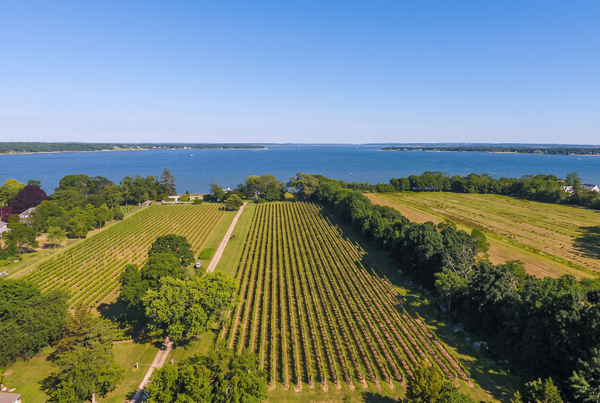
This is not river-gorge Germany. Rheinhessen is a plateau of gentle rises, locally called the land of a thousand hills, sheltered by the Hunsrück, Taunus, and Odenwald ranges. That shelter makes it one of the driest, sunniest pockets in the country, which is why red grapes and late-ripening whites succeed here at scale.
Soils are mostly deep loess, a wind-blown silt, plus limestone-rich marl: fertile ground that yields big crops on the flats and serious wine on the slopes. Two exceptions matter to buyers. The Roter Hang, a red slate-and-sandstone escarpment above Nierstein and Nackenheim on the Rhine, gives smoky, saline Riesling. And the limestone around Westhofen and Flörsheim-Dalsheim in the south produces dense, chalky whites that launched the region's modern reputation. Where the soil is ordinary the wine tends to be ordinary; where it breaks rock, it is not.
Grapes and Styles
Whites hold 74 percent of the vineyard (2022), but no single grape dominates. Riesling leads at 19 percent: dry, riper and broader than Mosel versions, citrus and stone fruit over chalk, with Roter Hang bottlings adding a smoky edge. Silvaner, a regional heirloom at 7 percent, makes quiet, earthy, dry whites that shine at the table; dry Silvaner from limestone is, to my taste, Germany's best-value white. Müller-Thurgau (14 percent) gives soft, grapey everyday wine, while Grauburgunder and Weißburgunder (Pinot Gris and Pinot Blanc) supply the rounder styles restaurants pour by the glass. Scheurebe adds blackcurrant-and-grapefruit perfume for fans of louder wines.
Reds are a real presence. Dornfelder (11 percent) is deep purple, plummy, low in tannin, and best slightly chilled; Spätburgunder (Pinot Noir) improves yearly. Liebfraumilch, the gentle semi-sweet blend, is still made, almost entirely for export. Sekt, bottle-fermented sparkling wine, and late-harvest sweet styles round out most estate lists. The region's calling card today, though, is dry white wine with muscle, and the top bottlings ask for patience; drunk too young, a Roter Hang Riesling can read as stern.
Reading the Label
Qualitätswein is officially tested regional wine; Prädikatswein carries a ripeness rank (Kabinett, Spätlese, Auslese, and up) based on grape sugar at picking. Trocken means dry, feinherb off-dry, and most serious Rheinhessen wine today is trocken.
Geography terms need care. An Einzellage is a single vineyard; a Grosslage is a large collective zone whose name looks identical on a label. Niersteiner Gutes Domtal, a Grosslage, may contain grapes from villages well away from Nierstein itself, while Niersteiner Pettenthal is one specific slope. If provenance matters to you, learn a handful of site names or buy from named estates. Grosses Gewächs (GG) marks dry wine from top sites classified by the VDP, an association of leading producers. Liebfraumilch on a label promises mild sweetness and no ambition; at least it is honest about what it is.
A Short History
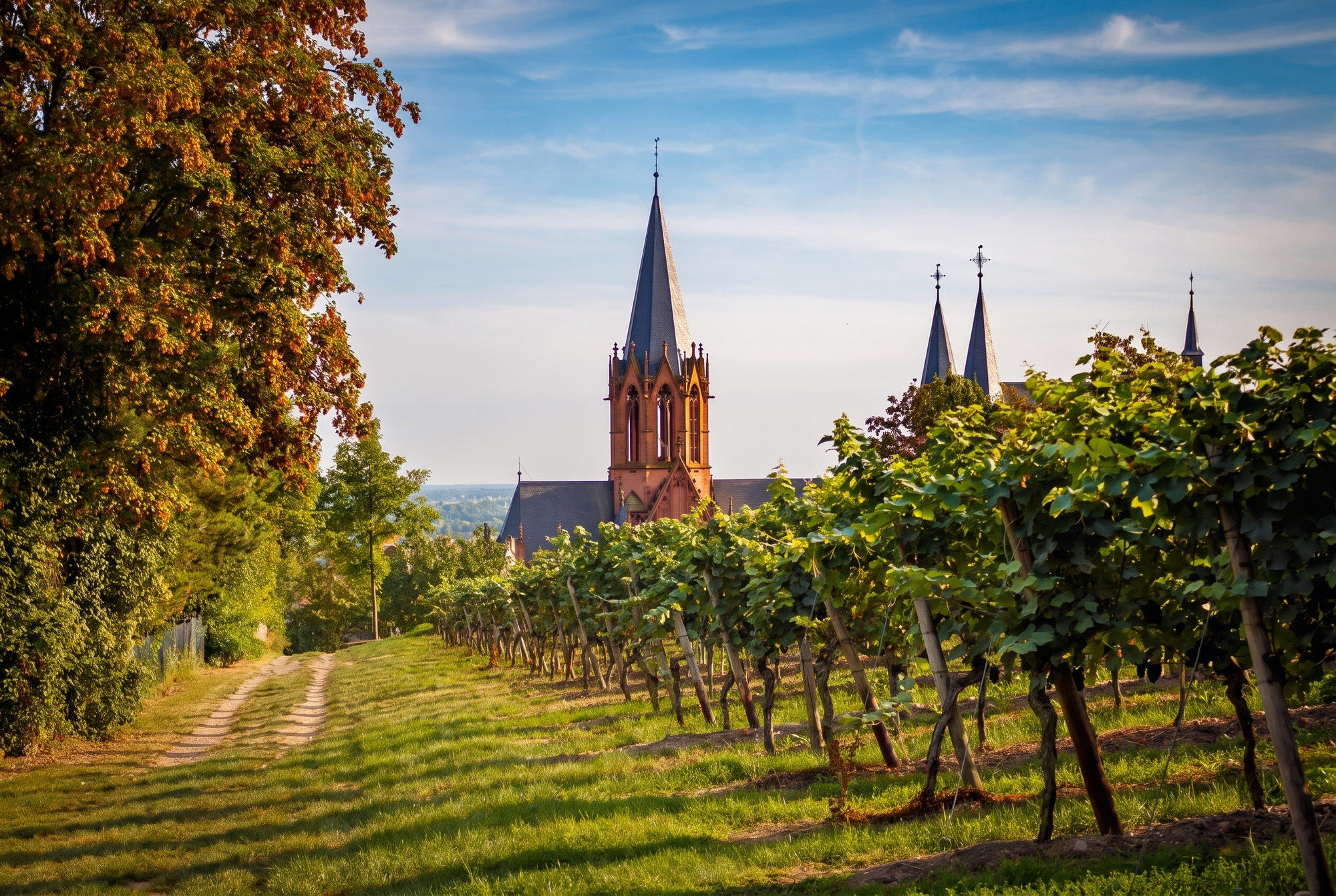
Vines here are ancient, but the modern story turns on one church. Liebfraumilch took its name from vineyards around the Liebfrauenkirche in Worms, and by the twentieth century the name had become a generic sweet blend shipped around the world. Volume paid the bills and buried the reputation. The turn came in the 1990s and 2000s, when a wave of young, Geisenheim-trained growers replanted the better slopes, cut yields, and went dry, making Rheinhessen fashionable for the first time in living memory.
Did You Know? Liebfraumilch means “milk of Our Lady.” The name originally referred to wine from the small vineyard surrounding the Gothic Liebfrauenkirche in Worms. That plot survives as the Liebfrauenstift-Kirchenstück and now produces serious dry Riesling, a fate its mass-market namesake never shared.
At the Table
Local cooking is farm food, and the wines match it. Silvaner with white asparagus is the rite of spring; the wine's mild earthiness lets the vegetable lead. Dry Riesling handles pork roasts, sausages, and Spundekäs, the local whipped-cheese dip served with pretzels. Dornfelder, poured cool at about 57°F (14°C), suits grilled bratwurst, and Grauburgunder works with roast chicken and creamy dishes.
Serve dry whites at 48 to 52°F (9 to 11°C). Little here needs decanting, and most bottles are best within five years. The exceptions are top dry Rieslings from the Roter Hang and the southern limestone, which reward five to fifteen years of patience.
Links
Official regional wine organization (Rheinhessenwein e.V.): https://www.rheinhessen.de/wein
Official regional tourism board: https://www.rheinhessen.de
National wine institute (Wines of Germany / DWI): https://www.winesofgermany.com