

More than a million oak barrels rest beneath Spain's most famous vineyards.
1. At a Glance
Rioja, strung along the Ebro River in northern Spain, is the country's flagship wine region and its most recognized export name. Built on Tempranillo and long barrel aging, it delivers reds that arrive in the store already mature, a rarity in modern wine, alongside reviving whites and rosados. About 570 wineries across 144 municipalities work under its rules (2024).
Country: Spain (north, upper Ebro valley)
Main grapes. Tempranillo, Garnacha, Graciano, Mazuelo; Viura for whites
Signature styles: Oak-aged reds from Crianza to Gran Reserva; barrel-aged whites
Climate: Atlantic-influenced in the west, warmer and Mediterranean toward the east
Key appellations: DOCa Rioja, with the zones Rioja Alta, Rioja Alavesa, and Rioja Oriental
Vineyard area: 66,638 hectares (164,700 acres) as of 2024
2. Why It Matters
Rioja set the template for Spanish fine wine. In 1991 it became the country's first DOCa (Denominación de Origen Calificada), the highest rank in Spain's appellation system, a status it still shares with only Priorat. Its aging classifications, Crianza, Reserva, Gran Reserva, are the vocabulary wine drinkers use for all of Spain, and its bottle-aged Gran Reservas remain among the best values in mature red wine anywhere. Exports keep growing too, up 4.42% in 2024, with the United States and United Kingdom leading demand.
3. Land and Climate
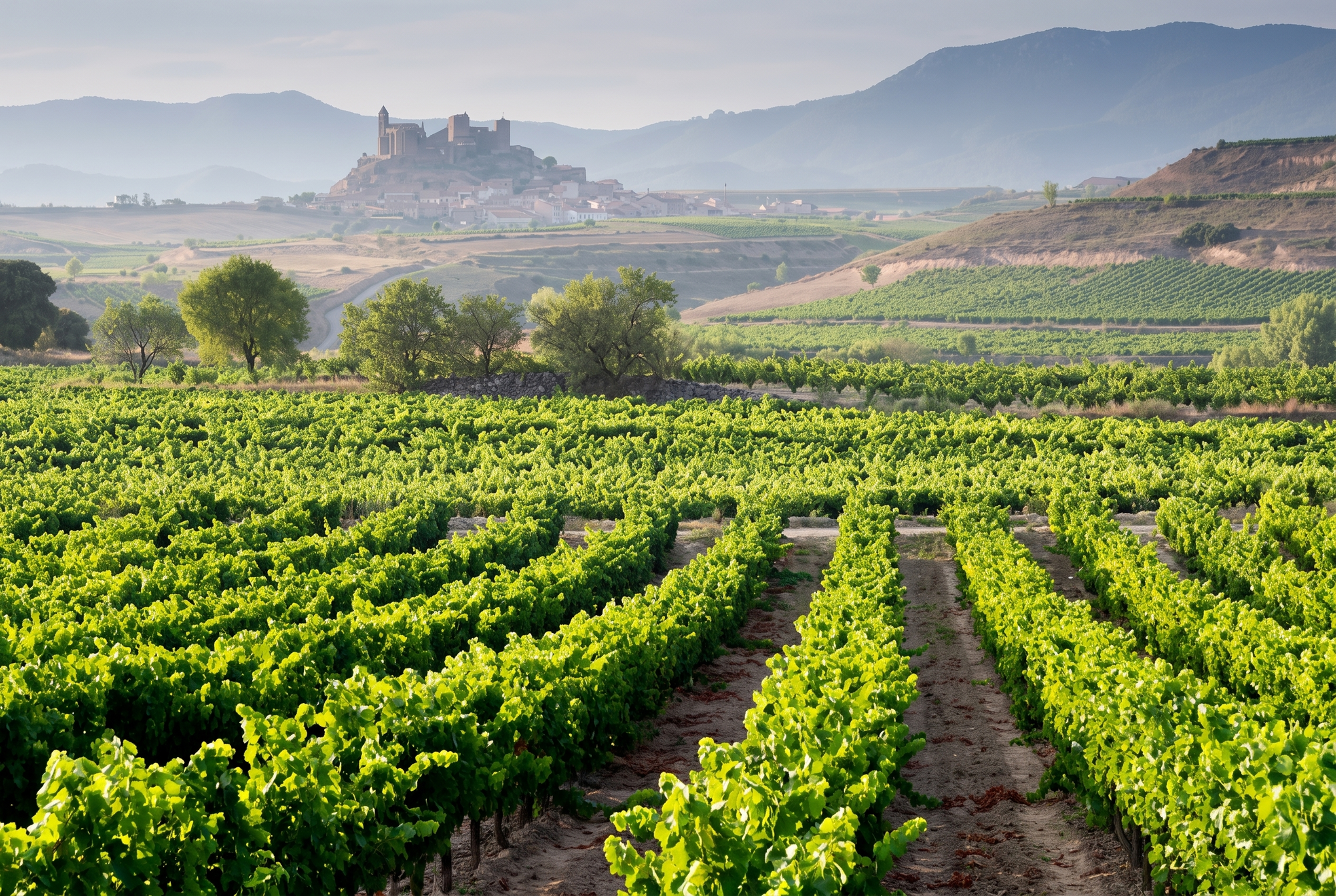
The region stretches about 60 miles (100 kilometers) along the Ebro, sheltered from Atlantic storms by the Sierra de Cantabria. That shelter matters: the mountains cut rainfall and wind, letting Tempranillo, an early-ripening grape, mature slowly at 1,300 to 2,600 feet (400 to 800 meters) without cooking. Seven tributary valleys crease the landscape, each with its own microclimate, which is why neighboring villages can make noticeably different wines.
Three zones split the territory (2024 boundaries). Rioja Alta and Rioja Alavesa, in the cooler, higher west, grow grapes on chalky clay and limestone; their wines are the region's most elegant and longest-lived. Rioja Oriental, the warmer, lower east, holds about 38% of the vineyard (2024) on iron-rich clay and gives riper, fuller wines and most of the Garnacha. Blending across zones, a Rioja tradition, is how houses keep a consistent style year after year.
4. Grapes and Styles
Tempranillo is the engine, close to 90% of red plantings (per the appellation's registry, 2018), supported by juicy Garnacha, aromatic Graciano, and tannic Mazuelo, whose tannins are the drying, grippy compounds that grape skins give a red wine. Classic red Rioja balances red cherry and plum with the vanilla, dill, and coconut of American oak barrels; modern styles use French oak and more extraction for darker, denser wines. Both camps coexist, often within one winery's range.
The aging ladder shapes what you taste. Young (joven) Rioja is all bright fruit. Crianza adds gentle spice from two years of maturing, at least one in barrel. Reserva (three years, one in barrel) brings leather and dried fruit; Gran Reserva (five years, two in barrel) is silky, fully mature, and released ready to drink.
White Rioja from Viura, especially the barrel-aged style, is to me the region's most underrated wine: nutty, textured, and built to age for decades. Fresh, unoaked whites and dry rosado complete the range, and a small amount of traditional-method sparkling wine has been permitted since 2017.
5. Reading the Label
Every genuine bottle carries a numbered back label from the regulatory council with the aging category printed on it: Joven/Genérico, Crianza, Reserva, or Gran Reserva. Those words are legal guarantees of time, not marketing.
Since 2017, look also for place terms: Viñedo Singular (a certified single vineyard, the top of the pyramid), Vino de Municipio (one village), and Vino de Zona (one of the three zones, e.g. Rioja Alavesa). A zone name generally signals a more site-driven style than a classic multi-zone blend. Vintage dates matter less than in most regions because aging rules smooth out differences; the council also publishes an official rating for every vintage, printed in many buying guides.
6. A Short History
Rioja's documented viticulture reaches back to at least 1063. The modern style was born in the mid-1800s, when producers such as Marqués de Riscal adopted Bordeaux techniques and small oak barrels just as France's blighted vineyards created huge demand. Wine houses clustered around Haro's railway station in the late 1800s to ship barrels north. Rioja introduced Spain's first guarantee-of-origin seal in 1925, and its regulatory council, founded in 1926, standardized quality; aging back labels followed in 1974, DOCa status in 1991, and single-vineyard rules in 2017.
Did You Know? Rioja holds the largest stock of aging barrels of any wine region on Earth: more than 1.29 million oak casks were resting in its cellars in 2024, roughly 20 barrels for every hectare of vines.
7. At the Table
Lamb is the classic pairing here: grilled chops over vine cuttings with a Crianza, slow-roasted shoulder with a mature Reserva. Gran Reserva, with its mellow, earthy edge, suits braises, mushrooms, and aged Manchego or Idiazábal cheese. Barrel-aged white Rioja is superb with roast chicken and creamy rice dishes, and it handles hard cheeses that would flatten a lighter white.
Serve Crianza at about 60°F (16°C) and older wines slightly warmer. Young modern reds benefit from 30 to 60 minutes in a decanter; decant old Gran Reserva only to remove sediment, gently and just before serving. Well-stored Reservas routinely improve for 15 to 25 years, which makes Rioja one of the few regions where buying a case young and forgetting it actually works.
Links
Consejo Regulador DOCa Rioja (regulatory body): https://riojawine.com/en-us/
La Rioja official tourism board: https://lariojaturismo.com/en