

Vines climb past 10,000 feet, and one vineyard has been producing since 1862.
1. At a Glance
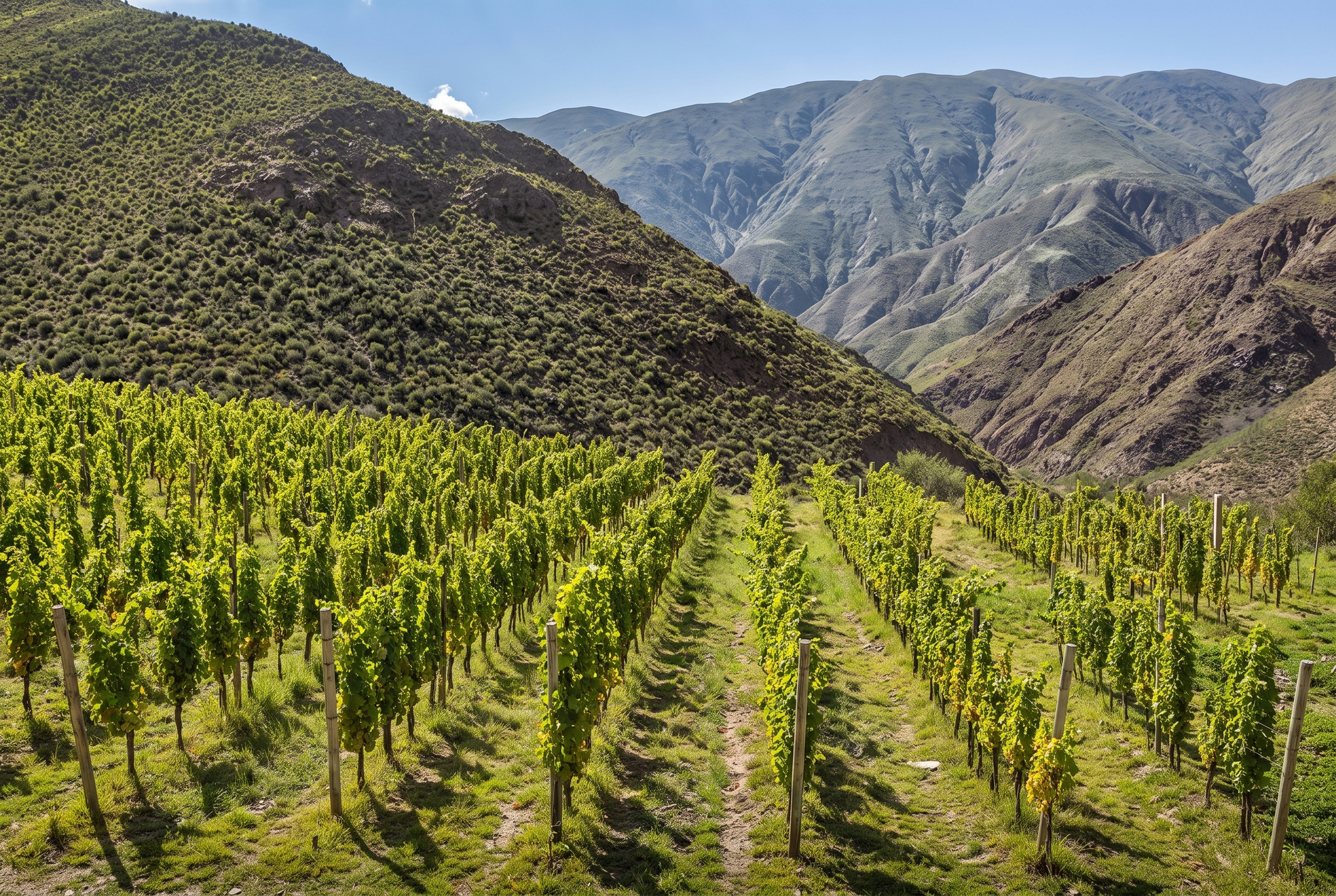
Salta sits in Argentina's far northwest, near the Bolivian border, closer to the tropics than any serious wine region would seem to allow. Altitude is the escape. Its vineyards occupy the Calchaquí Valleys, a chain of high desert valleys where the town of Cafayate concentrates about 70 percent of the province's vines. The wines are vivid and intensely perfumed, white and red alike, and the scenery around them draws as many visitors as the bottles do. Salta held roughly 3,800 hectares (9,400 acres) of vines in 2024, per the INV, Argentina's national wine regulator, and unlike most of the country it is still planting.
Country: Argentina
Main grapes: Torrontés, Malbec, Cabernet Sauvignon, Tannat
Signature styles: Aromatic dry Torrontés whites, dense high-altitude reds
Climate: High-altitude desert; 7 to 10 inches (185 to 250 mm) of rain a year
Key appellations: Cafayate, Valles Calchaquíes, Molinos, Cachi
Vineyard area: About 3,800 hectares / 9,400 acres (2024, INV)
2. Why It Matters
Salta is the world capital of extreme-altitude wine. Vineyards run from about 4,900 feet (1,500 meters) to above 10,000 feet (3,100 meters), higher than any other significant region on Earth. It is also the home turf of Torrontés, Argentina's own white grape, at its best in Cafayate. And while the national vineyard shrank over the past decade, Salta's grew by nearly 18 percent between 2015 and 2024, per the INV. Its average vineyard, at 14.5 hectares in 2024, is also among the largest of any major province, a sign that serious money sits behind the growth.
3. Land and Climate
Cafayate lies at about 26°S, a latitude where grapes would normally bake. Elevation cancels the heat. At 5,600 feet (1,700 meters), days are warm and bright, nights are cold, and the gap between them often exceeds 36°F (20°C). That swing lets grapes ripen fully while keeping their acidity, which is why Salta wines taste rich and fresh at the same time.
The air is thin and the ultraviolet light fierce, so grapes grow thick skins, and thick skins mean deep color and firm tannin in the reds. Rain barely figures: 7 to 10 inches (185 to 250 mm) a year, with irrigation drawn from the Calchaquí and Santa María rivers. Soils are sandy and stony, laid down by those same rivers, and drain almost instantly. Disease pressure is close to nil; the grower's struggle here is managing sun, not rot. Cafayate is the hub, but vines also climb the valley through San Carlos, Molinos, Cachi, and La Poma, where soils turn volcanic and the last commercial parcels pass 10,000 feet (3,100 meters).
4. Grapes and Styles
Start with the white. Torrontés, specifically the Torrontés Riojana variety, exists almost nowhere outside Argentina, and Cafayate is its showcase. The nose is extravagant, all jasmine, rose, and orange peel, and first-timers brace for sweetness; the palate lands dry and citrusy instead. That tension is the whole trick. It is a wine to drink young and cold, and my advice is to skip the oaked versions, which rarely improve on the fresh ones.
The reds are Malbec first, and Salta Malbec is a different animal from Mendoza's: darker, more tannic, often with a savory, peppery edge from all that sun and altitude. Cabernet Sauvignon and Tannat, a thick-skinned red that thrives in strong light, follow the same pattern of concentration. A few producers also coax light, thirst-quenching reds from old plantings of Criolla, the pale grape of colonial Argentina, and late-harvest bottlings of Torrontés appear in small quantities for the sweet-toothed.
5. Reading the Label
Most quality bottles carry an IG, short for Indicación Geográfica, a protected geographic indication that guarantees the grapes' origin. Look for Valle de Cafayate or Valles Calchaquíes; the valley system crosses into Tucumán and Catamarca, so the broader name can include neighbors. Producers here like printing vineyard altitude on the label, and it is genuinely useful shorthand: higher usually means fresher and more taut. A named grape means at least 85 percent of that variety under national law. “Reserva” guarantees minimum aging of 12 months for reds and 6 for whites; “Gran Reserva” doubles both. One caution: “Torrontés” covers three related Argentine varieties, and the Riojana version, the standard in Salta, is the one prized for quality.
6. A Short History
Missionaries brought vines to these valleys in the 1600s, and wine has been made around Cafayate ever since, isolated by distance from the Mendoza-dominated trade. Estates stayed in family hands, selling mostly within the Argentine north. Two things changed that: the international discovery of Torrontés in the 1990s and 2000s, and investment in extreme-altitude vineyards such as Colomé, which put Salta on collectors' maps. Growth followed; it is the only major Argentine wine province that expanded over the past decade (INV, 2015 to 2024).
Did You Know? Argentina's oldest recorded working vineyard grows here: a Torrontés parcel in the Calchaquí Valleys planted in 1862 and still producing, according to the INV's national registry. At the other extreme, Bodega Colomé farms its Altura Máxima vineyard at 10,207 feet (3,111 meters), among the highest commercial vineyards on the planet.
7. At the Table
Empanadas salteñas, filled with hand-cut beef, cumin, and paprika, are the region's edible emblem, and cold Torrontés is their standard partner; the wine's acidity and perfume cut the spice. It also handles ceviche, Thai food, and anything with cilantro. Serve it at 46 to 50°F (8 to 10°C) and buy the newest vintage you can find. The reds want food with char: grilled goat, lamb, or a proper steak. Give a young Salta Malbec 30 to 60 minutes of air, pour it near 62°F (17°C), and expect the structured bottlings to age well for a decade.
Links
National wine regulator (INV): https://www.argentina.gob.ar/inv
Official tourism board (Visit Argentina): https://www.argentina.travel
National promotion body (Wines of Argentina): https://www.winesofargentina.org