

A Mediterranean island whose grapes arrived by sea from Spain, and taste like it.
1. At a Glance
Sardinia (Sardegna) is a large island in the western Mediterranean with a wine culture shaped as much by Spain as by Italy. Centuries of Spanish rule left grapes and habits behind. The result is a distinct island style: firm, saline whites from Vermentino and sturdy reds from Cannonau.
Country: Italy
Main grapes: Vermentino, Cannonau (Grenache), Carignano, Nuragus
Signature styles: Crisp to full white, warm red, some sweet
Climate: Mediterranean, hot and dry with constant sea wind
Key appellations: Vermentino di Gallura DOCG, Cannonau di Sardegna DOC, Carignano del Sulcis DOC
Vineyard area: About 27,000 hectares registered (Istat, 2024 harvest)
2. Why It Matters
Sardinia is the island where Italian and Spanish wine cultures meet. Its top grapes are not native Italian at all: Cannonau is Grenache, Carignano is Carignan, both Spanish in origin. That gives Sardinian wine a character found nowhere else in Italy, and its Vermentino di Gallura is one of only a handful of Italian white DOCGs.
3. Land and Climate
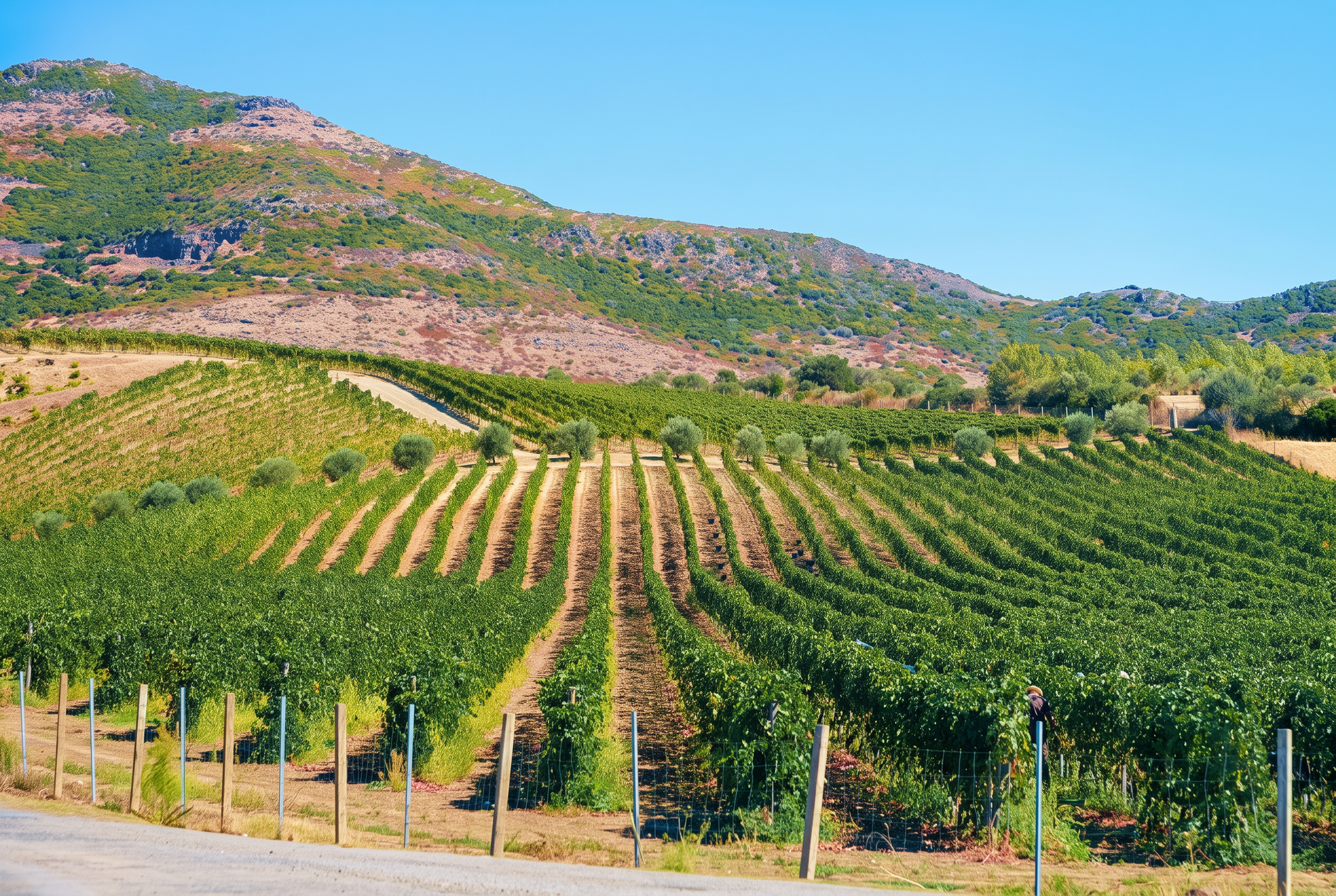
Sardinia is dry, sunny, and swept by relentless wind, especially the mistral off the sea. That wind matters: it keeps the vines healthy in the humid Mediterranean and concentrates the grapes, and it leaves a saline signature in the whites. The island's soils are ancient and varied, but granite dominates in the north, in Gallura, where Vermentino grows. Granite drains hard and stresses the vine, which is why Gallura's Vermentino is more mineral and structured than the softer versions grown on clay elsewhere. In the far southwest, the Sulcis area has sandy soils where old, ungrafted Carignano vines survive; sand naturally resists the vine louse phylloxera, so some vines are a century old.
4. Grapes and Styles
Whites. Vermentino is the star: dry, with citrus, green herbs, and a salty, slightly bitter finish. From Gallura's granite it gains real structure. Nuragus and Vernaccia di Oristano (an oxidative, sherry-like wine) add local color.
Reds. Cannonau (Grenache) is warm, red-fruited, herbal, and high in alcohol, the island's signature red. Carignano del Sulcis, from old coastal vines, is deeper and more brooding, with dark fruit and a savory edge.
Sweet. Sardinia makes several traditional sweet wines, including sweet Cannonau and the rare, oxidative Vernaccia di Oristano, aged in part-full barrels for a nutty flavor.
5. Reading the Label
The labels follow the grape-plus-place pattern. "Vermentino di Gallura DOCG" is the island's premier white zone (the DOCG rank marks it as top-tier); plain "Vermentino di Sardegna DOC" comes from anywhere on the island and is usually simpler. "Cannonau di Sardegna DOC" is the standard red; a sub-zone name like "Jerzu" or "Oliena" signals a specific area. "Carignano del Sulcis DOC" points to the old-vine reds of the southwest. "Riserva" means longer aging. If a Cannonau or Vernaccia label says nothing about sweetness, assume it is dry; the sweet versions are labeled "dolce" or "liquoroso" (fortified).
6. A Short History
Sardinia spent nearly four centuries under the Crown of Aragon and then Spain, and its vineyards still show it: the island's two most important red grapes came from Iberia. This is the single fact that explains why Sardinian wine tastes different from the mainland's. For much of the 20th century the island made heavy, high-alcohol wine for blending. The modern shift, as elsewhere in the south, has been toward fresher, more precise bottlings, led by Gallura's crisp Vermentino.
Did You Know? Sardinia's Cannonau is genetically Grenache, and some researchers have argued the grape may have originated on the island rather than in Spain, though the evidence is disputed. Either way, its arrival predates Italian unification by centuries.
7. At the Table
Sardinian Vermentino is built for seafood: bottarga (cured fish roe, a local delicacy), grilled fish, and shellfish, where its salinity shines. Serve it cold, about 48°F (9°C). Cannonau suits roast pork (the island's porceddu, or suckling pig), game, and pecorino sardo cheese; serve at about 63°F (17°C). A young, tannic Carignano benefits from a short decant. Most Sardinian wines drink well young, but old-vine Carignano and Riserva Cannonau can age a decade.
Links
Regulatory body (Consorzio Vermentino di Gallura): https://www.vermentinogallura.wine
Official tourism board: https://www.sardegnaturismo.it/en