

A honeyed fortified Muscat aged on its own perfumed skins for months.
1. At a Glance
The Setúbal Peninsula hangs just south of Lisbon between the Tagus and Sado estuaries, a compact region of limestone mountains and warm sandy plains spread across the municipalities of the Setúbal district, with Palmela at its center. Its calling card is Moscatel de Setúbal, an amber fortified Muscat demarcated in 1907, backed by a solid trade in dry reds built on the Castelão grape around the town of Palmela.
Country: Portugal
Main grapes: Moscatel de Setúbal (Muscat of Alexandria), Moscatel Roxo, Fernão Pires, Arinto (white); Castelão (red)
Signature styles: Fortified Moscatel; Castelão-based dry reds; fresh whites and rosés
Climate: Mediterranean with Atlantic moderation; hot, dry summers
Key appellations: DO Setúbal (fortified Moscatel); DO Palmela; IG Península de Setúbal
Vineyard area: About 8,000 hectares (20,000 acres) as of the mid-2020s
2. Why It Matters
Moscatel de Setúbal is one of the world's reference sweet wines, made here and effectively nowhere else, and the zone protecting it, demarcated in 1907, is Portugal's second oldest after the Douro. The peninsula is also the spiritual home of Castelão, the southern red grape that reaches its finest expression in these warm coastal sands. For visitors, the whole region sits half an hour across the bridge from Lisbon, cellars included.
3. Land and Climate
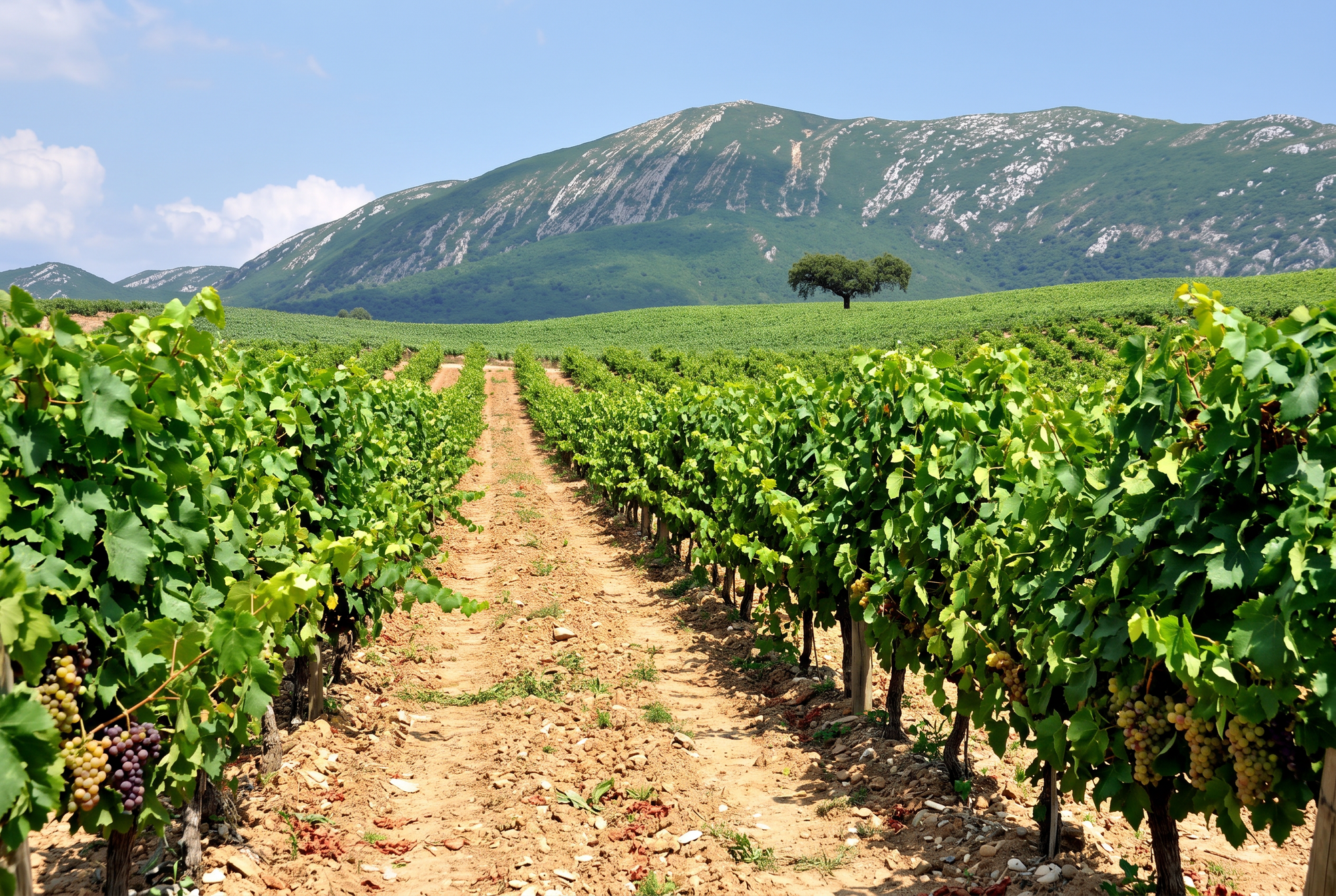
Two landscapes share the peninsula, and they split the wines between them. Along the south runs the Serra da Arrábida, a limestone ridge rising to roughly 1,640 feet (500 meters) directly above the sea; its clay-limestone slopes, freshened by Atlantic air yet sheltered by the mountain itself, give structured whites and the grapes for fine Moscatel.
Inland stretches a hot, flat plain of deep sand around Palmela, sitting mostly between 100 and 330 feet (30 and 100 meters) above sea level. Sand drains fast, holds heat, and is poor in nutrients, a combination that suits Castelão exactly; this is one of the few places in Portugal where the late-ripening grape reliably reaches full maturity. The two estuaries flanking the peninsula temper extremes, and summer drought concentrates flavor without scorching it. Few Portuguese regions pack this much geographic variety, plain, mountain, river, and open ocean, into so small an area.
4. Grapes and Styles
The famous wine comes first. Moscatel de Setúbal is a sweet wine made from Muscat of Alexandria, fermented briefly, then fortified: grape spirit is added to stop fermentation, preserving sweetness at 16 to 22 percent alcohol. The local twist follows: the wine macerates on its intensely aromatic Muscat skins for months, soaking up orange-blossom and dried-apricot perfume. Most bottlings then spend four or five years in oak casks before release. Young versions are golden and grapey; long cask aging turns them amber, then mahogany, with flavors of raisin, fig, coffee, and candied citrus, and the oldest bottlings rank with the world's great sweet wines. A rare pink-skinned mutation, Moscatel Roxo, makes an even more perfumed version in tiny quantities.
Dry wines carry the region's volume, and most of the peninsula's output is bottled at the regional tier. Palmela reds are built on Castelão: dark cherry fruit, an earthy, slightly gamey edge, firm acidity, and real aging capacity from old sand-grown vines. The Palmela DO also certifies whites, rosés, and sparkling wine, with Fernão Pires, dry Moscatel, and Arinto leading the whites: fresh, floral, and cheap for the quality. Old-vine Castelão is, for my money, the most unfairly overlooked serious red in Portugal.
5. Reading the Label
"Setúbal" or "Moscatel de Setúbal" on a label means the fortified sweet wine; the varietal name requires at least 85 percent Moscatel. "Moscatel Roxo" flags the rare pink variant. The wines appear as young non-vintage blends, as vintage-dated bottlings from a single harvest, and as aged styles carrying statements of 10, 20, or more years; "Superior" indicates longer-aged, panel-approved bottlings.
"Palmela DO" covers the dry wines, and its reds must be at least 67 percent Castelão (DO, for Denominação de Origem, is the controlled appellation). "Península de Setúbal" is the broader regional category for everything else, from rosé to inexpensive red blends, and replaced the older name "Terras do Sado" in 2009; in practice it accounts for most of what the peninsula bottles, so do not read the regional tier as a warning sign.
6. A Short History
Amphorae dug up around the Sado estuary show Romans shipped wine from here, and export references run through the medieval record; these wines were reaching England by the 14th century. The Moscatel zone was demarcated in 1907, making it Portugal's second-oldest protected wine region. The house of José Maria da Fonseca, founded in 1834 in Azeitão, industrialized and championed Moscatel from the mid-19th century and still anchors production, now alongside cooperatives and a wave of independent estates.
Did You Know? After fortification, Moscatel de Setúbal sits on its own aromatic grape skins for as long as six months, an unusually long maceration that gives the wine its signature orange-blossom perfume. Most fortified wines are pulled off their skins within days.
7. At the Table
Chill young Moscatel to 50 to 54°F (10 to 12°C) and pour it with the peninsula's own Azeitão, a soft raw sheep's-milk cheese; the salty-sweet contrast is the point. It is equally at home with almond tart, crème caramel, or simply as dessert itself. Old, dark Moscatels want walnuts and blue cheese, and an opened bottle keeps for weeks. Palmela Castelão, served at 61°F (16°C), is the natural local partner for choco frito, Setúbal's beloved deep-fried cuttlefish, and for roast pork; give structured old-vine bottlings a short decant and five to fifteen years of age.
Links
Regulatory body (CVR Península de Setúbal): https://vinhosdapeninsuladesetubal.org/en/
National promotion (Wines of Portugal): https://winesofportugal.com/en/discover/wine-regions/peninsula-de-setubal/
Official tourism board: https://www.visitportugal.com