

An active volcano now grows some of Italy's most sought-after reds and whites.
1. At a Glance
Sicily is the large island off Italy's toe, a Mediterranean crossroads with a wine history stretching back nearly three thousand years. Once known mainly for the fortified wine Marsala and for bulk production, it now earns attention for two things: the fresh reds and whites of Mount Etna, and its flagship grape, Nero d'Avola.
Country: Italy
Main grapes: Nero d'Avola, Nerello Mascalese, Catarratto, Grillo, Carricante
Signature styles: Volcanic red and white, ripe dry red, fortified Marsala
Climate: Hot Mediterranean, cooler and volcanic on Etna's slopes
Key appellations: Etna DOC, Sicilia DOC, Marsala DOC
Vineyard area: About 118,000 hectares registered (Istat, 2024 harvest)
2. Why It Matters
Sicily is the largest vineyard area of any Italian region and, over the past two decades, one of the most dynamic. Its transformation from a bulk-wine engine into a source of serious, distinctive wine is among the most striking in Europe. The wines of Mount Etna, grown on an active volcano, have become genuinely fashionable, prized for their freshness and mineral character.
3. Land and Climate
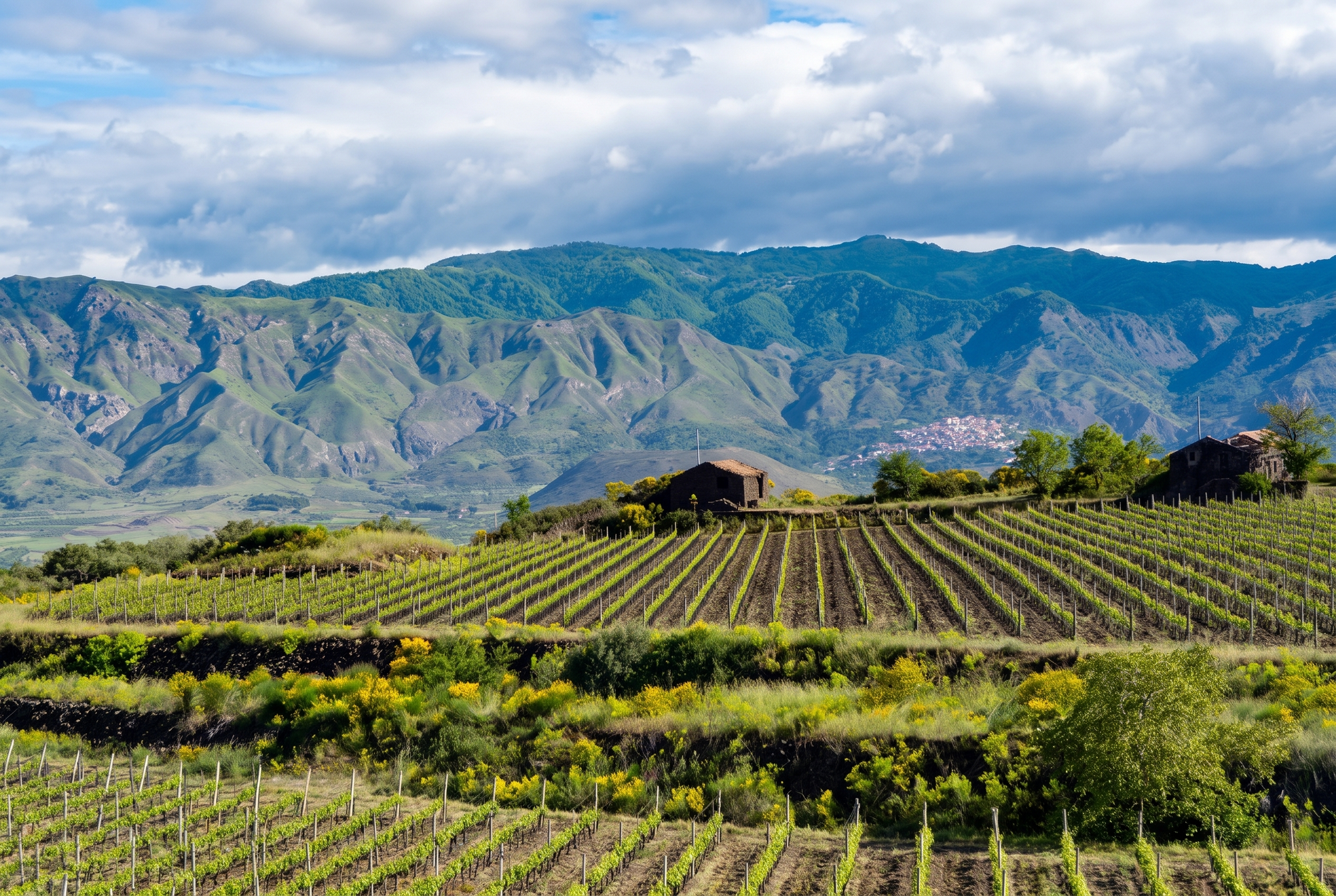
Two Sicilies, really. The interior and west are hot, dry, and sun-baked, ideal for ripe reds and the whites that go into Marsala. Then there is Etna, on the east coast: Europe's largest active volcano, where vineyards climb its slopes to over 3,000 feet (900 meters). Altitude is the whole point on Etna. High up, days are warm but nights are cold, and that swing keeps the wines fresh and aromatic in a way the lowland heat cannot. The soil is black volcanic ash and lava, mineral-rich and fast-draining, and it gives Etna wines their distinct savory, smoky edge. Old vines, some ungrafted and over a century old, survive in these volcanic sands.
4. Grapes and Styles
Volcanic reds and whites. On Etna, Nerello Mascalese makes a pale, high-acid, perfumed red often compared to Nebbiolo or Pinot Noir. Carricante makes a taut, mineral, age-worthy white. Both taste of the volcano: savory and stony.
Island reds. Nero d'Avola is Sicily's most-planted red: deep, warm, full of black cherry and plum, ripe but balanced by acidity. It ranges from easy everyday bottles to serious wines.
Island whites and fortified. Catarratto and Grillo make crisp, citrusy dry whites (Grillo is also the base of Marsala). Marsala itself is a fortified wine, sometimes dry, sometimes sweet, once world-famous and now being revived.
5. Reading the Label
"Etna DOC" is the label to look for if you want the volcanic style; it will specify "Rosso" (Nerello-based red) or "Bianco" (Carricante-based white). Etna labels increasingly name a contrada, a single vineyard district, much like a Burgundy village. "Sicilia DOC" is a broad island-wide appellation covering everything from Nero d'Avola to Grillo. For Marsala, the key words describe color and sweetness: "Oro" and "Ambra" (gold and amber), "Secco" (dry) through "Dolce" (sweet), and aging terms like "Vergine" (the driest, longest-aged). The grape name is often printed for the dry wines.
6. A Short History
Sicily made wine for the ancient Greeks and later built a global reputation on Marsala, the fortified wine an English merchant popularized in the late 1700s. Through much of the 20th century the island produced enormous volumes of cheap wine for blending. The revolution came from the 1990s onward: a wave of quality-minded producers, and the "discovery" of Etna by outside winemakers in the 2000s, reframed Sicily as a source of distinctive, terroir-driven wine rather than mere volume.
Did You Know? Etna's vineyards are among the highest in Europe and grow on an active volcano that still erupts regularly. Some vines survive on their original rootstocks, over a century old, because the sandy volcanic soil naturally repels phylloxera, the louse that destroyed most of the world's old vines.
7. At the Table
Etna Rosso, light and savory, is unusually food-friendly for a red: it suits grilled fish, roast poultry, and mushroom dishes, and can be served slightly cool, around 60°F (16°C). Nero d'Avola pairs with heartier fare, caponata (the sweet-sour eggplant dish), grilled meats, and aged cheese, at about 64°F (18°C). Carricante and Grillo love seafood and citrus-dressed dishes, served cold. Dry Marsala works with savory food and hard cheese; sweet Marsala with dessert. Etna reds and whites can age surprisingly well; most island wines drink best young.
Links
Regulatory body (Consorzio di Tutela Vini Etna DOC): https://thewinesofetna.com/consortium/
Regulatory body (Consorzio di Tutela Vini Sicilia DOC): https://siciliadoc.wine
Official tourism board: https://www.visitsicily.info/en/