

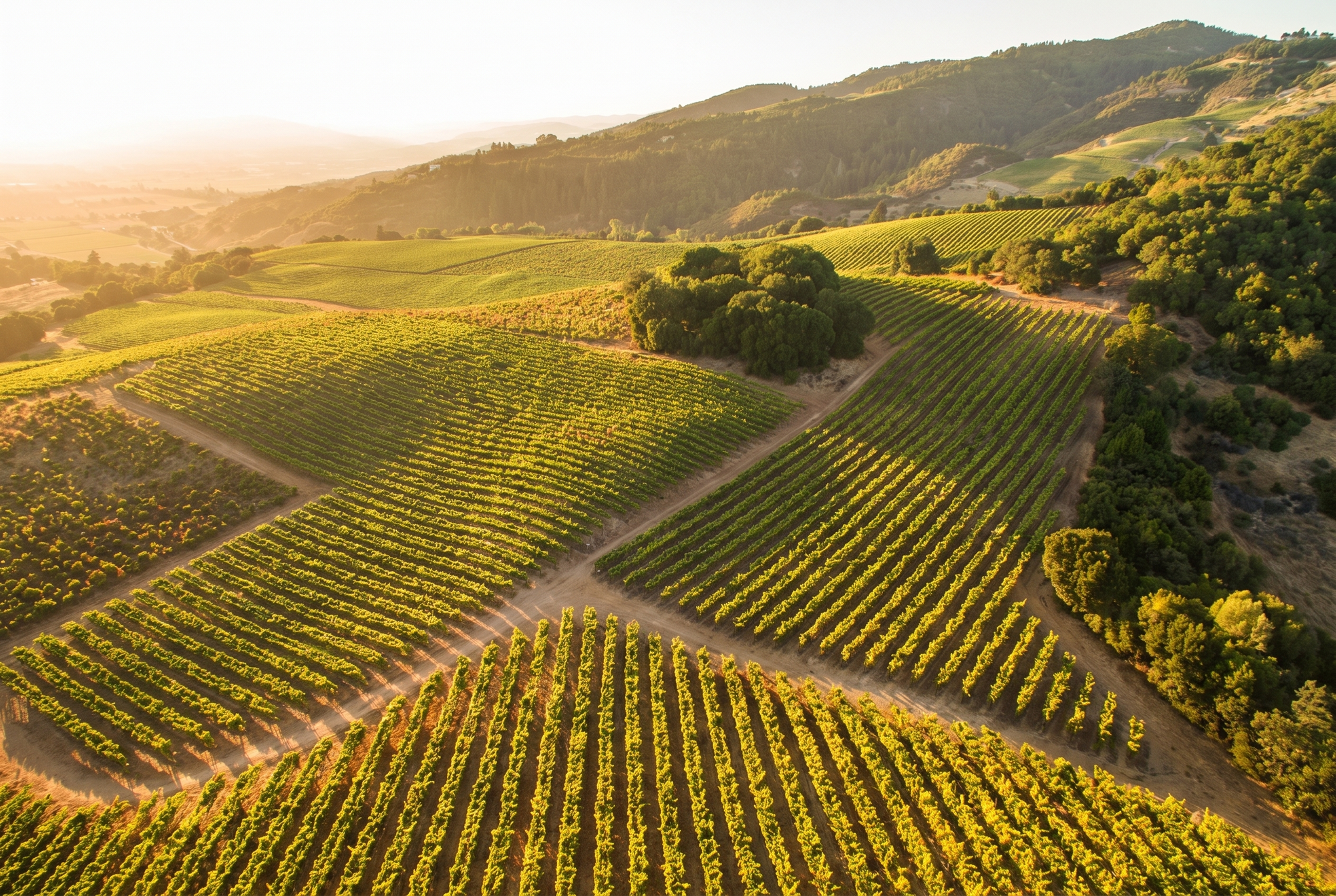
Nineteen appellations, a million acres, and vines that predate the state of California.
1. At a Glance
Sonoma County stretches from the cold Pacific coast to warm inland valleys just west of Napa. It is Northern California’s largest wine producer, yet it still feels like farm country: 95 percent of its vineyards are family owned (2024). No single grape rules here. Fog-cooled Pinot Noir, old-vine Zinfandel, and warm-valley Cabernet all count as local specialties. The county produces about 6 percent of California’s wine (2024), several times Napa’s output, yet it keeps a lower profile than its smaller neighbor.
Country: United States
Main grapes: Chardonnay, Pinot Noir, Cabernet Sauvignon, Zinfandel
Signature styles: Cool-climate Pinot Noir and Chardonnay; old-vine Zinfandel; Alexander Valley Cabernet
Climate: Mediterranean, ranging from cold and foggy near the coast to hot inland
Key appellations: 19 AVAs, including Russian River Valley, Sonoma Coast, Alexander Valley, Dry Creek Valley, and Carneros
Vineyard area: About 59,000 acres (23,900 hectares) as of 2024
2. Why It Matters
Sonoma is proof that one county can behave like several wine countries at once. Its 19 American Viticultural Areas (AVAs), the federally defined growing regions, span a wider climate range than most European nations. It is also a world leader in green farming: by 2019, 99 percent of its vineyard acreage was certified sustainable by independent auditors, a scale no comparable region had reached. For drinkers, the practical draw is choice: nearly every major wine style made in California exists here, often at friendlier prices than the famous valley next door.
3. Land and Climate
Everything in Sonoma comes back to the Pacific. Cold ocean air pours inland through two gaps, the Petaluma Gap and the Russian River’s channel through the coastal hills, and blankets the vineyards in morning fog. Where the fog reaches, as in the Russian River Valley, grapes ripen slowly and keep sharp acidity, ideal for Pinot Noir and Chardonnay.
Where mountains block the fog, as in Alexander Valley to the northeast, afternoons top 90°F (32°C) and Cabernet Sauvignon ripens fully. Even there, nights fall into the 40s°F (single digits Celsius), preserving freshness, and the growing season runs nearly rain-free from May through September.
Soils matter too. The Russian River Valley’s Goldridge soil, a fine sandy loam from an ancient seabed, drains quickly and starves vines just enough to concentrate flavor in Pinot Noir. Elevation adds a final variable, with vineyards running from sea level to about 2,600 feet (790 meters) in the mountain appellations.
4. Grapes and Styles
Chardonnay is the most planted grape, at about 15,000 acres (6,100 hectares) in 2024, and ranges from lean and citrusy near the coast to rich and toasty from warmer sites. Pinot Noir is the county’s calling card: silky, perfumed reds tasting of cherry, cola, and forest floor, from the Russian River Valley, Sonoma Coast, and Carneros. Sonoma’s best Pinot Noir now rivals anything Napa does with Cabernet, usually for less money.
The warm valleys tell a different story. Alexander Valley Cabernet Sauvignon is supple and chocolatey. Dry Creek Valley grows Zinfandel, some of it on vines over a century old, that delivers brambly raspberry fruit and black pepper spice. Carneros, shared with Napa, supplies Pinot Noir and Chardonnay for excellent traditional-method sparkling wine, made by the same technique as Champagne. Sauvignon Blanc from Dry Creek Valley and mineral-driven whites from Chalk Hill round out a portfolio broader than almost any other American county can offer.
5. Reading the Label
“Sonoma County” on a label requires at least 75 percent county fruit under the county rule; a specific AVA name such as “Russian River Valley” requires 85 percent from that zone. Since 2014, wines from the county’s AVAs must also carry the words “Sonoma County”, so you will often see two place names on one bottle.
Watch the geography. “Sonoma Coast” is a huge AVA that reaches well inland; the newer “West Sonoma Coast” (2022) is the truly coastal, cold-climate zone. “Old Vine” on Zinfandel has no legal definition, so treat it as marketing unless the producer states the planting date. Single-vineyard names, such as those from the Russian River Valley’s celebrated Pinot Noir sites, are where the county’s most serious wines hide.
6. A Short History
Russian colonists planted vines near Fort Ross by 1817, and Spanish missionaries followed at Sonoma in 1823, making this the birthplace of North Coast winegrowing. Hungarian immigrant Agoston Haraszthy founded Buena Vista in 1857, often called California’s first premium winery. By 1920 the county had 256 wineries; Prohibition killed all but about 50. Recovery ran through the 1970s Pinot Noir and Chardonnay boom in the Russian River Valley, the county’s 1981 debut as an AVA region, and the 2019 milestone of near-total sustainability certification.
Did You Know? Vines were growing in Sonoma before California was American. Russian colonists planted grapes at their Fort Ross outpost by 1817, three decades before statehood and the Gold Rush, which makes Sonoma the oldest winegrowing county on the North Coast.
7. At the Table
Match the wine to the county’s own food. Russian River Pinot Noir with roast duck, salmon, or mushroom risotto is the classic move; the wine’s acidity cuts richness while its soft tannins stay out of the way. Serve it slightly cool, 55 to 60°F (13 to 16°C). Dry Creek Zinfandel loves barbecue and anything with smoke or char.
Coastal Chardonnay pairs with crab and oysters at 50°F (10°C). Most Sonoma wines drink well on release; only top Pinot Noir and Cabernet reward 5 to 15 years of aging, and decanting is rarely necessary. If a bottle smells shy at first, ten minutes of air in the glass usually does the job.
Links
Trade association (Sonoma County Vintners): https://sonomawine.com
Growers’ organization (Sonoma County Winegrowers): https://sonomawinegrape.org
Official tourism board (Sonoma County Tourism): https://www.sonomacounty.com