

Cabernet country where a university professor invented a brand-new grape in 1925.
1. At a Glance
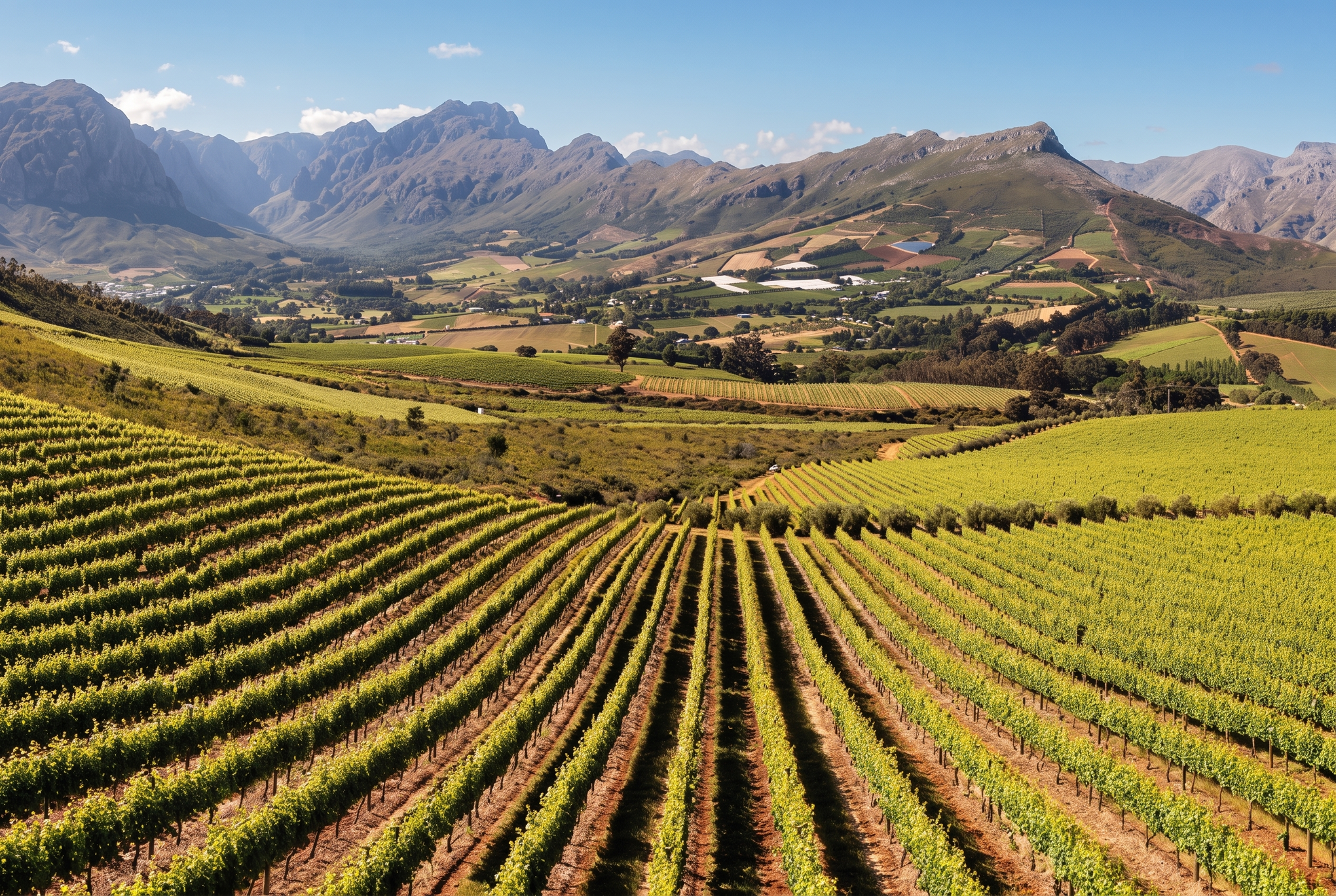
Stellenbosch is South Africa's flagship wine district, about 30 miles (50 kilometers) east of Cape Town. It combines a 17th-century university town with the country's densest cluster of top wine estates. Reds lead here, above all Cabernet Sauvignon, but the district also grows some of the Cape's finest Chenin Blanc. More than 150 wineries operate in the district, from grand Cape Dutch estates with gabled manor houses to garage-scale cellars, and the wine route that links them, founded in 1971, was the country's first. If South African wine has a capital, this is it.
Country: South Africa
Main grapes: Cabernet Sauvignon, Merlot, Syrah (Shiraz), Pinotage, Chenin Blanc, Chardonnay, Sauvignon Blanc
Signature styles: Structured Cabernet Sauvignon, Bordeaux-style red blends, dry Chenin Blanc
Climate: Warm Mediterranean, cooled by afternoon breezes off False Bay
Key appellations: Wine of Origin Stellenbosch; wards include Simonsberg-Stellenbosch, Jonkershoek Valley, Bottelary, Polkadraai Hills
Vineyard area: About 28,800 acres (11,650 hectares) as of 2024 (SAWIS)
2. Why It Matters
Stellenbosch is the reference point for South African red wine. Its Cabernet Sauvignon appears on restaurant lists worldwide, and the district holds roughly one eighth of the national vineyard as of 2024. It is also the industry's brain: Stellenbosch University trains most of the country's winemakers, and Pinotage, South Africa's own grape, was created on its campus. When critics rank the Cape's best producers, Stellenbosch names dominate.
3. Land and Climate
Mountains define the place. The Simonsberg, Jonkershoek, and Helderberg ranges break the district into valleys and slopes with distinct personalities. False Bay lies about 12 miles (20 kilometers) south, and its afternoon southeasterly wind cools the vineyards after hot mornings. That daily relief preserves the fresh acidity that keeps ripe reds from tasting heavy. Soils split into two broad camps. Decomposed granite on the mountain slopes drains fast, forcing vines to work and yielding small berries with firm tannins, the grape-skin compounds that give red wine its grip. Heavier clay and alluvial soils on the valley floors hold water, which suits higher-volume whites. Winter rain is usually generous enough that many growers irrigate sparingly. Plant Cabernet on a granite slope facing the sea breeze and you get exactly what Stellenbosch is famous for: dark, structured wine that ages.
4. Grapes and Styles
Reds first. Cabernet Sauvignon is the most planted variety and the district's calling card: blackcurrant, cedar, and graphite flavors with tannins built for a decade or more in the cellar. Producers often blend it with Merlot and Cabernet Franc into a Bordeaux-style blend, meaning a red assembled from the grape varieties traditional in Bordeaux, France. Syrah adds pepper-spiced, fleshier reds. Pinotage, a local cross of Pinot Noir and Cinsaut, ranges from smoky and dense to bright and juicy in modern hands. Whites are no afterthought. Chenin Blanc, South Africa's most planted grape, shows up here as everything from crisp and appley to barrel-aged, honeyed wines off old vines. Chardonnay and Sauvignon Blanc do best on cooler sites near the bay. Small amounts of botrytized dessert wine appear in good years, made from grapes shriveled by a beneficial fungus that concentrates sugar. Style varies by ward: Simonsberg-Stellenbosch Cabernets run powerful and firm, Jonkershoek Valley wines cooler and more aromatic, Bottelary reds sturdy and sun-filled. Here is a mild opinion: the Cabernets get the headlines, but old-vine Chenin Blanc is the smarter buy from Stellenbosch, pound for pound.
5. Reading the Label
South African labels follow the Wine of Origin system, a government-run certification started in 1973 that guarantees where the grapes grew. "Wine of Origin Stellenbosch" (often just "W.O. Stellenbosch") means 100 percent of the grapes came from this district. A ward is a smaller demarcated area inside a district, so "Simonsberg-Stellenbosch" or "Jonkershoek Valley" on a label signals a single prized pocket. "Estate Wine" means the wine was grown, made, and bottled on one registered property. If a grape variety or vintage year appears, at least 85 percent of the wine must match it. Look for the numbered certification seal over the capsule; it is the government's guarantee that all of these claims were audited, and the number can be traced back to the certified batch. Prices track the pyramid: district-level bottles offer value, while single-ward and estate wines carry the premiums.
6. A Short History
Governor Simon van der Stel founded Stellenbosch in 1679, making it South Africa's second-oldest town, and vines followed almost immediately. For much of the 20th century a national cooperative system pushed volume over quality. The turn came in 1971, when three local farmers launched South Africa's first wine route, betting on estate bottling and visitors. After apartheid ended in 1994, export markets reopened and Stellenbosch led the quality boom that followed.
Did You Know? Pinotage was born here in 1925, when Abraham Perold, Stellenbosch University's first professor of viticulture, crossed Pinot Noir with Cinsaut. He planted just four seedlings in his garden and then left for a new job. A young lecturer cycling past rescued the forgotten vines from a garden clean-up crew, saving South Africa's signature grape from the compost heap.
7. At the Table
Stellenbosch Cabernet was made for the braai, the South African barbecue: lamb chops, aged beef, or venison stand up to its tannins. Pinotage loves smoke, so pair it with barbecued ribs or boerewors, the local spiced farmer's sausage. Chenin Blanc handles Cape Malay cooking, such as bobotie, a lightly curried baked minced-meat dish, and also plain roast chicken. Serve the reds at 60 to 65 degrees Fahrenheit (16 to 18 Celsius), not room temperature, and give a young Cabernet an hour in a decanter to soften. Whites want 46 to 50 Fahrenheit (8 to 10 Celsius). Top Stellenbosch reds reward 10 to 20 years of patience.
Links
Stellenbosch Wine Routes (producers' association): https://wineroute.co.za
Wines of South Africa (national promotion body): https://www.wosa.co.za
SAWIS (industry statistics and Wine of Origin administration): https://www.sawis.co.za