

Two languages, one Alpine valley, and Italy's most reliable cool-climate whites.
1. At a Glance
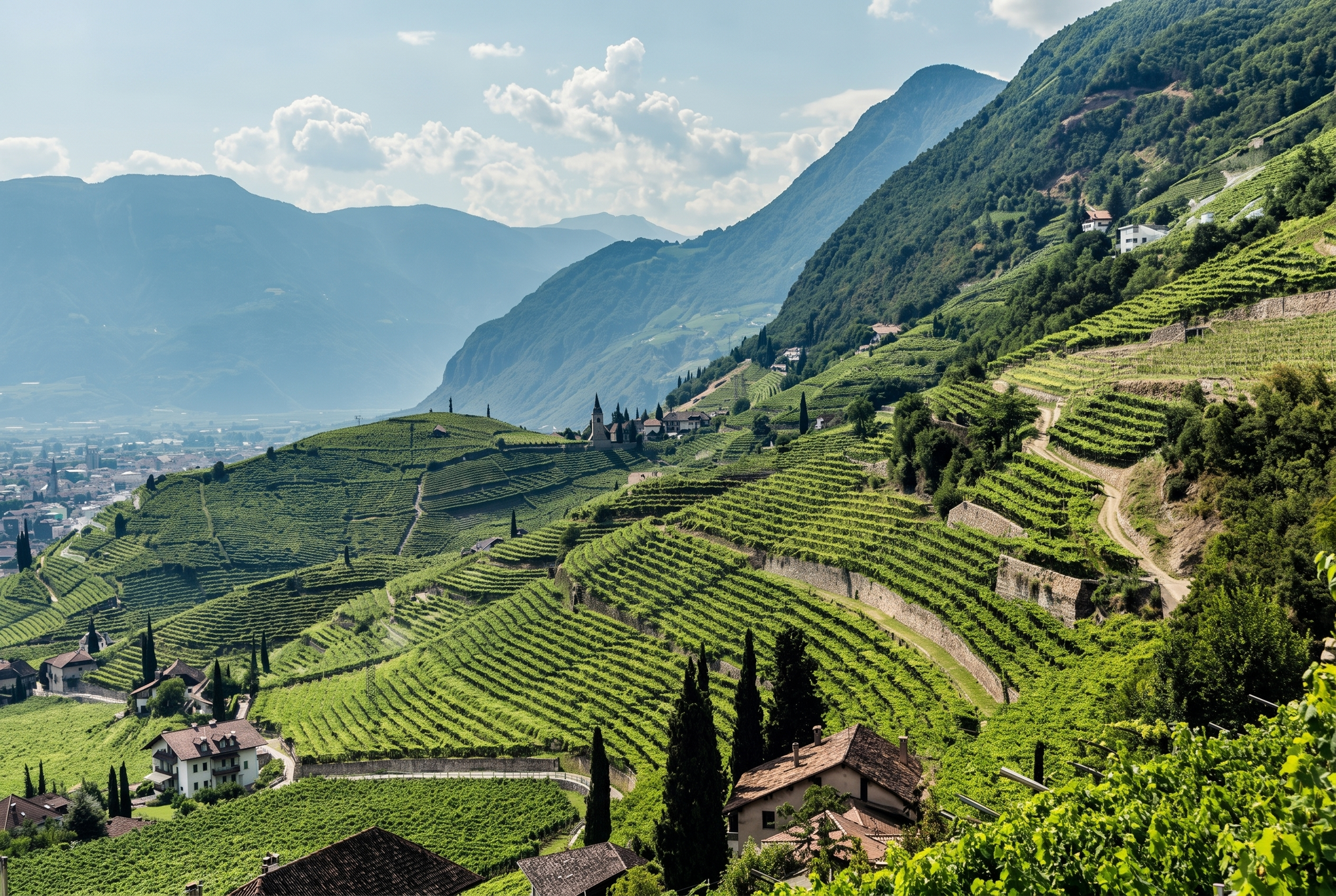
This is Italy's northernmost region, a mountainous stretch of the Alps bordering Austria. It splits into two: German-speaking Alto Adige (South Tyrol) in the north and Italian-speaking Trentino below it. Together they make precise, varietally labeled cool-climate wines, mostly whites, of consistently high quality.
Country: Italy
Main grapes: Pinot Grigio, Gewürztraminer, Chardonnay, Schiava, Lagrein, Pinot Nero
Signature styles: Aromatic dry white, light Alpine red, traditional-method sparkling
Climate: Alpine and continental, with warm valley floors and cold nights
Key appellations: Alto Adige DOC, Trentino DOC, Trento DOC (sparkling)
Vineyard area: About 16,000 hectares registered (Istat, 2024 harvest)
2. Why It Matters
Alto Adige has quietly become Italy's most dependable source of fine white wine. Its wines are clean, aromatic, and true to their grape, and its cooperatives, which make most of the wine here, hold quality remarkably high. Trentino, just south, is home to Trentodoc, one of Italy's top traditional-method sparkling wines. Over two-thirds of the region's output is white.
3. Land and Climate
Everything here is shaped by the Alps and the Adige River valley that cuts through them. Vineyards climb the valley sides, sometimes above 3,000 feet (900 meters). Altitude and steep slopes create big day-to-night temperature swings, cold mountain nights following warm days, and that is precisely what keeps the whites so aromatic and fresh. The valley floor is warmer and suits reds. Soils vary sharply over short distances: limestone and volcanic porphyry on the slopes, gravel and sand below. Growers match grape to site with real care, planting aromatic whites high and cool, reds low and warm. The payoff is wine that tastes distinctly of a cool mountain climate: crisp, high-toned, precise.
4. Grapes and Styles
Aromatic whites. Pinot Grigio here is serious and textured. Gewürztraminer (named for the local village of Tramin) is intensely floral and spicy. Chardonnay, Pinot Bianco, Sauvignon, and Müller-Thurgau round out a strong white lineup, all dry and fresh.
Reds. Schiava (Vernatsch in German) is light, pale, and easy, the traditional everyday red. Lagrein is the serious one: dark, full-bodied, with plum and a savory bite. Pinot Nero (Pinot Noir) does well at altitude.
Sparkling. Trento DOC, marketed as Trentodoc, is a dry traditional-method sparkling wine from Chardonnay and Pinot Nero, made in the mountains and aged long on its lees for a fine, complex bubble.
5. Reading the Label
This region labels by grape more clearly than almost anywhere in Italy, so the variety is usually the biggest word on the bottle. The zone tells you the style: "Alto Adige DOC" (or "Südtirol" in German, they are the same) for the northern whites and reds, "Trentino DOC" for the southern still wines. "Trento DOC" (Trentodoc) means the sparkling wine specifically, never a still one. Because Alto Adige is bilingual, expect German on the label: "Weiss" (white), "Rot" (red), "Vernatsch" (Schiava). A single-vineyard name signals a top bottling.
6. A Short History
The region's split personality is a legacy of history: Alto Adige belonged to Austria until 1919, which is why it remains German-speaking and Germanic in its winemaking. This is the only Italian region where the planted vineyard area grew, rather than shrank, through the late 20th century, a sign of how well its cooperative model worked. Those cooperatives, pooling grapes from thousands of tiny high-altitude plots, are the quiet engine behind the region's consistency.
Did You Know? The Gewürztraminer grape takes its name from the South Tyrolean village of Tramin (Termeno in Italian); "Gewürz" is German for "spice." So the world's most famous aromatic white grape is named, in part, after a small Alpine town in this region.
7. At the Table
Alto Adige's aromatic whites are natural partners for the region's Austro-Italian food: speck (smoked cured ham), dumplings, and trout. Gewürztraminer's spice makes it one of the few wines that handles Asian food well. Serve whites cold, about 48°F (9°C). Light Schiava suits charcuterie and can be served cool; fuller Lagrein wants roast meat at about 62°F (16°C). Trentodoc works from aperitif through the meal, served cold. These wines are made for freshness; most drink best within a few years, though Lagrein and top whites can age.
Links
Regulatory body (Consorzio Vini Alto Adige): https://www.altoadigewines.com/en
Regulatory body (Consorzio Vini del Trentino): https://vinideltrentino.com/en/home-2/
Official tourism board (South Tyrol): https://www.suedtirol.info/en