

Sangiovese built Chianti and Brunello here, then rebel winemakers broke the rules on the coast.
1. At a Glance
Tuscany, in central Italy, is the country's most famous wine region alongside Piemonte. Its identity rests on one grape, Sangiovese, which makes Chianti, Brunello di Montalcino, and Vino Nobile di Montepulciano. On the coast, a separate revolution produced the "Super Tuscans," bold reds that ignored tradition.
Country: Italy
Main grapes: Sangiovese, plus Cabernet Sauvignon and Merlot on the coast
Signature styles: avory dry red, powerful age-worthy red, sweet Vin Santo
Climate: Mediterranean to continental, warmer on the coast
Key appellations: Chianti Classico DOCG, Brunello di Montalcino DOCG, Bolgheri DOC
Vineyard area: About 60,000 hectares registered (Istat, 2024 harvest)
2. Why It Matters
Tuscany gave the world Chianti, one of the most recognizable wines anywhere, and Brunello di Montalcino, among Italy's most prestigious reds. It is Sangiovese's homeland, the grape that defines central Italian red wine. It is also where, in the 1970s, a handful of producers broke the appellation rules to make internationally acclaimed reds from French grapes, changing Italian wine forever.
3. Land and Climate
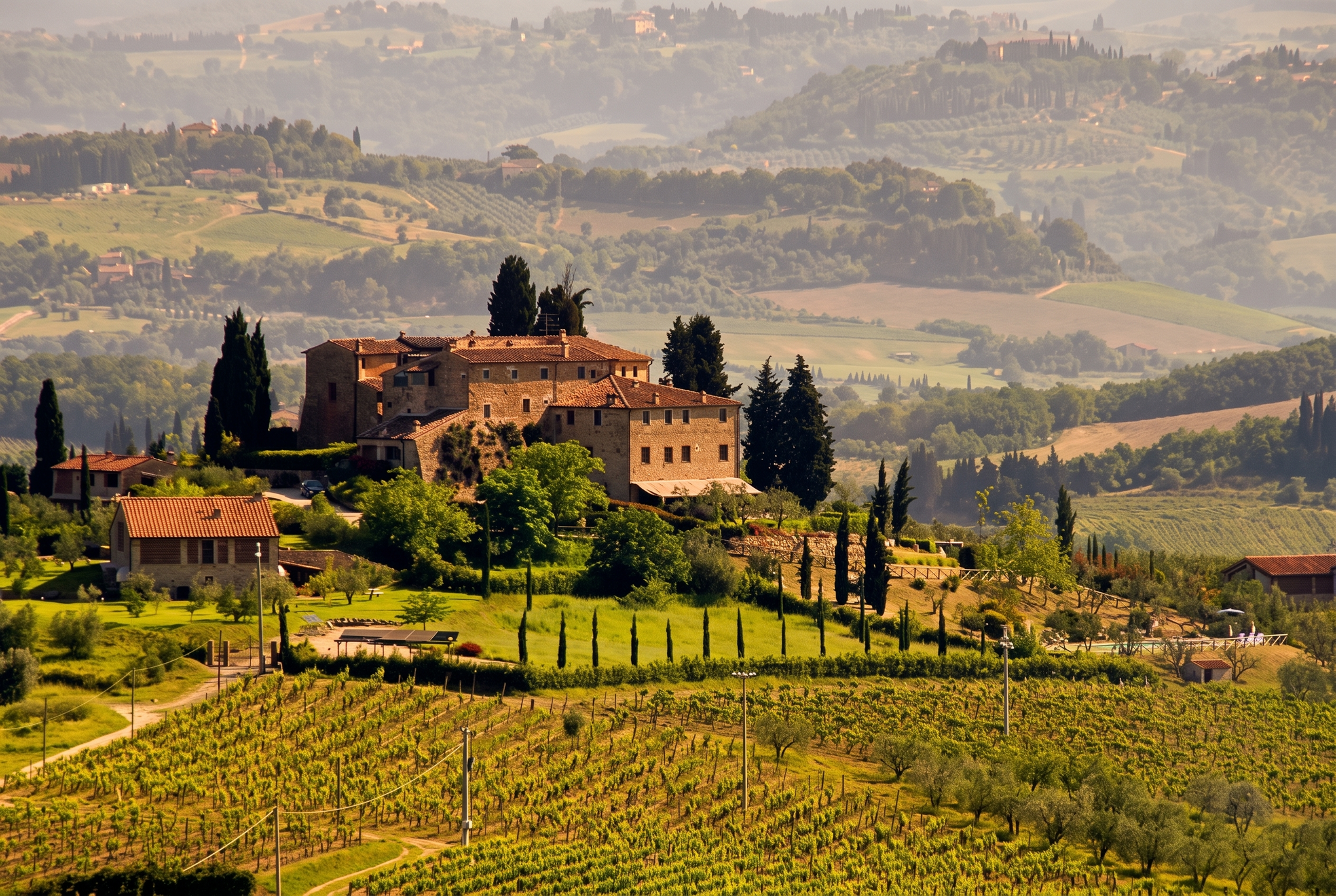
Inland Tuscany is a landscape of hills, and altitude and exposure drive the style. Sangiovese is thin-skinned and needs warmth to ripen but keeps its prized acidity when grown on cooler hillsides. In Chianti Classico, vineyards sit at 800 to 1,600 feet (250 to 500 meters) on a mix of soils, including a rocky marl the locals call galestro, which stresses the vine and sharpens the wine. Montalcino, to the south, is warmer and drier, which is why its Brunello ripens fuller and richer. The coast, at Bolgheri, is warm, maritime, and gravelly, more like Bordeaux than central Italy, which is exactly why Bordeaux grapes thrive there. Place, in Tuscany, sets the whole character of the wine.
4. Grapes and Styles
Sangiovese reds. Chianti Classico is savory and bright: sour cherry, herbs, tomato leaf, firm acidity, and grippy tannin. Brunello di Montalcino is Sangiovese pushed to its fullest, powerful and long-aging. Vino Nobile di Montepulciano sits between them in style.
Super Tuscans. Mostly from the coast at Bolgheri, these are reds built on Cabernet Sauvignon, Merlot, and Sangiovese in free blends. They are ripe, polished, and often expensive, made outside the old rules.
Sweet. Vin Santo is the traditional dessert wine, made from grapes dried on mats and aged for years in small barrels, giving a nutty, caramel, sometimes sherry-like wine.
5. Reading the Label
"Chianti Classico DOCG" is the historic core zone and the one to trust; plain "Chianti" covers a much larger, more variable area. On Chianti Classico, a quality ladder runs from standard to "Riserva" (longer aging) to "Gran Selezione" (the top tier, stricter rules). "Brunello di Montalcino DOCG" is always 100% Sangiovese with long mandatory aging; its younger, cheaper sibling is labeled "Rosso di Montalcino." On the coast, "Bolgheri DOC" covers the Bordeaux-style reds. Super Tuscans that don't fit the rules often appear under the flexible "Toscana IGT" label despite their high price and quality.
6. A Short History
The pivotal event is the Super Tuscan rebellion of the 1970s. Frustrated by rules that forbade Bordeaux grapes and even required white grapes in Chianti, a few estates on the coast made unapproved Cabernet- and Merlot-based reds, sold them as lowly "table wine," and watched them earn international acclaim and high prices. The scandal forced Italy to reform its whole classification system and to create new appellations like Bolgheri. Chianti's own rules were overhauled in its wake, dropping the mandatory white grapes.
Did You Know? The rooster on every bottle of Chianti Classico, the Gallo Nero (Black Rooster), comes from a medieval legend about a boundary dispute between Florence and Siena settled by a rooster's crow. It is now the zone's official, legally protected seal.
8. At the Table
Chianti Classico is a textbook match for Tuscan food: its acidity and savory edge were made for tomato-based pasta, grilled steak (the famous bistecca alla fiorentina), and pecorino cheese. Serve it at about 64°F (18°C). Brunello, richer and more tannic, wants roasts and game and rewards decanting; it can age 20 years or more. Rosso di Montalcino is the everyday alternative. Vin Santo is traditionally served with cantucci, hard almond biscuits made for dunking. Chianti Classico drinks well from release; Gran Selezione and Brunello reward.
Links
Regulatory body (Consorzio Vino Chianti Classico): https://www.chianticlassico.com/en/
Regulatory body (Consorzio del Vino Brunello di Montalcino): https://www.consorziobrunellodimontalcino.it
Official tourism board: https://www.visittuscany.com/en/