

Italy's only landlocked region hides Sagrantino, one of the most tannic red grapes on earth.
1. At a Glance
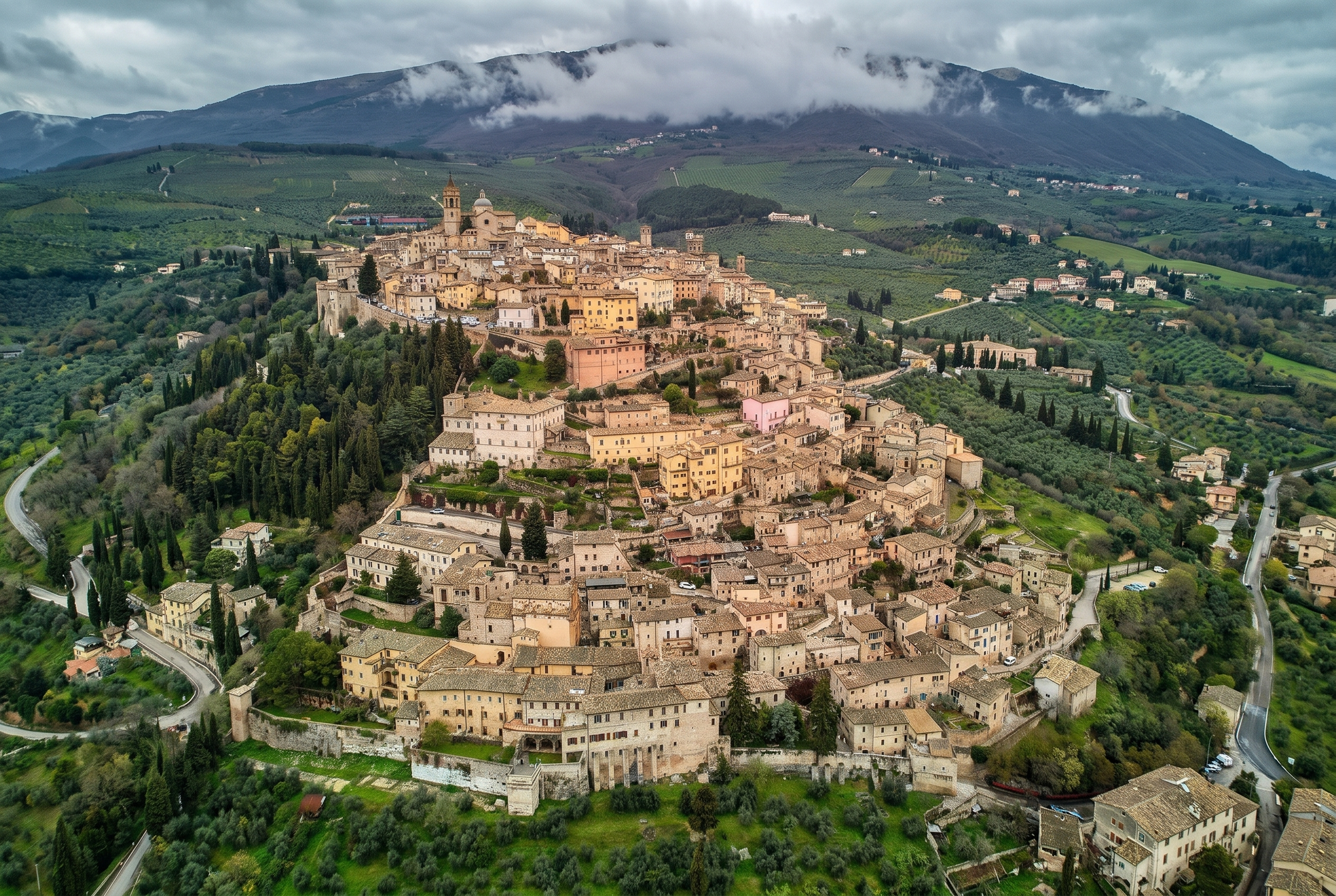
Umbria sits in the middle of the Italian peninsula, the only region touching neither sea nor foreign border. Long overshadowed by neighboring Tuscany, it makes two things worth seeking out: crisp, food-friendly whites around Orvieto, and the powerful red Sagrantino from the hill town of Montefalco.
Country: Italy
Main grapes: Sagrantino, Sangiovese, Grechetto, Trebbiano
Signature styles: Intense tannic red, everyday red, dry white, sweet passito
Climate: Continental, hilly, with warm days and cool nights
Key appellations: Montefalco Sagrantino DOCG, Orvieto DOC, Torgiano Rosso Riserva DOCG
Vineyard area: About 12,000 hectares registered (Istat, 2024 harvest)
2. Why It Matters
Umbria's claim to fame is Sagrantino, a grape grown almost nowhere else and one of the most tannin-rich red varieties in the world. Montefalco Sagrantino is a wine of enormous structure and aging potential, a serious rival to Tuscany's best that far fewer people know. The region also makes reliable, undervalued whites, which deserve more attention than they get.
3. Land and Climate
Umbria is all hills and river valleys, sheltered inland from the sea. Being landlocked and elevated gives it warm days and notably cool nights, the temperature swing that lets red grapes ripen fully while keeping freshness. Around Montefalco, clay and limestone soils suit the demanding Sagrantino vine, which needs heat and a long season to tame its ferocious tannins. Near Orvieto, in the west, volcanic tuff soils (soft rock from ancient eruptions) and a slightly cooler setting favor white grapes, giving Orvieto its mineral lift. The best vineyards sit on slopes rather than valley floors, where drainage is better and the vines are stressed just enough.
4. Grapes and Styles
Powerful reds. Montefalco Sagrantino is 100% Sagrantino: inky, massively tannic, with blackberry, plum, and spice, built to age for a decade or more. There is also a traditional sweet passito version from dried grapes.
Everyday reds. Montefalco Rosso is Sangiovese-led with a splash of Sagrantino, softer and more approachable, the region's everyday red. Torgiano Rosso, also Sangiovese-based, can reach high quality at Riserva level.
Whites. Orvieto, a blend led by Grechetto and Trebbiano, is dry, crisp, and gently nutty. Grechetto bottled on its own gives a fuller, more characterful white. A historic sweet, botrytis-affected version of Orvieto also exists.
5. Reading the Label
"Montefalco Sagrantino DOCG" always means the pure, powerful Sagrantino red; if it says "Passito," it is the sweet dried-grape version. Don't confuse it with "Montefalco Rosso DOC," which is the softer, Sangiovese-based everyday wine. "Orvieto DOC" is the white; a label reading "Classico" marks the historic core of that zone, and "Secco" means dry (versus the rarer sweet "Amabile"). "Torgiano Rosso Riserva DOCG" is the region's other top red. As in Tuscany, "Riserva" signals longer aging and usually a more serious bottle.
6. A Short History
Sagrantino was nearly forgotten. For most of its history it was made only as a sweet passito wine for local religious feasts, and by the mid-20th century the grape had dwindled to a few acres. Its revival, from the 1970s onward, was driven largely by one determined producer who bet on a dry version, proving Sagrantino could make a great structured red. Montefalco earned DOCG status in 1992. Orvieto, by contrast, has been famous since the Renaissance, when it was prized as a sweet wine by popes and painters.
Did You Know? Sagrantino has one of the highest tannin levels of any wine grape in the world, measured by its polyphenol content. That is why the wine can age for decades, and why it was historically made sweet: the residual sugar softened the grape's fierce grip.
7. At the Table
Montefalco Sagrantino needs rich, fatty food to balance its tannins: roast lamb, wild boar, and hard aged cheese. Serve it at about 64°F (18°C) and decant young bottles for a good hour or two, since the tannins need air. Montefalco Rosso is the flexible everyday choice for pasta and grilled meats. Orvieto and Grechetto suit the region's freshwater fish, cured meats, and truffle dishes, served cold at about 48°F (9°C). Sagrantino can age 10 to 20 years; the whites are made to drink young.
Links
Regulatory body (Consorzio Tutela Vini Montefalco): https://www.consorziomontefalco.it
Official tourism board: https://www.umbriatourism.it/en/homepage