

Spain's second red grape hides an hour inland from the beach resorts.
1. At a Glance
The Valencia region, on Spain's Mediterranean coast, is far more than paella country. Its port shipped wine for centuries, and its three appellations still work at scale: Utiel-Requena on the high inland plateau, built on the native Bobal grape; Alicante in the south, home of Monastrell and the venerable sweet Fondillón; and DO Valencia itself, from mountain whites to Moscatel.
Country: Spain (east coast, around the city of Valencia)
Main grapes: Bobal, Monastrell, Tempranillo, Merseguera, Moscatel de Alejandría
Signature styles: Sturdy Bobal reds and rosados; Monastrell reds; sweet Moscatel and Fondillón
Climate: Mediterranean on the coast; continental with cold winters on the inland plateau
Key appellations: DO Valencia, DO Utiel-Requena, DO Alicante
Vineyard area: Roughly 33,000 hectares (81,500 acres) in Utiel-Requena alone as of 2025
2. Why It Matters
This is the world capital of Bobal, Spain's second most-planted red grape, which barely exists outside these hills. Utiel-Requena held about 20,500 hectares of it in 2024, nearly two-thirds of the appellation, including almost 9,000 hectares of vines over 45 years old, a trove of old-vine material most regions would envy. Add Alicante's Fondillón, one of Europe's rarest historic sweet wines, and a DO Valencia network selling in about 100 countries (2020s), and the region rewards drinkers who look past the beach.
3. Land and Climate
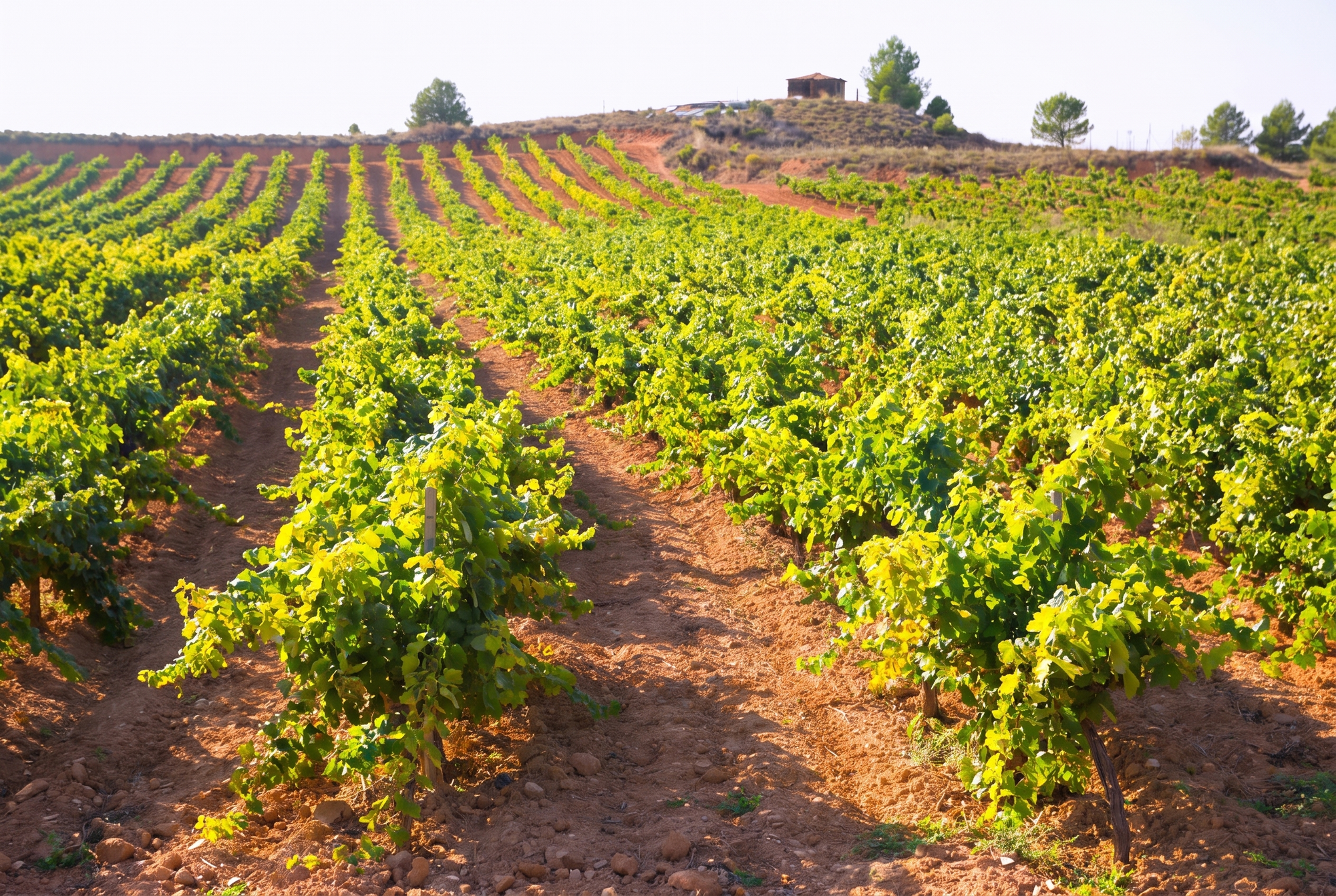
The coast is classic Mediterranean: warm, sunny, and gentle, ideal for Moscatel and easy reds. Drive an hour inland to Utiel-Requena, though, and you reach a plateau at 2,000 to 3,000 feet (600 to 900 meters) where the climate turns continental: summer days above 104°F (40°C), winter nights below 14°F (-10°C), and day-night swings of 36°F (20°C) or more in the growing season.
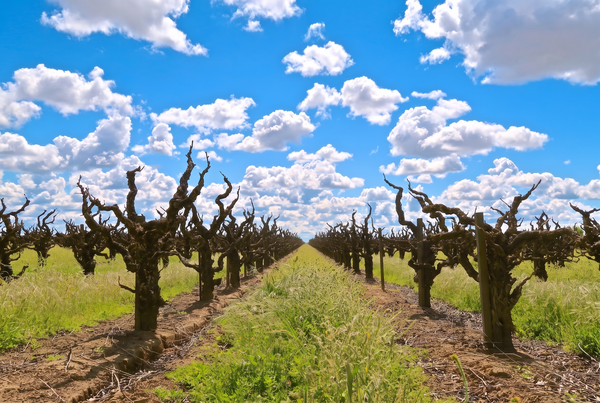
Those cold nights are the point. They preserve acidity in Bobal, a late-ripening, thick-skinned grape, so the wines stay fresh despite the heat. Clay-limestone soils and only about 18 inches (450 millimeters) of rain keep yields low; most old vines are dry-farmed bushes, spaced widely so each finds its own water. Alicante's arid hills do the same for Monastrell, concentrating dark fruit and firm tannin, the mouth-drying grip that grape skins lend a red wine.
4. Grapes and Styles
Bobal comes in two guises. As rosado, briefly macerated on its dark skins, it is pale, dry, and mineral, with a faint grip that suits food; for the money, it may be Europe's most underpriced pink wine. As a red, especially from old vines, it gives black cherry, plum, and spice with firm acidity, in styles from carafe-friendly to cellar-worthy. Researchers have also found Bobal unusually rich in resveratrol, the antioxidant compound wine marketers love, a byproduct of the plateau's climatic stress.
Monastrell (France's Mourvèdre) dominates Alicante: ripe, dark, and warming reds. The region's treasure is Fondillón, made from overripe Monastrell fermented dry-ish and naturally sweet, then aged at least 10 years, often in a solera, a stack of barrels where young wine gradually blends with old. Expect walnut, dried fig, and toffee.
Whites include crisp Merseguera from the high Alto Turia subzone, whose vineyards climb past 3,000 feet (900 meters), and Moscatel de Alejandría, the base of mistela, a fortified sweet local staple poured over ice in Valencian cafés. Low-alcohol styles and sparkling wines are a growing sideline aimed at export markets.
5. Reading the Label
Three DOs (Denominación de Origen, Spain's regulated appellations) share the region, and the DO name is your first clue: Utiel-Requena usually means Bobal; Alicante means Monastrell; Valencia covers four subzones whose names (Alto Turia, Valentino, Moscatel, Clariano) sometimes appear on labels.
Aging terms follow the national system: joven for young wines, then Crianza, Reserva, and Gran Reserva for progressively longer barrel-and-bottle maturing. "Fondillón" is a protected term in Alicante and legally requires a minimum of 10 years' aging. "Mistela" or "Vino de Licor Moscatel" signals the sweet fortified style. "Viñas viejas" (old vines) on a Bobal label is worth paying for.
6. A Short History
Iberians grew grapes near Requena by the 7th century BC, and Valencia's port made wine one of the region's great exports. The boom came in the late 1800s, when phylloxera, the vine-killing louse, ruined France and French buyers emptied these cellars; Alicante alone held 93,000 hectares of vines when the French trade deal ended in 1892. Bobal's partial resistance to the pest softened the crash that followed. Cooperatives dominated the 20th century, with Utiel-Requena's first bottling cooperative founded in 1965; estate bottling and old-vine projects have driven quality since the 1990s.
Did You Know? Bobal is Spain's second most-planted red grape, yet most wine drinkers have never ordered one by name. Nearly all of it grows around Utiel and Requena, where some registered parcels date to the early 1900s.
7. At the Table
Paella was born here, and Bobal rosado, chilled to about 50°F (10°C), is its local match: enough body for the socarrat crust, enough freshness for the saffron. Old-vine Bobal and Alicante Monastrell reds, served at 61°F (16°C), suit arroz al horno (baked rice with pork), grilled lamb, and anything cooked over vine cuttings, a common local fuel.
Young reds need no decanting; give serious old-vine bottlings 30 minutes of air, and expect the best to improve for a decade. Pour Fondillón in small glasses at cellar temperature with turrón, blue cheese, or dark chocolate; an open bottle keeps for weeks because oxygen has already done its work during those long years in barrel.
Links
Consejo Regulador DOP Valencia (regulatory body): https://vinovalencia.org/consejo-regulador/
Consejo Regulador DO Utiel-Requena (regulatory body): https://utielrequena.wine/
Utiel-Requena Wine Route (Spain official tourism): https://www.spain.info/en/oenology/wine-route-utiel-requena/