

Portugal's largest wine region bottles whites so young they still fizz.
1. At a Glance
Vinho Verde is the big green northwest of Portugal, from the Minho River on the Spanish border down past Porto, and the name of the wine it makes. "Verde" means green, but it refers to youth, not color: these are wines released within months of harvest, low in alcohol, high in acidity, and often carrying a faint natural-style spritz. It is the largest of Portugal's controlled appellations, and its light whites have become the country's calling card on summer tables worldwide.
Country: Portugal
Main grapes: Alvarinho, Loureiro, Arinto (Pedernã), Trajadura, Avesso, Azal (white); Vinhão (red)
Signature styles: Light, slightly fizzy young whites; serious still Alvarinho; inky, sharp Vinhão reds
Climate: Atlantic maritime; mild, humid, with rainfall above 47 inches (1,200 millimeters) in places
Key appellations: DOC Vinho Verde with nine subregions; IG Minho
Vineyard area: About 21,000 hectares (52,000 acres), roughly 9 percent of Portugal's vineyards (2024)
2. Why It Matters
Vinho Verde is Portugal's most recognizable white wine export, sold in more than a hundred countries, and one of the world's great values in light, refreshing wine. It is also two regions in one: an ocean of inexpensive, faintly fizzy blends, and a smaller, fast-growing tier of serious single-variety wines, above all Alvarinho from Monção e Melgaço, that compete with fine whites anywhere.
3. Land and Climate
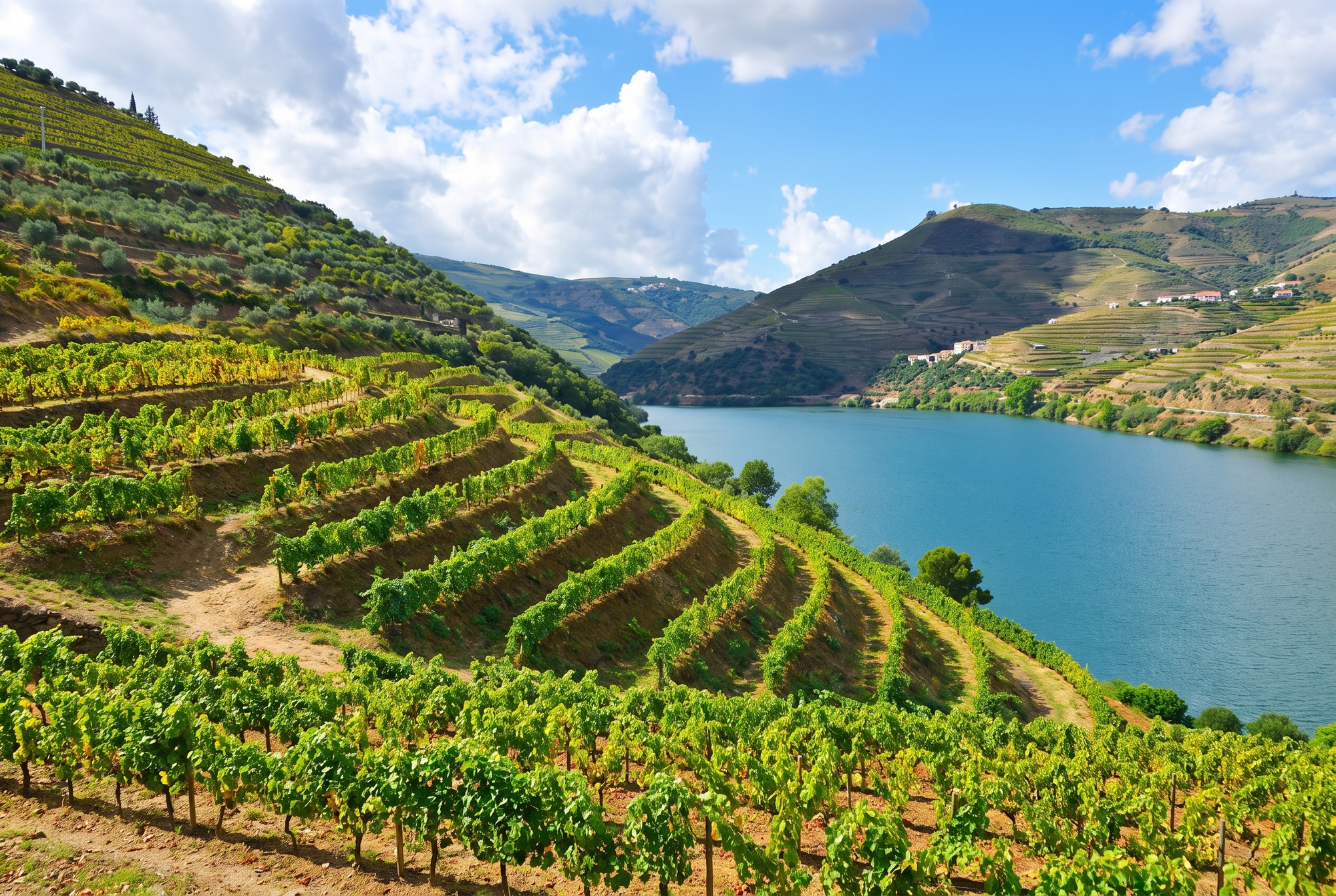
This is the wettest, greenest corner of Portugal. Atlantic weather sweeps in unobstructed, rainfall tops 47 inches (1,200 millimeters) a year in parts, and granite underlies nearly everything. Cool, damp conditions keep sugar low and acid high, which is the whole style in one sentence: light body, modest alcohol, mouthwatering freshness.
Land here is minutely divided; roughly 19,000 growers and about 600 bottlers turned out some 85 million liters a year as of the mid-2020s, with many families farming plots little bigger than gardens and historically training vines up trees and pergolas to save ground for other crops. Nine subregions ring the river valleys. The one to remember is Monção e Melgaço in the far north: hills shield it from direct ocean weather, so it is warmer and drier, and its Alvarinho ripens to a fullness the coastal zones cannot match.
4. Grapes and Styles
Whites are about 86 percent of production. Classic Vinho Verde is a blend of Loureiro (floral, laurel-scented), Trajadura, Arinto (locally called Pedernã), Azal, and Avesso: pale, lemony, around 8.5 to 11.5 percent alcohol, with a light prickle of carbon dioxide below the legal threshold for sparkling wine. Geography sorts the grapes: the cool coastal valleys of the Lima, Cávado, and Ave favor aromatic Loureiro and Arinto, while the warmer inland zones let later-ripening Azal and Avesso reach maturity. Drink it cold and young; it is the definition of a summer wine.
Alvarinho is the aristocrat, the same grape as Spain's Albariño just across the Minho River. From Monção e Melgaço it makes still, dry whites at 12 to 14 percent alcohol with peach, citrus, and saline mineral depth, and the best age gracefully for a decade. Single-variety Loureiro and Avesso are following the same serious path, and the region's top bottlings are far better wine than its cheap-and-cheerful reputation suggests.
The traditional red, Vinhão, is inky purple, tart, and lightly fizzy, a local taste worth trying at least once, well chilled. Rosés and, since 1999, fully sparkling wines round out the range, and the region's high natural acidity gives the sparkling category real promise for the years ahead.
5. Reading the Label
"DOC Vinho Verde" (Denominação de Origem Controlada, the controlled appellation) covers the classic style. One of nine subregion names may be added, and it matters: "Vinho Verde Monção e Melgaço" plus "Alvarinho" signals the top tier, permitted higher alcohol than the generic blend.
A single grape name on the label (Alvarinho, Loureiro, Avesso) promises a varietal wine, usually still rather than fizzy. Alcohol on the label is a style guide in itself: near 9 percent means light and spritzy, 12.5 percent and up means a serious still white. "Espumante" means fully sparkling, a separate category. "IG Minho" or "Vinho Regional Minho" is the looser regional tier used for wines outside DOC rules. "Colheita" plus a year is simply the vintage.
6. A Short History
Roman writers mentioned vines between the Douro and Minho rivers, and a winery donation near Marco de Canaveses is documented in the year 870. The region was legally demarcated on September 18, 1908, its rules were set in 1926 under the regional commission (CVRVV), and full DOC status came in 1984. Exports of light, spritzy whites built the modern brand from the mid-20th century; the premium Alvarinho movement is the story of the last three decades.
Did You Know? For centuries, Vinho Verde growers trained their vines up trees and tall pergolas at the edges of fields, saving the scarce farmland below for corn and vegetables. You can still see vines climbing trees along back roads in the Minho.
7. At the Table
Serve classic Vinho Verde ice-cold, 43 to 46°F (6 to 8°C), with exactly what the locals eat: grilled sardines, clams in garlic and cilantro, salt-cod fritters, or a plate of percebes; it also handles caldo verde, the Minho's classic kale and sausage soup. Its low alcohol makes it the rare wine that works at lunch. Still Alvarinho deserves a lighter chill, 50°F (10°C), and richer fare such as roast octopus or arroz de marisco; good bottles improve for five to ten years. Chill Vinhão and pour it with rojões, the Minho's fried pork. Nothing in this region ever needs a decanter.
Links
Regulatory body (CVRVV): https://www.vinhoverde.pt
National promotion (Wines of Portugal): https://winesofportugal.com/en/discover/wine-regions/vinho-verde/
Official tourism board: https://www.visitportugal.com