

Two states share one small valley where sun-baked cobblestones ripen remarkable Syrah.
1. At a Glance
Walla Walla is a farm town in Washington’s southeastern corner whose valley, and whose wine appellation, spills across the state line into Oregon. The vineyards are tiny, under 3,000 acres (1,200 hectares) as of 2024, but the concentration of ambitious producers is the highest in the Pacific Northwest. Cabernet Sauvignon built its reputation; Syrah grown on an old cobblestone riverbed may be its future.
Country: United States
Main grapes: Cabernet Sauvignon, Syrah, Merlot
Signature styles: Polished Cabernet Sauvignon; savory, smoky Syrah from The Rocks District
Climate: Warm and dry, with rainfall rising from 9 inches (23 cm) in the west to 22 inches (56 cm) near the Blue Mountains
Key appellations: Walla Walla Valley AVA (within the Columbia Valley AVA) and the nested Rocks District of Milton-Freewater AVA in Oregon
Vineyard area: About 2,933 acres (1,187 hectares) as of 2024
2. Why It Matters
For a valley with less vineyard land than a single large Napa estate, Walla Walla carries improbable weight. Its pioneering wineries of the late 1970s and 1980s proved Washington could make collectible reds, and more than 120 wineries now work here (2024). The Rocks District, on the Oregon side, produces some of the most distinctive Syrah in the Western Hemisphere, wines so savory they are recognizable blind. The town itself, with its tasting rooms, restaurants, and converted World War II airbase buildings full of wineries, has become the Northwest’s favorite wine-country weekend.
3. Land and Climate
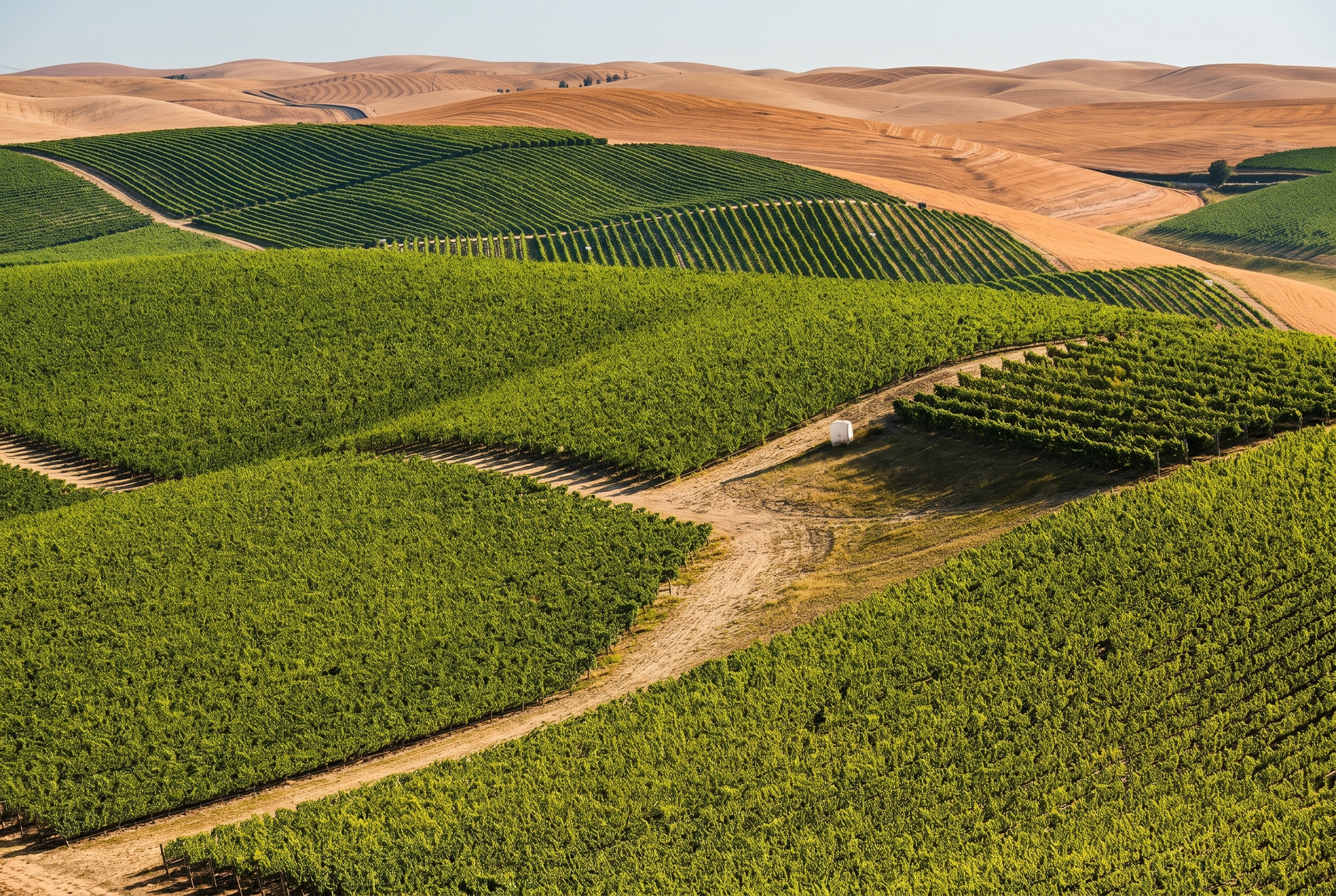
The valley slopes upward from west to east into the Blue Mountains, and rainfall more than doubles along the way, from 9 to 22 inches (23 to 56 centimeters) a year. Western vineyards must irrigate; a few eastern ones can farm without it, a rarity in Washington. Most soils are wind-blown silt, called loess, over deposits left by the Ice Age Missoula Floods, giving well-drained ground and cold nights that keep acidity high.
The south end is stranger. Near Milton-Freewater, Oregon, the Walla Walla River once dumped a fan of dark basalt cobblestones. These fist-sized stones soak up daytime heat and radiate it back onto the vines at night, pushing grapes, especially Syrah, to full ripeness with wild, savory flavors. Growers compare the stones to the famous galets of Châteauneuf-du-Pape in France’s southern Rhône, and the comparison holds up.
4. Grapes and Styles
Reds dominate the plantings here, and three grapes account for most of them. Cabernet Sauvignon is the most planted and the backbone of the valley’s reputation: polished, cassis-driven reds with fine tannin and enough acidity to age 10 to 20 years. Merlot, the grape that first made the region famous in the 1980s, is supple and plummy. Bordeaux-style blends, combining these grapes as Bordeaux does, are common at the top end.
Then there is Syrah, and the Syrahs, not the Cabernets, are the valley’s most distinctive wines. From The Rocks District they show an unmistakable profile: black olive, smoked meat, iron, and flowers over dark fruit, closer to France’s northern Rhône than to typical American Syrah. Grenache and other Rhône grapes are following the same path, and a few producers now bottle Rhône whites from the cobbles as well. Whites remain a small minority of what is planted, mostly crisp Chardonnay, Viognier, and aromatic blends, best drunk young. Because the valley’s vineyards climb from about 800 to over 2,000 feet (240 to 610 meters), even a single grape can show real range from one site to the next.
5. Reading the Label
“Walla Walla Valley” means at least 85 percent of the grapes grew in this AVA, the federally defined region, on either side of the state line. “The Rocks District of Milton-Freewater” means 85 percent from the cobblestone zone in Oregon.
Here is the useful oddity: because The Rocks District lies entirely in Oregon, federal rules let only wines fully finished in Oregon carry its name. A Washington winery using those same grapes must label the wine “Walla Walla Valley” instead, so some of the best Rocks fruit hides behind the broader name; vineyard names on the back label are the clue. “Reserve” remains legally meaningless.
6. A Short History
Italian immigrants grew grapes here in the 1860s to supply Idaho gold miners, but hard winters ended that era. The modern chapter began when Leonetti Cellar bonded in 1977 and Woodward Canyon followed in 1981; their acclaimed reds put the valley on the map, and it became an AVA in 1984, among the earliest in the Northwest. In 1997 Christophe Baron planted Syrah in the cobblestones near Milton-Freewater, and that zone became The Rocks District AVA in 2015.
Did You Know? A wine grown in The Rocks District but fermented across the state line in Washington cannot legally say “The Rocks District” on its label. Federal rules require wines from a single-state appellation to be fully finished in that state, so identical grapes wear different names depending on which side of the border the winery sits.
7. At the Table
Rocks District Syrah wants food with the same savory streak: grilled lamb, duck, mushrooms, or anything cooked over wood fire. Its smoky, olive-tinged character can taste odd next to sweet sauces, so keep the barbecue sauce away. Serve it at 60°F (16°C) and give young bottles 30 to 60 minutes in a decanter.
Walla Walla Cabernet handles steak and braised short ribs, and the local pairing is beef with Walla Walla sweet onions, the town’s other famous crop. Top reds from good vintages will age comfortably for 15 years or more.
Links
Producers’ association (Walla Walla Valley Wine Alliance): https://www.wallawallawine.com
Official tourism board (Visit Walla Walla): https://wallawalla.org
State wine institute (Washington State Wine Commission): https://www.washingtonwine.org